










Camera brands: the guide to choosing between film and digital
All used camera brands compared: origins, flagship film and digital models, mounts, accessories, and buying advice.
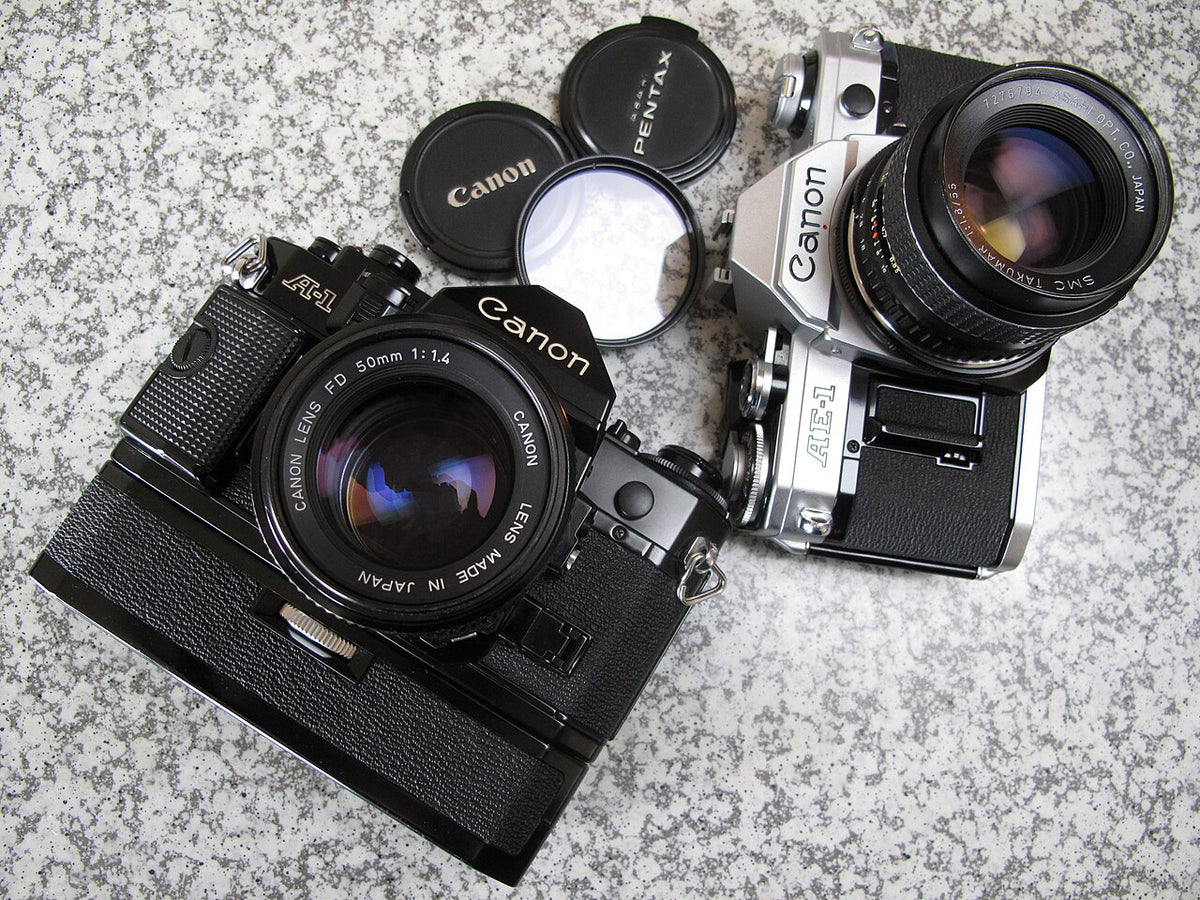
Choosing a used camera brand means choosing an ecosystem: a lens mount, batteries, a memory card format, and a philosophy. This guide introduces all the major brands you’ll find in film, digicams, used digital cameras, and video, their flagship models, and what you need to know before buying. Each brand has (or will soon have) its own detailed guide.

Brand table
| Brand | Origin | Film flagship | Digital flagship | Video / instant | Guide |
|---|---|---|---|---|---|
| Canon | Japan, 1937 | AE-1, AE-1 Program, A-1, Canonet QL17, Prima / Sure Shot | IXUS, PowerShot A/G, G7 X, EOS | MiniDV camcorders, Legria | Canon guide |
| Nikon | Japan, 1917 | FM2, FE2, F3, EM, L35AF, 35Ti | Coolpix, D40, D700, D750 | — | Nikon guide |
| Sony | Japan, 1946 | — | Cyber-shot W/T, Mavica, RX100, Alpha | Handycam Video8, Hi8, Digital8, MiniDV | Sony guide |
| Olympus / OM System | Japan, 1919 | Trip 35, OM-1, OM-10, XA, Mju II, Pen | Mju Digital, Tough, PEN, OM-D | — | Olympus guide |
| Pentax / Asahi | Japan, 1919 | K1000, MX, ME Super, Spotmatic, 67 | Optio, K10D, K-5, K-70 | — | Pentax guide |
| Minolta / Konica Minolta | Japan, 1928 – 2006 | SR-T 101, X-700, Dynax, Hi-Matic, Riva | Dimage, Dynax 7D | — | Minolta guide |
| Fujifilm / Fujica | Japan, 1934 | Fujica ST, Klasse, Natura, GW690, QuickSnap | FinePix F30, X100, X-T | Instax (instant) | Fujifilm guide |
| Kodak | United States, 1888 (1892) | Brownie, Retina, Instamatic, Ektar H35 (license) | EasyShare, DCS | — | Kodak guide |
| Leica | Germany, Leitz (Leica I in 1925) | M3, M6, Minilux, CL | D-Lux, C-Lux, X1, M8 | — | Leica guide |
| Yashica | Japan, 1949 | T4, Electro 35, Mat-124G, FX-3 | Some digital compacts | — | Yashica guide |
| Contax | Germany, then Japan (Yashica/Kyocera, until 2005) | T2, T3, G1/G2, RTS, 139 Quartz | N Digital, SL300R T* | — | Contax guide |
| Ricoh | Japan, 1936 | GR1, 500G, FF-9 | GR Digital, Caplio, GR (APS-C) | — | Ricoh guide |
| Konica | Japan (Konishiroku), merged in 2003 | C35, Big Mini, Hexar AF | Revio, Digital Revio | — | Konica guide |
| Panasonic | Japan, Lumix range since 2001 | — | Lumix FX, TZ, LX, G, GH | MiniDV, VHS-C, SD camcorders | Lumix guide · Camcorders |
| Samsung | South Korea (Kenox, Digimax, NX) | Samsung/Kenox compacts from the 1990s | Digimax, ST, PL (dual screen), NX | Camcorders | Samsung guide |
| Casio | Japan, QV-10 in 1995, compact discontinued in 2018 | — | QV-10, Exilim EX-S, EX-Z | — | Casio Exilim guide |
| Polaroid | United States, 1937 | SX-70, 600, Spectra, Impossible / Polaroid Now | — | Instant | Polaroid guide · Polaroid or Instax |
| JVC | Japan | — | — | Inventor of VHS; VHS-C, MiniDV, Everio camcorders | JVC camcorders |
| Mamiya, Hasselblad, Rollei, Bronica | Japan, Sweden, Germany | Medium format: RB67, 645, 500 C/M, Rolleiflex, Rollei 35 | — | — | Medium format guide |
| Zenit, Praktica, Fed, Kiev | USSR / GDR | Robust and affordable SLRs and rangefinders | — | — | Eastern cameras guide |
| Foca, Semflex, Photax, Lumière | France (1930s – 1970s) | Foca PF3, Semflex, Photax, Lumirex | — | — | French brands guide |
| Lomography | Austria, 1992 | Lomo LC-A+, Diana F+, La Sardina, new cameras | — | — | — |
Japanese giants: Canon, Nikon, Pentax, Olympus, Minolta
These five brands produced the vast majority of 35mm SLRs from the 1960s to 2000. They look similar on paper but differ in their mounts and ergonomics:
| Brand | Manual film mount | Autofocus mount | Signature |
|---|---|---|---|
| Canon | FD (1971-1987) | EF (1987), then RF | Simple ergonomics, huge range |
| Nikon | F (since 1959) | F (AF), then Z | Durability, backward compatibility |
| Pentax | M42 then K (1975) | K | Compactness, built-in digital stabilization |
| Olympus | OM | Four Thirds / Micro 4/3 | Extreme lightness |
| Minolta | SR (MC/MD) | A (taken over by Sony) | Rokkor lenses, AF innovation |
For film, an SLR from any of these brands is an excellent starting point: the which film camera to start with guide helps you choose the type of camera, and our Canon AE-1 and Pentax K1000 reviews detail two classics.
Premium brands and luxury compacts
Leica (M rangefinders), Contax (T2, T3, G2), Ricoh (GR1), Yashica (T4), Konica (Hexar AF, Big Mini), Nikon (35Ti, 28Ti), and Minolta (TC-1) produced the most sought-after film compacts. Their value has increased significantly: we explain why in why film compacts have become so expensive, and offer 7 alternatives to the Contax T2. Our comparisons Contax T2 vs Yashica T4 and Mju II vs Yashica T4 help you decide.
Brands from the digicam era
For that 2000s look, every brand produced CCD-sensor compacts. The most sought-after: Canon (IXUS, PowerShot), Sony (Cyber-shot), Nikon (Coolpix), Fujifilm (FinePix), Olympus (Mju Digital), Kodak (EasyShare), Panasonic (Lumix), Casio (Exilim), Samsung, Pentax (Optio). The main difference in daily use comes down to accessories: Sony used Memory Stick, Olympus and Fujifilm used xD, and the others mostly used SD. Our complete digicam guide details each brand's series, and Canon IXUS vs Sony Cyber-shot compares the two most popular.
Video and instant cameras
In camcorders, Sony (Handycam), Panasonic, JVC, and Canon dominate; the format (VHS-C, Hi8, MiniDV...) matters more than the brand. See vintage camcorder: which one to choose. In instant cameras, Polaroid and Fujifilm Instax use incompatible films.
By country and major rivalries
Want to explore by origin? Our guides to Japanese brands, American brands (Kodak, Polaroid, Graflex, Argus...), German brands (Leica, Zeiss Ikon, Voigtländer, Rollei, Agfa, Exakta...), and French brands (Foca, Semflex, Photax, Lumière...) tell the major European lineages, while Zenit, Praktica and Eastern cameras cover the USSR and GDR. For medium format, see Mamiya, Hasselblad and Rollei — and the story of the Hasselblad that went to the Moon. Torn between the two giants? Read Canon or Nikon. To place each model in time, consult camera release years, and if you want to build a collection, read our collector's guide and the most sought-after vintage cameras.
How to choose a brand
- Start with the use, not the logo: compact for evenings, SLR for learning, camcorder, instant camera.
- Look at the ecosystem: if you already have lenses (FD, F, K, OM, M42), stick to the same mount or plan for an adapter.
- Check the consumables: alkaline batteries for film, battery and card for digital, cassettes for the camcorder.
- Compare condition more than the brand: a modest camera in perfect condition is better than a worn-out cult model. Our checklists: film and digicam.
- Buy from a seller who tests and guarantees: see warranty, condition, and trust.
At Vibes Photo, every camera is checked before being listed and covered by a six-month commercial warranty, in addition to legal warranties for conformity and hidden defects. Details are in our general terms and conditions of sale.
All our brand, buying, and culture guides
Brand guides, buying used with confidence, gifts, and photography culture:
- Buying a used camera: warranty, condition, and trust
- Chronology of cult cameras: release years from 1925 to 2024
- Cameras in 1900: Brownie, folding, and Belle Époque box cameras
- Vintage wooden cameras and glass plates: the guide
- Vintage folding cameras: models, films, and checks
- Spy and miniature cameras: from Minox to Kodak Matchbox
- Which camera went to the Moon? Hasselblad and NASA
- Which camera for an evening or a wedding?
- Vintage camera as decor: choosing, displaying, and protecting
- Vintage camera: a good investment? Our honest opinion
- Which vintage camera to take on a trip?
- Used camera: how to check if it's stolen
- Most sought-after vintage cameras: which ones are worth something?
- Cameras from the 50s, 60s, 70s, and 80s: the icons of each decade
- Russian cameras: Leica and Contax copies, fake Leicas, and models to know
- Used camera scams: how to recognize and avoid them
- Insuring your camera: home, portable devices, theft, and breakage
- Photography Bicentennial 2026-2027: history, highlights, and ideas to celebrate
- Which vintage camera for your budget? The tiered guide
- Which camera to give a teenager? Digicam, instant, or film
- Mother's Day and Father's Day: photo gift ideas
- Christmas camera gift: ideas, ready-to-use kit, and calendar
- Gift for a film photographer: ideas that are actually useful
- Canon or Nikon: which brand to choose for film and vintage digital?
- Collecting vintage cameras: the guide to getting started
- Used camera value: how to estimate the right price in 5 steps
- The daguerreotype: history, how it works, value, and preservation
- Image rights: what the law says when you photograph in the street
- Maintaining and storing a vintage camera
- Shipping a camera by parcel: packaging, insurance, and proof
- Photo exhibitions in Paris: what to see right now (autumn 2026)
- Famous female photographers: 14 names to know and their images
- Photo festivals in France: Arles, Visa pour l'Image, La Gacilly, and others
- Photo glossary: over 100 film, digital, and video terms explained
- Canon cameras: history, ranges, and which model to choose
- Contax cameras: history, T2, T3, G2, and which model to choose
- Fujifilm cameras: FinePix, Instax, X100, which model to choose
- Kodak cameras: history, film, EasyShare, and which model to choose
- Konica cameras: history, Big Mini, Hexar AF, and which model to choose
- Leica cameras: history, M3, M6, Minilux, and which model to choose
- Minolta cameras: history, ranges, and which model to choose
- Nikon cameras: history, ranges, and which model to choose
- Olympus cameras: history, ranges, and which model to choose
- Pentax cameras: history, ranges, and which model to choose
- Ricoh cameras: history, GR1, GR Digital, and which model to choose
- Sony cameras: Cyber-shot, Handycam, Alpha, which model to choose
- Yashica cameras: history, Electro 35, Mat-124G, T4, and which model to choose
- Digicam: the complete guide to vintage digital cameras
- Film photography: the complete guide to getting started
- History of the digital camera: from Kodak in 1975 to the return of digicams
- History of film photography: from Niépce to the return of film
- Identifying a vintage camera: brand, model, and year in 5 steps
- The best photography books: culture, great photographers, and technique
- Lomography: definition, history, golden rules, and cameras
- Film medium format: Rolleiflex, Hasselblad, Mamiya, Bronica, which one to choose?
- German camera brands: Leica, Zeiss Ikon, Rollei, Agfa…
- American camera brands: Kodak, Polaroid, Graflex, Argus…
- French camera brands: Foca, Semflex, Photax, Lumière…
- Japanese camera brands: Nikon, Canon, Pentax, Olympus, and others
- Photography museums in France: 16 places to visit for the Bicentennial
- New or used camera: the honest comparison
- Radioactive thorium lens: which ones, what risks, how to correct yellowing
- Where to buy a used camera? Shop, Leboncoin, Vinted, eBay compared
- 12 famous photographers and their film cameras
- Humanist photography: definition, photographers, and cameras
- Polaroid: brand history, film systems, and which camera to choose
- First camera: which type to choose (film, digicam, instant, hybrid)?
- What to do with an old camera? 7 options before throwing it away
- Refurbished or used camera: what's the difference?
- Repairing a vintage camera: when it's worth it and where to do it
- Why film is back in fashion: 7 reasons and the signs of its return
- Selling your used camera: price, listing, safety, and shipping
- Cameras from the East: Zenit, Praktica, FED, Kiev, and Lomo, the guide
Frequently Asked Questions
What is the best brand of film camera?
There isn't just one: Canon, Nikon, Pentax, Olympus, and Minolta have all produced excellent SLRs. Choose according to the model, its condition, and the lens mount you're interested in.
Which digicam brand to choose for a 2000s look?
Canon and Sony are the most sought after, but Nikon, Fujifilm, Olympus, Kodak, Panasonic, and Casio offer equally interesting looks, often for less.
Are defunct brands a risk?
Not necessarily: Minolta and Konica have disappeared, but their cameras can be repaired and their lenses adapted. The real risk concerns proprietary consumables that are impossible to find.
Can you mix lens brands?
On the same body, only if the mount is identical (M42 in particular) or with an adapter. On mirrorless cameras, almost all vintage manual lenses can be adapted.
Are new "Kodak" or "Polaroid" cameras made by these brands?
Not always: many recent products are made under license by other companies. Read the actual manufacturer's sheet.