










Spy and Miniature Cameras: From Minox to Kodak Matchbox
The history of spy and miniature cameras, from detective cameras to Cold War Minoxes, and tips for collecting them.
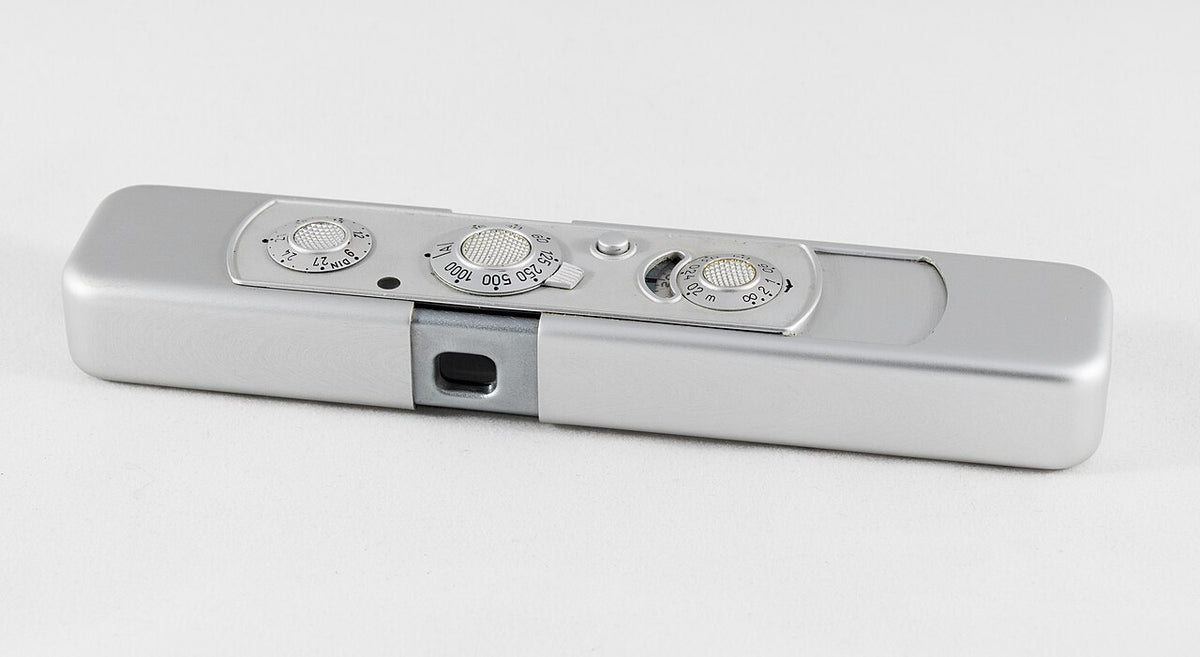
A camera hidden in a box of matches, a pack of cigarettes, or a watch: it's not just Hollywood. From the 1880s to the Cold War, manufacturers competed to miniaturize the camera. Some models were actually used by intelligence services; others were curiosities for amateurs. Here is the history of spy and miniature cameras, the models sought by collectors, and what you need to know before buying one.

The ancestors: "detective" cameras and watches
As early as the 1880s, the arrival of dry plates made it possible to photograph without a tripod. This led to the emergence of "detective" cameras, discreet boxes that did not look like cameras, and later models hidden in a hat, tie, book, or cane. At the beginning of the 20th century, cameras shaped like pocket watches, such as the Expo Watch Camera in the United States or the Ticka in England, caused a sensation. For historical context, read about early plate cameras.
The Minox, the most famous spy camera
Designed by Walter Zapp, the first Minox was manufactured from 1938 by VEF in Riga, Latvia. No larger than a finger, it used 8×11 mm film and could focus at very short distances, making it ideal for photographing documents. After the war, production resumed in West Germany. The Minox B (1958), with its built-in light meter, became the iconic camera of Cold War spies, both in reality and in films. Minox later also produced compact 35 mm cameras, such as the Minox 35.

World War II and the Cold War
During World War II, Kodak manufactured a camera disguised as a box of matches using 16 mm film for the OSS, the predecessor of the CIA. During the Cold War, intelligence services used Minoxes and other miniature cameras, sometimes hidden in everyday objects. The CIA Museum displays several of these cameras, including a Tessina concealed in a pack of cigarettes.

Models to know
| Camera | Era | Film | Feature |
|---|---|---|---|
| Expo Watch Camera, Ticka | Early 20th century | Small specific rolls | Pocket watch shape |
| Minox (Riga, then A, B, C…) | From 1938 | 8×11 mm | The ultimate spy camera |
| Kodak Matchbox | World War II | 16 mm | Disguised as a box of matches, for the OSS |
| Steky | Post-war Japan | 16 mm | Miniature with interchangeable lenses |
| Tessina | From 1960, Switzerland | 35 mm reloaded in special cassettes | Miniature reflex, spring-wound |
| Robot | Germany, 1930s | 35 mm, 24×24 format | Spring motor, burst shots |
Other miniatures, such as 110 format cameras, made small sizes accessible to everyone without being spy cameras. For small formats, also read our article on half-format cameras.
Collecting and using a miniature camera
- The film: Minox 8×11 mm film has become rare and expensive, and few labs develop it. Check before buying to photograph. The Tessina requires reloading 35 mm film into its cassettes, while the Robot takes standard 35 mm film in dedicated cassettes.
- The condition: miniature mechanics are fragile; a Minox that does not cock or has a dead light meter is common.
- Fakes: military "spy" cameras attract counterfeits and questionable "period" items. Be wary of spectacular provenance without proof, such as with {L('appareils-photo-sovietiques-russes','fake Leicas')}.
- The value: it depends on the model, condition, box, and accessories. See {a('appareils-photo-anciens-recherches','the most sought-after vintage cameras')} and {a('cote-prix-appareil-photo-occasion','how to assess a valuation')}.
And what about the law today?
Collecting a miniature camera is perfectly legal. However, photographing someone in a private place without their knowledge is punishable by the Penal Code (Articles 226-1 et seq.). A discreet camera does not change the rules: read our guide on the right to one's image before publishing photos of people.
Frequently Asked Questions
What camera did spies use?
The most famous is the Minox, used during the Cold War. Kodak also manufactured a camera disguised as a box of matches for the OSS, and other miniature cameras were hidden in objects.
Can you still find film for Minox?
8×11 mm film is still available from a few suppliers, but it is rare and expensive, and few labs develop it.
What is a detective camera?
A late 19th-century camera designed to be discreet, often a simple box or disguised object, usable without a tripod.
Is a vintage spy camera valuable?
Some models are sought by collectors; the value depends on the model, condition, and accessories.
Is it legal to use a hidden camera?
Owning a miniature camera is legal, but photographing a person in a private place without their consent is a crime.
Sources: Wikipedia: Minox; Wikipedia: Tessina; CIA Museum: Matchbox camera; Service Public: right to one's image.