










Lomography: definition, history, golden rules and cameras
Lomography explained: definition, history from the Lomo LC-A to the Lomographic Society, ten golden rules, cameras and tips for getting started.
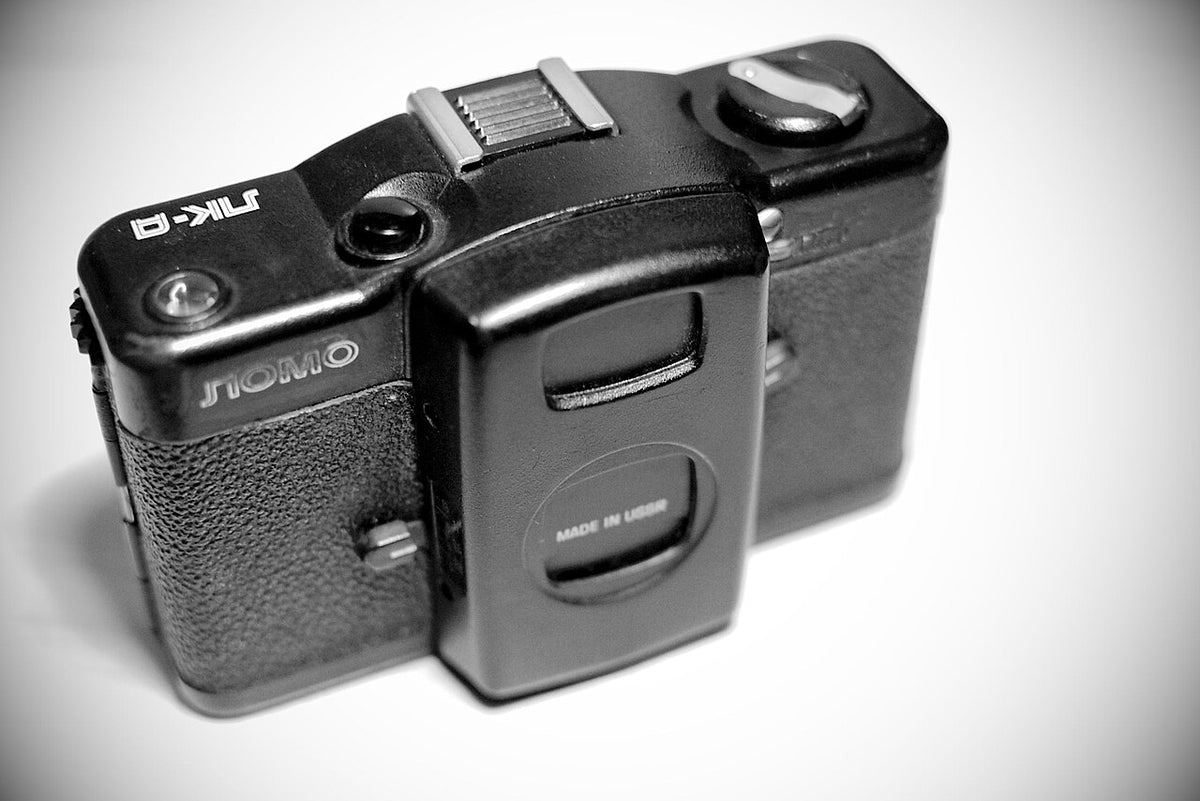
Saturated colors, dark corners, deliberate blur, crooked framing: lomography has turned photographic "mistakes" into a style. Born in the early 1990s around a small Soviet compact camera, it has largely contributed to the return of film. Here is its definition, its history, its golden rules, its cameras, and how to practice it.

Lomography: definition
The word refers to both a way of photographing (spontaneous, experimental, without worrying about technical perfection) and the Austrian company Lomography, which sells cameras, lenses, and film. The name comes from LOMO, the Leningrad (now Saint Petersburg) optics factory that manufactured the LC-A.
History: from Leningrad to Vienna
The Lomo LC-A was launched in 1984 in the Soviet Union, inspired by a Japanese compact camera. According to Lomography's account, in 1991, Viennese students discovered one in Prague and brought back photos with saturated colors and pronounced vignetting. Their enthusiasm led them to found the Lomographic Society International in Vienna in 1992, which published its manifesto and ten golden rules that same year. The movement spread through "wall" exhibitions featuring thousands of small photos, then became a brand. To see the LC-A in the context of Eastern European cameras, see Zenit, Praktica and Eastern European cameras.
The 10 golden rules
Summarized and freely translated, the ten rules published by the Lomographic Society:
- Take your camera everywhere you go.
- Use it at all hours, day and night.
- Lomography does not disrupt your life; it is part of it.
- Try to photograph without aiming, from the hip.
- Get as close as possible to your subject.
- Don't think.
- Be quick.
- You don't need to know what you have photographed in advance…
- … or afterwards.
- Don't worry about the rules.
Lomo cameras
| Camera | Type | What it brings |
|---|---|---|
| Lomo LC-A / LC-A+ | 35 mm compact with automatic exposure | Saturated colors, vignetting, the founding model |
| Diana / Diana F+ | Medium format plastic camera | Blur, light leaks, dreamy rendering |
| Holga | Medium format plastic camera | Toy camera aesthetic, sturdiness |
| Multi-lens cameras | 35 mm with 4 or 8 lenses | Image sequences in a single view |
| Recent cameras from the brand | Compact, instant, art lenses | Experimentation, creative film |

You don't need a camera from the brand to practice: any simple compact, disposable camera, or old box camera will do. See developing a disposable camera and Kodak cameras.
Practicing lomography
- Film: saturated color and slide film developed as negative (cross processing) are part of the aesthetic. See {a('pellicule-perimee','expired film')} for unpredictable colors.
- Effects: double exposure, colored flash, vignetting, light leaks. Our {pg('effets-creatifs','creative effects')} page details them.
- Mindset: lots of photos, little pressure, and accepting chance.
- When it goes wrong: learn to distinguish the intended effect from a real problem with {pg('clinique-photos-ratees','the clinic of failed photos')}.
To see the real rendering of these cameras, browse the online gallery of the Lomography community (photos protected by the copyright of their authors) on the Lomography website.
Lomography today
Lomography has become an international brand that produces cameras, lenses, and film, and runs a large online community. The movement has played a role in the renewed interest in film: see why film is making a comeback.
Frequently asked questions
What is lomography?
A spontaneous and experimental way of photographing, born around the Soviet Lomo LC-A compact camera, and the name of the Austrian brand Lomography.
Where does the word lomography come from?
From LOMO, the Leningrad optics factory that manufactured the LC-A. The movement was founded in Vienna in 1992.
Do you need a Lomography camera to do lomography?
No. Any simple, compact, disposable, or plastic camera allows you to adopt this mindset.
What are the rules of lomography?
Ten golden rules summarize the spirit: take your camera everywhere, photograph often, close up, without thinking, and don't worry about the rules.
Is the Lomo LC-A a good camera?
It is a simple, charming, and iconic compact camera. Its unique rendering is appealing, but it is not the most precise camera: that is precisely its charm.
Sources: Lomography – History; Lomography – The Lomography Manifesto.