










Photo Glossary: Over 100 Film, Digital, and Video Terms Explained
Film photography, digicam and camcorder terminology explained from A to Z, with links to our guides.
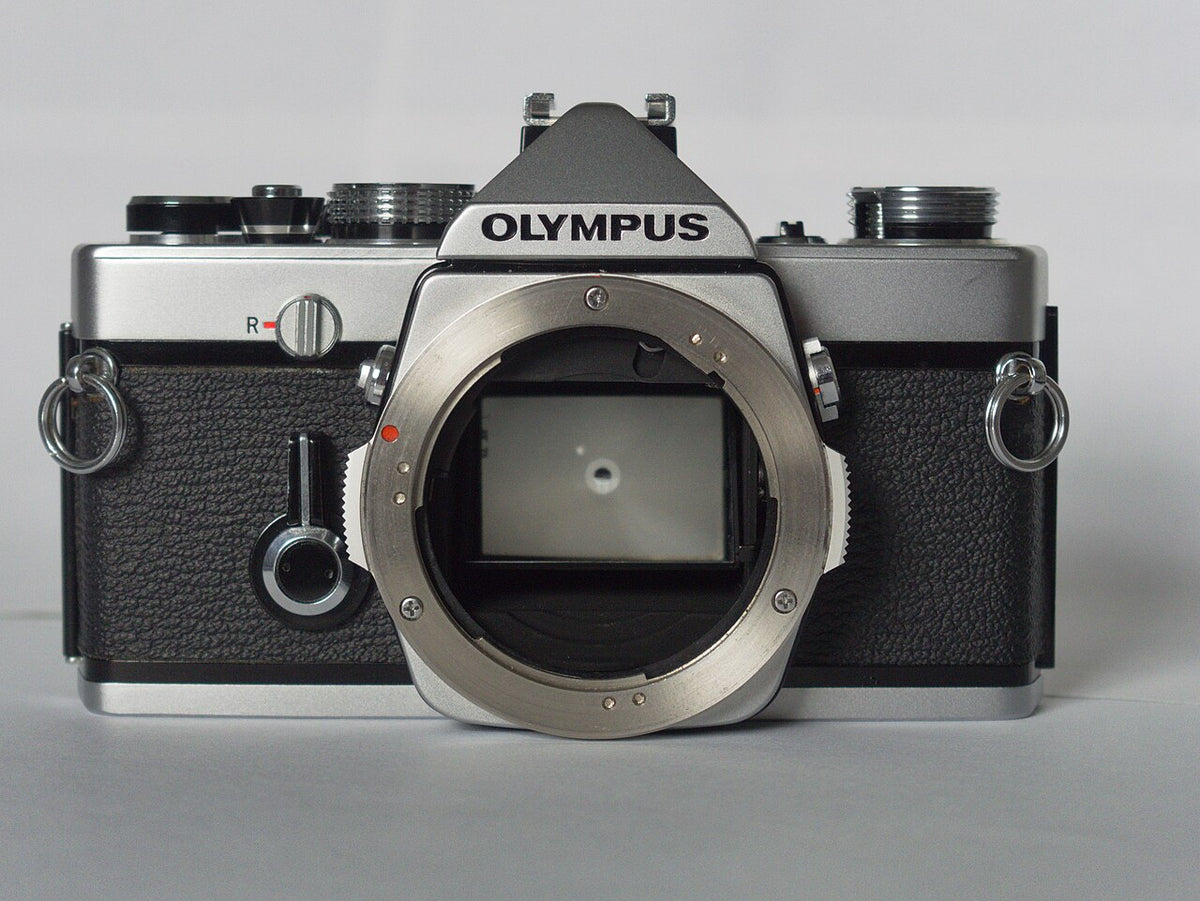
Aperture, DX code, CCD, MiniDV, xD, Sunny 16… Film photography, digicams and camcorders each have their own vocabulary. This glossary brings together over 100 simply explained terms, each with its relevant field (film, digital or video) and a link to our guides if you want to learn more.
Go to: A · B · C · D · E · F · G · H · I · J · L · M · N · O · P · R · S · T · V · X · Z

A
- Autofocus (AF) (Film / Digital)
- Automatic focusing. On 1980s-1990s film point-and-shoots, often activated by infrared; on digital cameras, by contrast or phase detection.
- Film leader (Film)
- The beginning of 35 mm film, cut with a tab, which is inserted into the take-up reel when loading. See loading film.
- APS (Advantix) (Film)
- Film format launched in 1996, smaller than 35 mm, with three image formats (C, H, P). The film is no longer manufactured.
- APS-C (Digital)
- Digital sensor size of approximately 23 × 15 mm, used by many SLRs and mirrorless cameras. It applies a crop factor of approximately 1.5 (1.6 on Canon) to focal lengths.
- ASA (Film)
- Former film sensitivity scale, equivalent to current ISO (100 ASA = 100 ISO).
B
- White balance (Digital)
- Digital setting that corrects the color of light (sun, cloud, light bulb) so that whites remain white. In film photography, this role is played by the choice of film (daylight or tungsten).
- Bayonet (Film / Digital)
- Lens mounting system with a quarter-turn (FD, F, K, OM, EF…), as opposed to screw mount (M42).
- Bokeh (Film / Digital)
- Quality of the background blur, related to the lens and its aperture.
- Bridge (Digital)
- Digital point-and-shoot with a large zoom and handling close to an SLR, without interchangeable lenses.
- Digital noise (Digital)
- Colored or grainy noise in a digital image, more visible at high sensitivity and on small sensors.
- Bulb (B exposure) (Film)
- Setting where the shutter remains open as long as the shutter button is pressed. Used for long exposures.
C
- C-41 (Film)
- Standard chemical process for developing color negatives, offered by the vast majority of labs.
- Sensor (Digital)
- Electronic component that replaces film in a digital camera. See CCD or CMOS.
- CCD (Digital)
- Type of sensor that dominated point-and-shoots until the late 2000s, sought after for the digicam look. See CCD or CMOS: what's the difference.
- Cell (built-in light meter) (Film)
- Device that measures light to suggest an exposure. Often powered by a button cell battery on film cameras. See what battery for my film camera.
- Fungus (Film / Digital)
- Filaments that grow in a lens stored in humidity. See maintaining a vintage camera.
- CMOS (Digital)
- Sensor type that is now universal, more power-efficient and faster than CCD.
- DX code (Film)
- Checkerboard pattern printed on the 35 mm cartridge that indicates its sensitivity to the camera, for automatic ISO setting.
- CompactFlash (CF) (Digital)
- Thick memory card format, used by early digital point-and-shoots and many SLRs. See memory cards.
- Expert compact (Digital)
- Digital point-and-shoot with a large sensor (1 inch or larger) and manual controls. See expert compact or digicam.
- Crop factor (coefficient) (Digital)
- Ratio between the diagonal of a 24 × 36 sensor and that of a smaller sensor; it "lengthens" the apparent focal length.
D
- Shutter actuations (counter) (Digital)
- Number of photos taken by a digital camera, an indicator of shutter wear on an SLR or mirrorless camera.
- Half-frame (Film)
- 18 × 24 mm image on 35 mm film: twice as many shots per roll (Olympus Pen, Kodak Ektar H35, Pentax 17).
- Development (Film)
- Chemical process that makes the latent image on film visible. See developing a disposable camera.
- Aperture (Film / Digital)
- Set of blades that adjusts the lens opening, expressed in f/ (f/2, f/2.8, f/4…).
- Digicam (Digital)
- Consumer digital point-and-shoot from approximately 1995-2012. See the complete digicam guide.
- Digital8 (Video)
- Digital camcorder format on Hi8 cassettes, launched by Sony in 1999.
- Slide film (Film)
- Reversible film that directly produces a positive image (E-6 process).
- Dynamic range (Film / Digital)
- Difference between the brightest and darkest areas that a film or sensor can record with detail.
E
- E-6 (Film)
- Color slide film development process, offered by fewer labs than C-41.
- Exposure (Film / Digital)
- Amount of light received by the film or sensor, set by aperture, shutter speed and sensitivity. See the exposure triangle.
- Multiple exposure (Film)
- Several images superimposed on the same frame.
F
- f/ (f-number) (Film / Digital)
- Aperture value: the smaller the number, the wider and brighter the lens.
- FireWire (i.LINK, IEEE 1394) (Video)
- Connection used to transfer video from MiniDV camcorders to a computer. See transferring your cassettes.
- Direct flash (Film / Digital)
- Flash directed at the subject, typical of the digicam look and party photos. See digicam settings.
- Focal length (Film / Digital)
- Optical distance expressed in millimeters (28, 35, 50 mm…) which determines the angle of view.
- 120 format (Film)
- Medium format film roll, without cartridge, for 6 × 4.5 to 6 × 9 cm images.
- 135 format (Film)
- Technical name for 35 mm film in a cartridge, for 24 × 36 mm images.
- 110 format (Film)
- Small film in a cartridge (13 × 17 mm images) for Pocket Instamatics.
G
- Grain (Film)
- Visible structure of the film image, more pronounced on high-sensitivity films and small formats.
- Wide-angle (Film / Digital)
- Short focal length lens (approximately less than 35 mm in 24 × 36) that captures a wide field.
H
- Hi8 (Video)
- Improved 8 mm analog camcorder format, launched in 1989.
- Hybrid (Digital)
- Mirrorless digital camera with interchangeable lenses and electronic viewfinder.
- Hyperfocal (Film / Digital)
- Focusing distance that provides the greatest depth of field up to infinity.
I
- Latent image (Film)
- Invisible image formed on the film before development.
- Instant camera (Film)
- Camera that produces a single print in a few minutes (Polaroid, Instax). See Polaroid or Instax.
- ISO (Film / Digital)
- Sensitivity of a film or sensor. See 200 or 400 ISO film.
J
- JPEG (Digital)
- Compressed image format produced by the camera, with its own color processing.
L
- Lab (Film)
- Laboratory that develops, scans and prints film. See our lab map.
- Exposure latitude (Film)
- Exposure margin of error that a film tolerates; wide for color negative, narrow for slide film.
- Lens error (Digital)
- Digital point-and-shoot error message when the retractable lens gets stuck. See checking a used digicam.
- Lomography (Film)
- Photography movement and Austrian brand founded in 1992 around simple and creative cameras.
M
- M42 (Film)
- 42 mm screw mount shared by Pentax, Praktica, Zenit, Fujica and others until the 1970s.
- Megapixel (Mpx) (Digital)
- One million pixels: measures the resolution of a sensor, not its image quality.
- Memory Stick (Digital)
- Sony memory card format (Duo, Pro Duo) used until around 2010. See memory cards.
- MiniDV (Video)
- Digital video cassette format launched in 1995. See vintage camcorders.
- Mirror (Film / Digital)
- Moving part of the SLR that reflects the image into the viewfinder and lifts when the shutter is released.
- Focusing (Film / Digital)
- Sharpness adjustment at a given distance: manual, zone, rangefinder or autofocus.
- Mount (Film / Digital)
- Interface between body and lens (FD, EF, F, K, OM, M42, E, X, RF…).
- Weather sealing foam (Film)
- Foam seals that prevent light from entering a film camera; they degrade over time.
- Medium format (Film)
- Film formats larger than 24 × 36, generally on 120 film.
N
- Negative (Film)
- Developed film where values (and colors) are inverted. See reading a negative.
- NiMH (Digital)
- AA or AAA rechargeable batteries, suitable for battery-powered digicams.
O
- Lens (Film / Digital)
- Set of lenses that forms the image; fixed or interchangeable, fixed focal length or zoom.
- Shutter (Film / Digital)
- Mechanism that lets light pass for the chosen duration: focal plane (SLR) or central leaf (point-and-shoots).
- Aperture (Film / Digital)
- Diaphragm diameter, expressed in f/; it adjusts the amount of light and depth of field.
P
- Parallax (Film)
- Offset between what is shown by the viewfinder of a point-and-shoot or rangefinder and what is captured by the lens, noticeable at close range.
- Film (Film)
- Light-sensitive photographic film. See choosing your film.
- Expired film (Film)
- Film whose recommended date has passed. See expired film.
- Full frame (Digital)
- 24 × 36 mm digital sensor, the size of a 35 mm film image.
- Point & shoot (Film / Digital)
- Automatic point-and-shoot.
- Light meter (Film)
- Device (or app) that measures light to set the exposure.
- Aperture priority (A, Av) (Film / Digital)
- Mode where you choose the aperture and the camera calculates the shutter speed.
- Shutter priority (S, Tv) (Film / Digital)
- Mode where you choose the shutter speed and the camera calculates the aperture (Canon AE-1).
- Depth of field (Film / Digital)
- Area of the image that appears sharp in front of and behind the focus point.
- Push / pull (Film)
- Expose and develop film at a higher (push) or lower (pull) sensitivity than its nominal value.
R
- RAW (Digital)
- Unprocessed digital file, not processed by the camera, to be developed on a computer.
- Reflex (SLR, DSLR) (Film / Digital)
- Camera with a mirror viewfinder through the lens; film (SLR) or digital (DSLR).
- Rewinding (Film)
- Returning the exposed film into its cartridge before opening the back.
- Refurbished (Film / Digital)
- Since the decree of February 17, 2022, a second-hand product can only be called "refurbished" if it has been tested for all its features and restored to working order if necessary; the terms "as new" or "new condition" are prohibited. See refurbished or second-hand.
S
- Scan (Film)
- Digitizing a negative or slide, often offered by the lab.
- SD, SDHC, SDXC (Digital)
- Secure Digital memory cards: SD up to 2 GB, SDHC up to 32 GB, SDXC beyond. Many old digicams only accept SD.
- Selenium (cell) (Film)
- Photoelectric cell that produces its own current: no battery required (Olympus Trip 35).
- Sensitivity (Film / Digital)
- See ISO.
- SmartMedia (Digital)
- Very thin memory card used by Fujifilm and Olympus in the late 1990s.
- Stabilization (Digital)
- System that compensates for camera shake, in the lens or in the body.
- Sunny 16 (Film)
- Exposure rule without a light meter: in bright sunlight, f/16 and a speed close to the reciprocal of the sensitivity. See Sunny 16.
- Flash sync (Film)
- Fastest usable speed with a flash on a curtain shutter (often 1/60 to 1/250 s).
T
- Rangefinder (Film)
- Focusing system by superimposing two images in the viewfinder (Leica M, Canonet, Olympus XA).
- Telephoto lens (Film / Digital)
- Long focal length lens that magnifies distant subjects.
- Print (Film / Digital)
- Image printed on paper from a negative or a file. See our printing guide.
- TLR (twin-lens) (Film)
- Camera with two stacked lenses, one for viewing and the other for taking photos (Rolleiflex, Yashica Mat).
- TTL (Film)
- "Through the lens": light measurement through the lens.
- Tungsten (Film)
- Incandescent light bulb light, warmer than daylight; some films are balanced for it.
V
- VHS-C (Video)
- Compact VHS cassette for camcorder, playable in a VHS VCR with an adapter.
- Video8 (Video)
- 8 mm analog camcorder format launched in 1985.
- Viewfinder (Film / Digital)
- Viewfinder window: optical, reflex (through the lens) or electronic.
- Shutter speed (Film / Digital)
- Shutter opening time (1/1000 s, 1/60 s, 1 s…).
X
- xD-Picture Card (Digital)
- Olympus and Fujifilm memory card (2002), replaced by SD around 2010.
Z
- Zone focusing (Film)
- Focusing by distance ranges (portrait, group, landscape), typical of simple compact cameras.
- Zoom (Film / Digital)
- Variable focal length lens; optical zoom maintains quality, digital zoom crops the image.
For more
- The complete guide to film photography
- The complete guide to digicams
- The camera brand guide
- Vintage camcorder: which one to choose
Frequently asked questions
What is the difference between ISO and ASA?
None in practice: ASA is the old American scale, adopted as is by the ISO standard. A 400 ASA film is a 400 ISO film.
What does f/2.8 mean on a lens?
It is its maximum aperture: the smaller the number, the more light the lens lets in.
What exactly is a digicam?
A consumer digital compact camera from the late 1990s to the 2010s, sought after for its rendering, often with a CCD sensor.
135 and 35 mm film, is it the same?
Yes: 135 is the technical designation for 35 mm film in a cartridge.