










200 or 400 ISO film: which one to choose?
200 or 400 ISO? What sensitivity changes, why 400 is ideal in a point-and-shoot camera, and which films to choose depending on the light.
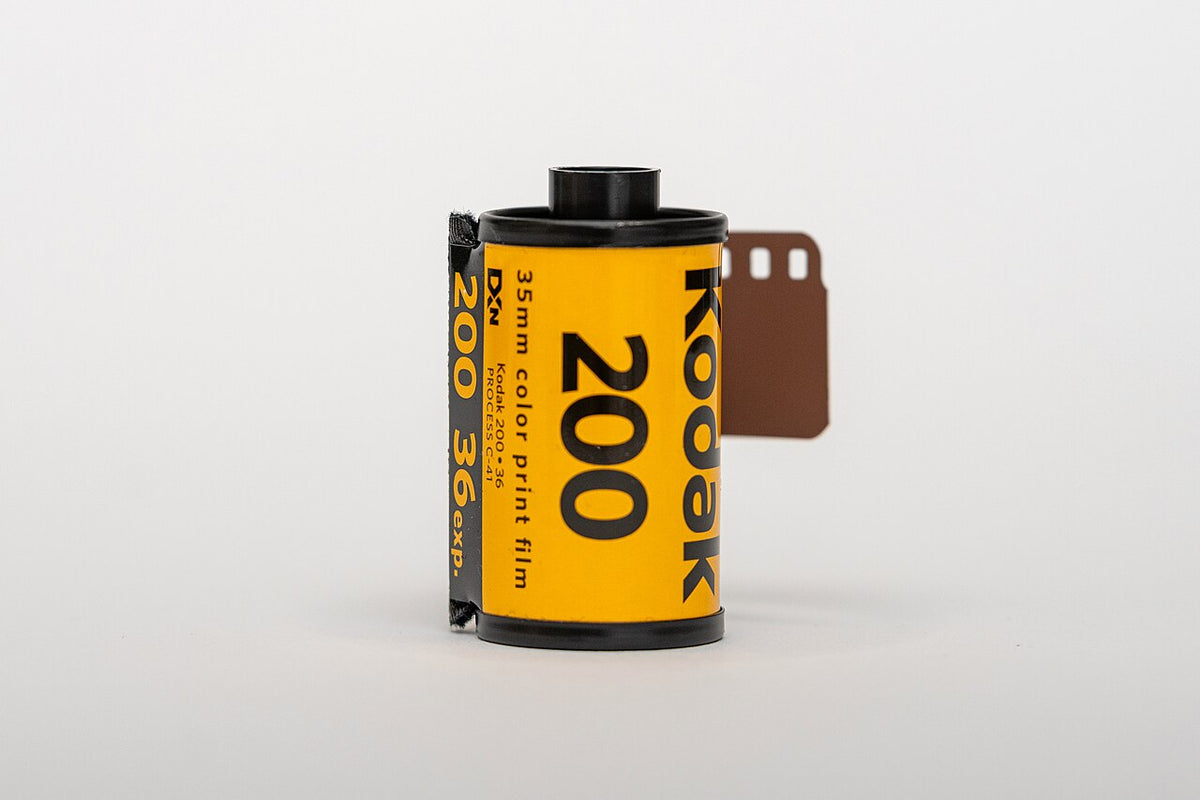
It's the first question you ask yourself when buying film: 200 or 400 ISO? The answer depends mostly on the light you'll encounter and your camera. Here's how to choose in one minute, and why 400 ISO is often the safest bet.
The verdict in 30 seconds
Take 200 ISO if…
- you mostly photograph in bright sunlight, in summer, at the beach;
- you want the finest grain possible;
- you're looking for the cheapest film.
Take 400 ISO if…
- the light changes often, or you photograph in the shade and indoors;
- your camera is a low-light compact;
- you want a single film for everything.
What ISO means
ISO sensitivity indicates how much the film reacts to light. 400 ISO is twice as sensitive as 200 ISO: it needs half as much light for a correctly exposed photo. We say there is one stop difference. In practical terms, your camera can use a shutter speed twice as fast, which limits camera shake blur, or close the aperture further for more depth of field.
To better understand the interaction between sensitivity, aperture, and shutter speed, try our exposure triangle simulator.
Why 400 ISO is ideal in a compact camera
Many automatic compact cameras have low-light lenses, especially zoom models. With 200 ISO, they trigger the flash more often or choose slow shutter speeds as soon as the light drops. 400 ISO gives them some leeway: in the shade, at the end of the day, or indoors in bright light, you'll more often get a sharp photo without flash.
Tip: automatic compact cameras read the sensitivity thanks to the DX code printed on the cartridge. You don't have to set anything, just load the film.
And the grain?
400 ISO has a slightly more visible grain than 200 ISO, but modern films have come a long way: on a scan or a standard-sized print, the difference often remains subtle. If you're specifically looking for pronounced grain, 400 ISO black and white is an excellent choice.
Films to know
| Sensitivity | Color | Black and white |
|---|---|---|
| 200 ISO | Kodak Gold 200, Fujifilm 200, Kodak ColorPlus 200 | Fomapan 200 |
| 400 ISO | Kodak UltraMax 400, Kodak Portra 400, Fujifilm 400 | Ilford HP5 Plus, Kodak Tri-X 400, Kentmere Pan 400 |
For a precise showdown, read our Kodak Gold 200 vs Portra 400 comparison. And to see the real results, our Choosing your film guide compares the main references.
If in doubt, take 400. It forgives almost everything.
The price
Consumer 200 ISO films are generally the cheapest. 400 ISO films range from budget, like UltraMax, to professional, like Portra. To calculate your costs, use our film photography cost guide.
Also read: What camera for an evening or a wedding? and What vintage camera to take on a trip?.
Also read: Fujifilm 200 and 400 films: characteristics, uses, and comparison.
Frequently asked questions
Can you use 400 ISO in bright sunlight?
Yes. Negative films handle slight overexposure very well, and most cameras reach fast enough shutter speeds to handle bright sunlight with 400 ISO.
Does 200 ISO work indoors?
Yes, but your camera will often use the flash. To photograph indoors without flash, prefer 400 ISO or higher.
And 800 ISO?
It's made for night, concerts, and dark interiors, with more pronounced grain. Kodak Portra 800 and CineStill 800T are the best known.
Cover photo: DYVER, via Wikimedia Commons, license CC BY-SA 4.0.