










The daguerreotype: history, operation, value and conservation
The daguerreotype explained: invention in 1839, how it works, how to distinguish it from an ambrotype or a tintype, value and preservation.
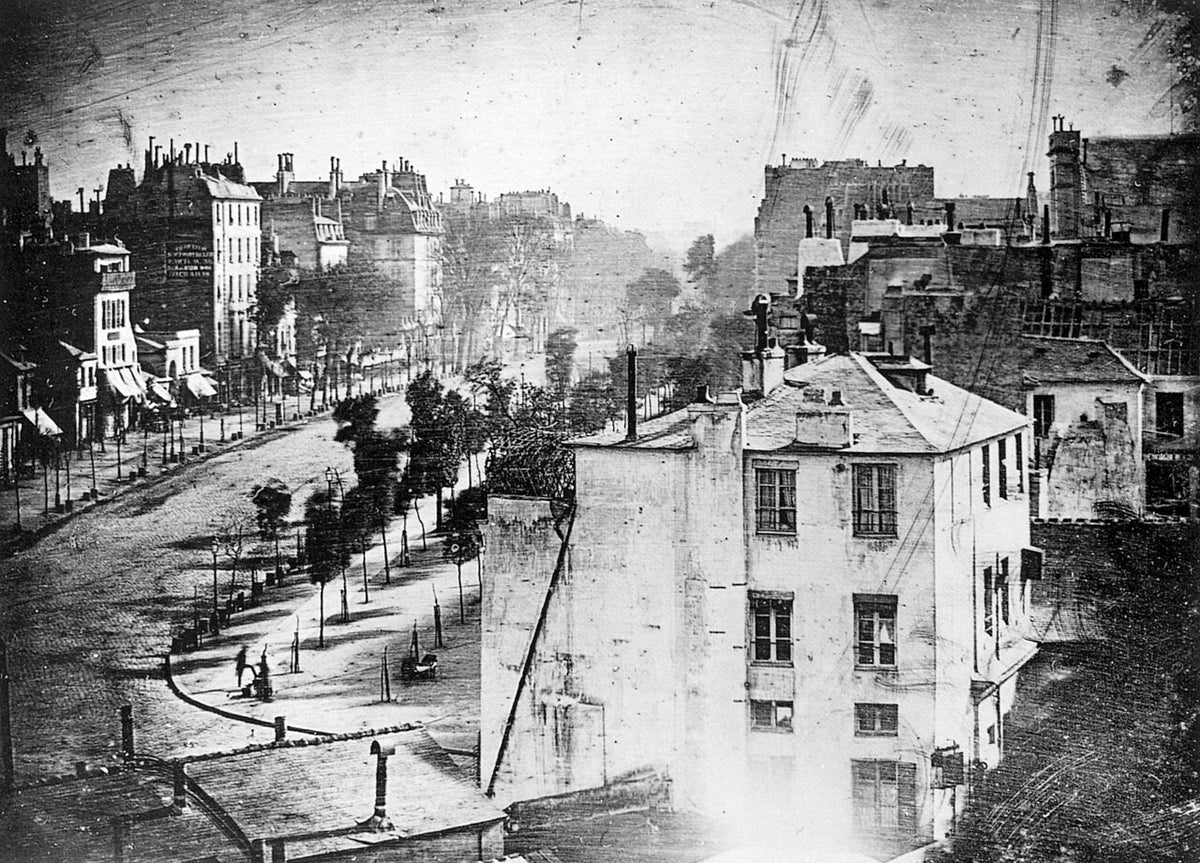
The daguerreotype was the first photographic process marketed worldwide. Presented in Paris in 1839, it produces a unique image of incredible detail on a silver-plated copper plate that shines like a mirror. Here is its history, how it works, how to recognize a genuine daguerreotype, and what you need to know about its value and preservation.

A French invention
After the first fixed image by Nicéphore Niépce (see the Bicentennial of Photography), Louis Daguerre, his partner, developed a much faster process. The scientist François Arago announced it to the French Academy of Sciences in January 1839, and the process was made public on August 19, 1839: the French government purchased it and offered it to the world in exchange for a pension paid to Daguerre and Niépce's son. The first cameras, built by Alphonse Giroux or Susse Frères, were large wooden boxes.

The daguerreotype enjoyed immense success in the 1840s and 1850s, especially for portraiture, before being superseded by collodion, the ambrotype, and paper prints.
How it works
- A silver-plated copper plate is polished to a mirror finish.
- It is sensitized with iodine vapors (then bromine to speed up the process).
- It is exposed in the camera: several minutes at first, then much less as lenses and chemistry improved.
- The latent image is developed using highly toxic mercury vapors.
- It is fixed, then often gold-toned to strengthen it, and placed under glass.
The result: a unique positive image, reversed left to right like a mirror image, impossible to reproduce except by re-photographing it.
Recognizing a daguerreotype
| Process | Support | How to recognize it | Era |
|---|---|---|---|
| Daguerreotype | Silver-plated copper | Mirror effect: the image appears positive or negative depending on the angle | 1839 – 1850s |
| Ambrotype | Glass | Positive image thanks to a black background, no mirror effect | 1850s – 1860s |
| Tintype | Black-varnished iron plate | Matte metal support, attracted by a magnet | 1850s to the early 20th century |
| Paper print | Paper | Paper texture, often mounted on cardboard | From the 1850s onward |

What is its value?
The value of a daguerreotype varies widely. It depends primarily on the subject (an anonymous portrait is much more common than a cityscape, a trade, or a famous person), the size of the plate, its condition (oxidation, scratches), the original case or frame, and the signature of a studio. For a serious appraisal, contact an auction house or an expert; our general method is in used camera values and prices.
Preserving a daguerreotype
- Do not open the package (glass, frame, plate): air damages the surface.
- Never clean the plate: the surface is so fragile that even touching it with a finger can erase the image.
- Store it flat, away from bright light, moisture, and temperature fluctuations.
- Digitize it using diffused light, tilting it slightly to avoid reflections.
- If it deteriorates, consult a photographic restorer.
Where to see them
The Nicéphore Niépce Museum in Chalon-sur-Saône, the French Museum of Photography in Bièvres, and many other museums display daguerreotypes and period cameras: see photography museums in France. For the rest of the story: the history of film photography and glass-plate cameras.
Also read: the history of color photography, from Maxwell to autochrome and Kodachrome.
Frequently Asked Questions
What is a daguerreotype?
The first photographic process marketed, made public in 1839: a unique image on a silver-plated copper plate, without a negative.
How can you tell if it is a daguerreotype?
Tilt it: a daguerreotype has a mirror effect, and the image appears positive or negative depending on the angle. An ambrotype (on glass) or tintype (on iron) does not have this effect.
How much is a daguerreotype worth?
It depends on the subject, size, condition, and case. A common anonymous portrait is worth much less than a rare view or a famous person: have an expert appraise it.
Who invented the daguerreotype?
Louis Daguerre, based on work conducted with Nicéphore Niépce. The process was presented by François Arago in 1839.
Can you still make daguerreotypes today?
Yes, a few artists still practice this process, but it requires significant expertise and precautions due to the toxic chemicals involved.