










History of color photography: from Maxwell to autochrome and Kodachrome
How photography evolved from black and white to color: Maxwell’s trichromy, the Lumière brothers’ autochrome, Kodachrome, C-41 negative film, and digital photography.
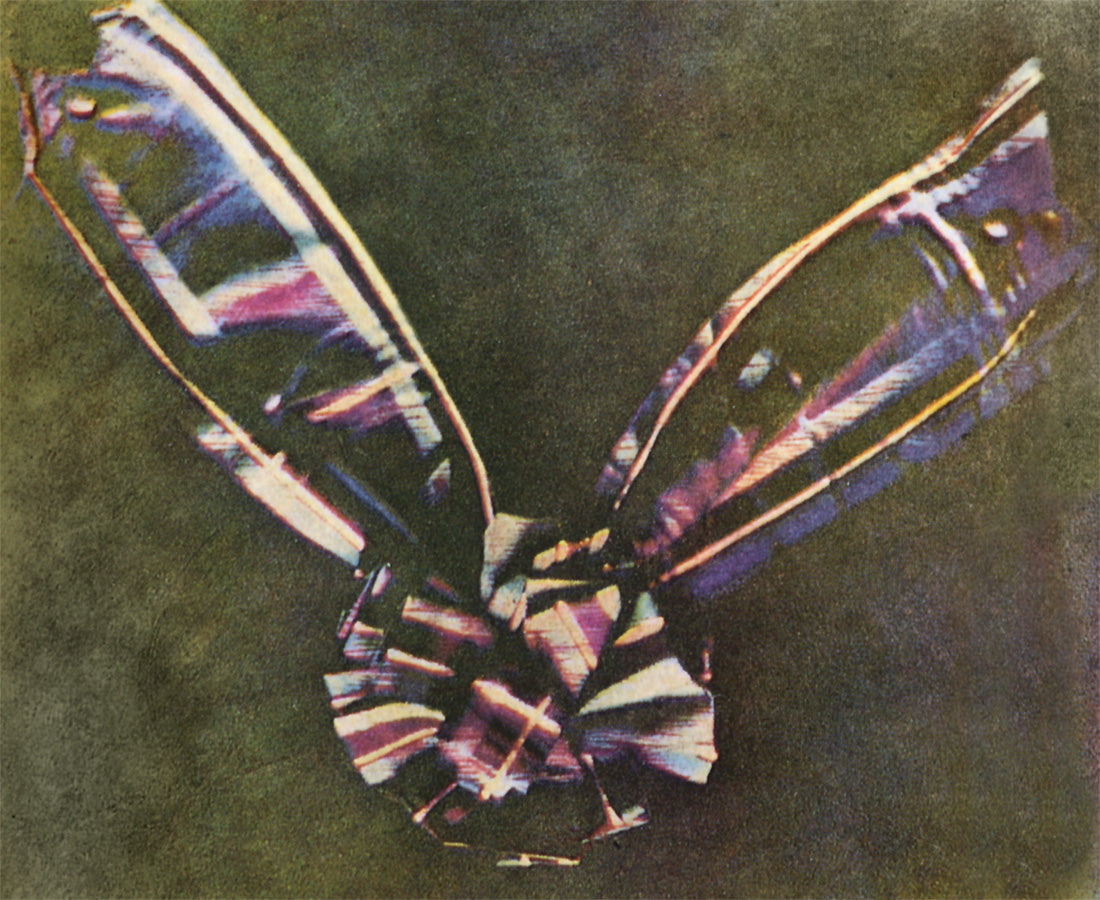
For nearly a century, photography was black and white. Achieving faithful colors required physicists' experiments, plates coated with potato starch, and multilayer films. Here is how we went from Maxwell's tartan ribbon in 1861 to the C-41 films you put in your camera today.
1861: Maxwell's trichromie
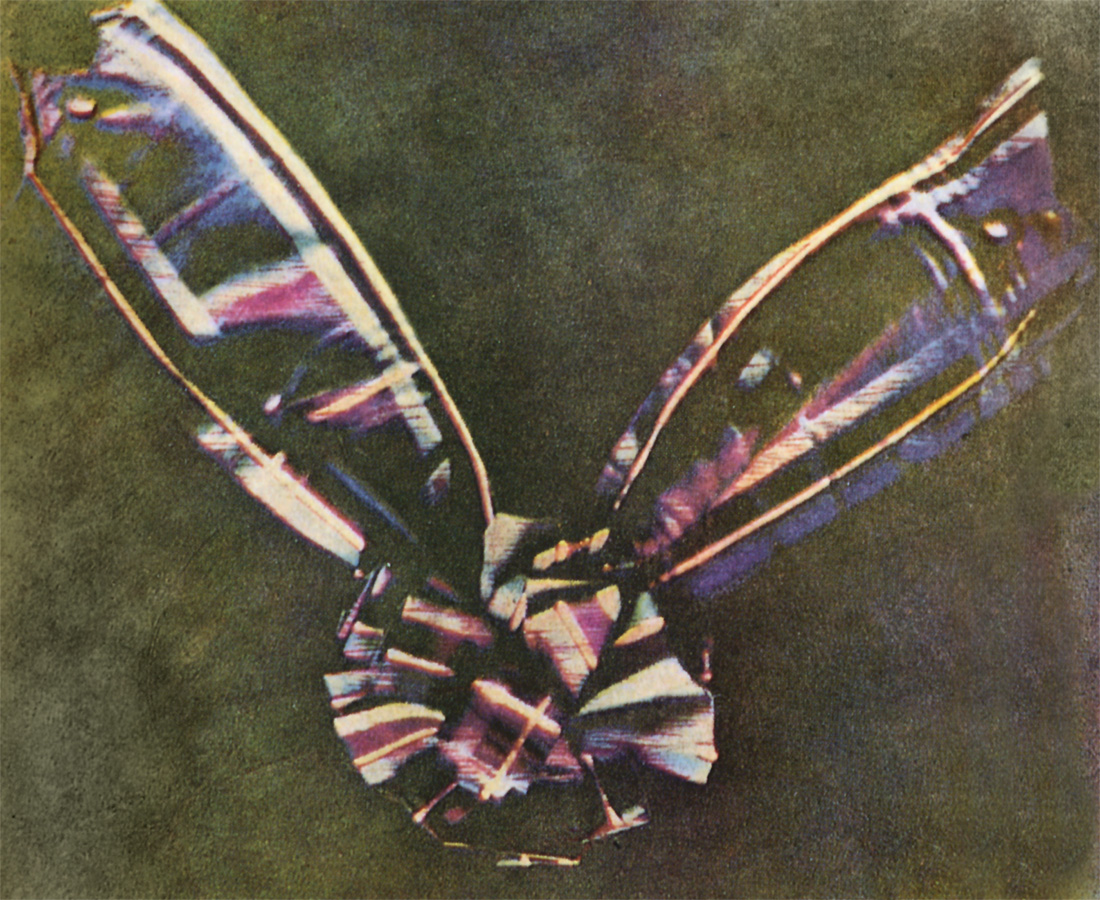
Scottish physicist James Clerk Maxwell wanted to prove that all colors could be recreated from three primary colors. With photographer Thomas Sutton, he photographed a tartan ribbon three times, through a red filter, a green filter, and a blue filter. The three black-and-white images were then projected on top of each other, each through its filter: the ribbon appeared in color. This is additive synthesis, the principle still used by screens and digital sensors.
Ducos du Hauron and subtractive color
In France, Louis Ducos du Hauron described another approach in the late 1860s: subtractive synthesis. Instead of adding lights, images tinted in cyan, magenta, and yellow (in modern terms) were superimposed, each absorbing part of the light. Charles Cros published similar ideas at the same time. This is the principle that would be used by almost all 20th-century color films and prints. At this stage, the processes remained very long and reserved for experimenters.
1907: the Lumière brothers' autochrome
The Lumière brothers, in Lyon, developed the autochrome, marketed in 1907. It is the first color photography process truly usable by the public. On a glass plate, a thin layer of potato starch grains tinted in orange, green, and purple served as a filter in front of a black-and-white emulsion. After reversible development, a unique positive image was obtained, to be viewed by transparency or projected.
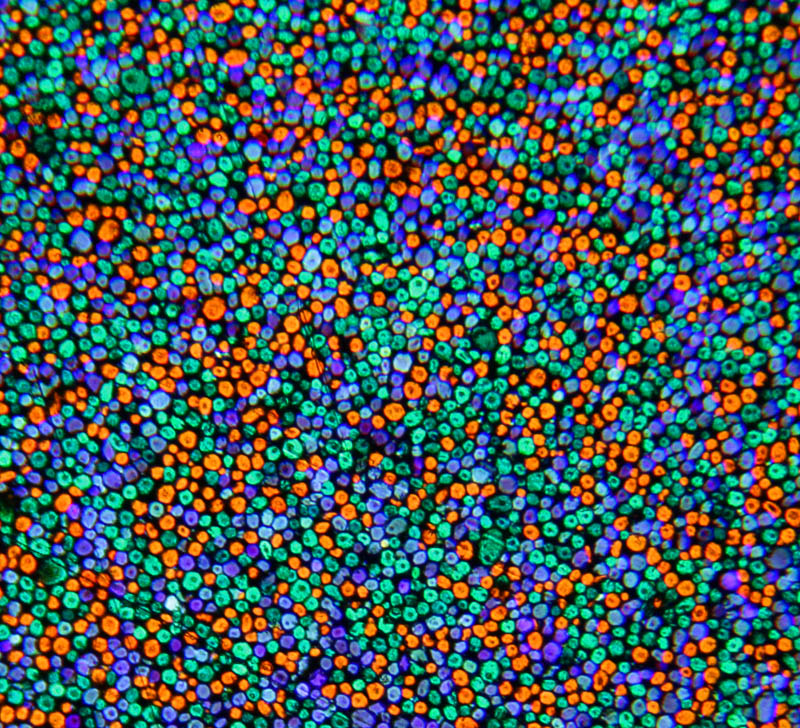
Exposure times were measured in seconds, or more: a tripod and still subjects were required. This did not prevent the autochrome from experiencing real success until the 1930s. Major collections, such as Albert Kahn's Archives of the Planet, kept at the Albert-Kahn Museum in Boulogne-Billancourt, show the world of the early 20th century in color. For older processes, read our article on the daguerreotype.

Kodachrome, Agfacolor: multilayer films
In the 1930s, color moved from glass plates to flexible film. Kodachrome, developed by Leopold Mannes and Leopold Godowsky for Kodak, was released in 1935 for amateur cinema, then in 35 mm for slides. It superimposed several layers sensitive to a color, each one. Its development is very complex: dyes are added during processing, which reserved it for specialized laboratories.
In 1936, the German Agfa launched Agfacolor Neu, whose chromogenic couplers were already incorporated into the film layers. Development became simpler, and this chromogenic principle then became standard in almost all color films, including Kodak's Ektachrome, a slide film that laboratories and amateurs could develop themselves. To understand this type of film, read our guide to slide film.

Kodachrome was discontinued in 2009, and the last laboratory that developed it stopped its processing at the end of 2010. A Kodachrome film found today can no longer be developed in color.
Color negative and C-41
Slide film gives superb images, but not easy prints. The color negative, launched by Kodak in the early 1940s under the name Kodacolor, allows for large numbers of paper prints. In 1972, Kodak introduced the C-41 development process, still used today. With the minilabs of the 1980s, color photography became the standard for family photos, and black and white became an artistic choice.
You can develop color negative yourself: follow our guide for developing C-41 film at home.
Instant color and digital
Polaroid launched Polacolor, its first instant color film, in 1963, then the complete SX-70 system in 1972: the image comes out of the camera and develops by itself. The whole history is in our Polaroid guide.
On the digital side, color relies on a return to Maxwell's principle: most sensors place a mosaic of red, green, and blue filters in front of the photosites, the Bayer filter, named after Kodak engineer Bryce Bayer who patented it in the 1970s. The processor then reconstructs the colors of each pixel. See the history of the digital camera.
What remains today
- C-41 color negative: the most common family (Kodak Gold, Portra, Fujifilm...). See our comparison {a('kodak-gold-200-vs-portra-400','Kodak Gold 200 or Portra 400')}.
- E-6 slide film: Kodak relaunched Ektachrome in 2018. Vivid colors, but demanding exposure.
- ECN-2 cinema films: cinema films adapted for photography, like the {a('cinestill-800t-avis','CineStill 800T')}.
- Instant color: Instax and Polaroid.
- Autochrome and Kodachrome: they are now only found in collections and museums. See our list of {a('musees-photo-france','photography museums in France')}.
Summary timeline
| Year | Stage |
|---|---|
| 1861 | Maxwell and Sutton: first color projection by trichromie |
| Late 1860s | Ducos du Hauron describes subtractive synthesis |
| 1907 | Lumière autochrome becomes available |
| 1935 | Kodachrome (amateur cinema, then 35 mm slide film) |
| 1936 | Agfacolor Neu, couplers incorporated into the film |
| 1940s | Kodacolor color negative, Ektachrome |
| 1963 | Polacolor, instant color |
| 1972 | C-41 process and Polaroid SX-70 |
| 1970s | Bayer filter for electronic sensors |
| 2009–2010 | End of Kodachrome and its development |
| 2018 | Return of Ektachrome |
For the overview, read our history of silver halide photography.
Frequently asked questions
What is the first color photo?
The tartan ribbon photographed in 1861 for James Clerk Maxwell by Thomas Sutton, with three red, green, and blue filters, is generally cited.
Who invented color photography?
Several inventors contributed: Maxwell for additive trichromie, Louis Ducos du Hauron and Charles Cros for subtractive synthesis, then the Lumière brothers with the autochrome, the first commercial process, in 1907.
When did color photography become common?
It spread after World War II with color negative, and became the standard for family photos in the 1970s and 1980s.
Can you still develop Kodachrome?
No, not in color: its processing stopped at the end of 2010. A found Kodachrome film can no longer be developed except in black and white by some labs.
What is an autochrome?
A glass plate covered with colored potato starch grains, which gives a positive image in color. Lumière brothers' process, marketed in 1907.
Sources: Wikipedia: Autochrome ; Wikipedia: Kodachrome ; Wikipedia: Agfacolor ; Wikipedia: Tartan Ribbon (Maxwell) ; Wikipedia: Bayer filter ; Albert-Kahn Museum.