










Slide film (E-6): Ektachrome, Velvia, Provia, the guide
Everything about slide film: how it differs from negative film, the E-6 films still being made, how to expose them, processing, scanning, and cross-processing.
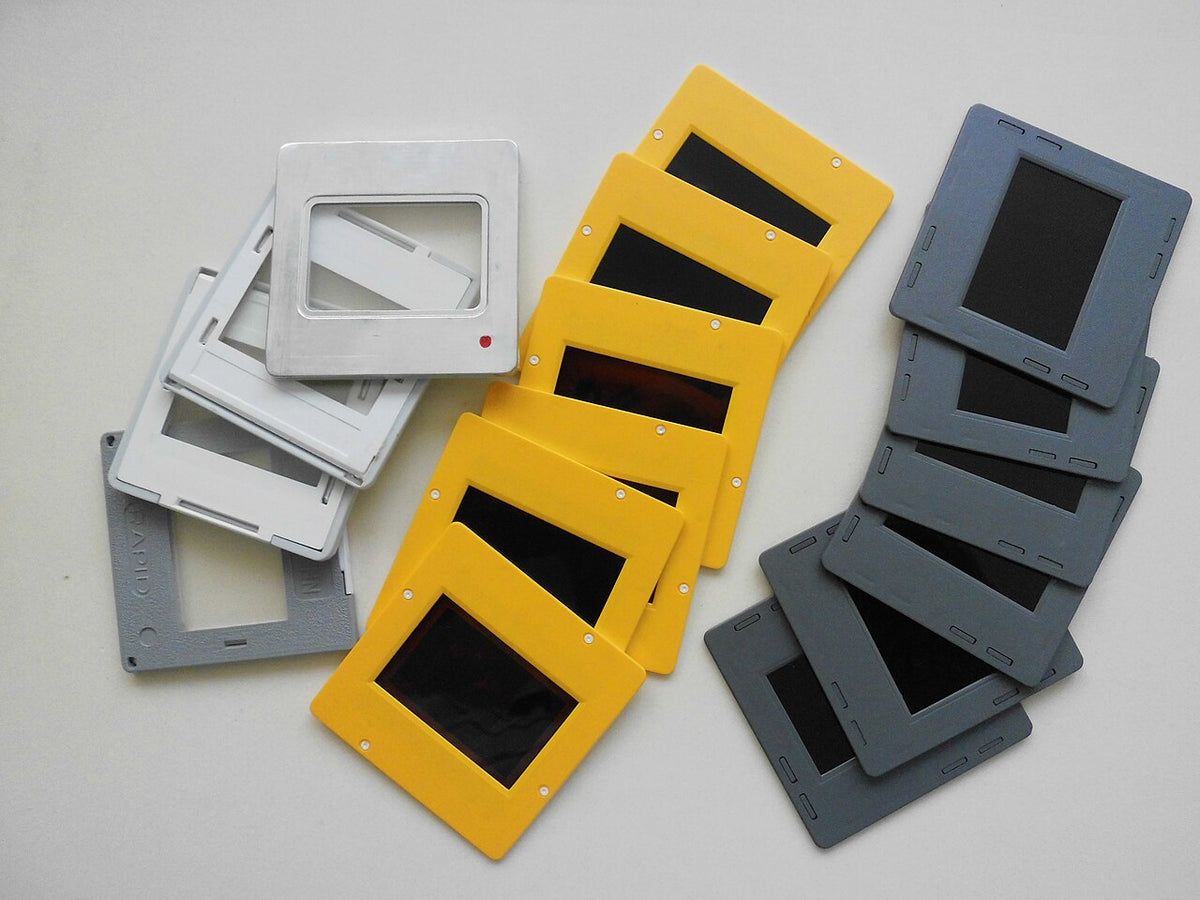
Reversal film (or slide film) produces a positive image directly: when you look at the film in the light, you see your photos in color, like on a light table. Its vibrant colors and sharpness made Kodachrome, Ektachrome, and Velvia legendary. But it allows for almost no exposure errors. Here are the films still being made, how to expose them, and where to get them developed.
Negative or slide: the difference
| Color negative (C-41) | Slide (E-6) | |
|---|---|---|
| Image on the film | Reversed, with orange mask | Positive, true colors |
| Exposure latitude | Wide, especially with overexposure | Very low: about half to one stop of margin |
| Contrast and saturation | Moderate | High |
| Processing | Everywhere, fast | Few labs, more expensive |
| Use | Versatile | Landscape, projection, high-quality scanning |

The slides still being made
| Film | Sensitivity | Rendering |
|---|---|---|
| Kodak Ektachrome E100 | 100 ISO | Accurate colors, fine, slightly cool |
| Fujifilm Velvia 50 | 50 ISO | Very high saturation, the landscape standard |
| Fujifilm Velvia 100 | 100 ISO | Saturated, slightly more sensitive than Velvia 50 |
| Fujifilm Provia 100F | 100 ISO | More neutral and versatile |
Kodak relaunched Ektachrome E100 in 2018 and has been distributing it directly since February 2026. Fujifilm still lists Velvia 50, Velvia 100, and Provia 100F among its films. The renderings described here are those announced by the manufacturers and generally observed; they vary with light and scanning.


How to expose a slide
- Measure the highlights: an overexposed slide is lost (blown-out whites). It is better to underexpose slightly than overexpose.
- Use a reliable light meter, ideally in spot or center-weighted metering. See our light meter and exposure meter guide.
- Avoid very high-contrast scenes: slide film does not cover as many stops as negative film.
- Bracket your important scenes (−½, 0, +½ EV).
- Set the correct sensitivity, without relying on the latitude like with negative film.
A fully automatic compact camera can work, but a camera with exposure compensation or manual mode gives you more control: see the best film SLR cameras.

Processing, mounting, and scanning
Slides are processed in E-6, a chemistry that few labs still offer. As of 30/10/2026, Labo Gris Souris charged €14.50 for E-6 135 film (€17.90 with mounting in cases) and €16.30 for 120 film. Turnaround times are often longer: up to 3 to 4 weeks at Photolix at the time of the survey. All the details in our film processing price comparison.
A slide can be projected or scanned. It produces excellent scans, without an orange mask to reverse, but requires a scanner capable of reading a high dynamic range. See scanning your negatives and slides yourself.
Cross-processing
Processing a slide in C-41 (the negative process) produces very saturated and shifted colors, with high contrast: this is "cross-processing". Always tell your lab; some offer it at no extra cost.
Want to see more images? Browse the most popular photos taken on Kodak Ektachrome E100 on Lomography (Lomography community gallery, photos protected by the copyright of their authors).
Want to see more images? Browse the most popular photos taken on Fujifilm Velvia 50 on Lomography (Lomography community gallery, photos protected by the copyright of their authors).
Frequently asked questions
Can you get a slide developed at any lab?
No: you need a lab that processes E-6. Many labs send it out to a subcontractor, with a longer turnaround time.
Which slide film should I start with?
Ektachrome E100 or Provia 100F, which are more versatile than Velvia 50, which is very saturated.
Does slide film forgive mistakes?
Very little: about half to one stop of margin, especially with overexposure.
Can you push slide film?
It is possible at some labs, but rarely offered; see our push/pull guide.
Why do slides cost more?
Production is more limited and E-6 processing is rarer and more expensive than C-41.
Sources: Kosmo Foto – Ektachrome E100 distribution (2026); Fujifilm – negative and reversal films; Labo Gris Souris – prices.