










The best used film SLRs: our ranking by profile
Pentax K1000, Nikon FM2, Canon AE-1, Minolta X-700, Olympus OM-1, Nikon F3… the best used film SLR cameras ranked according to your profile.
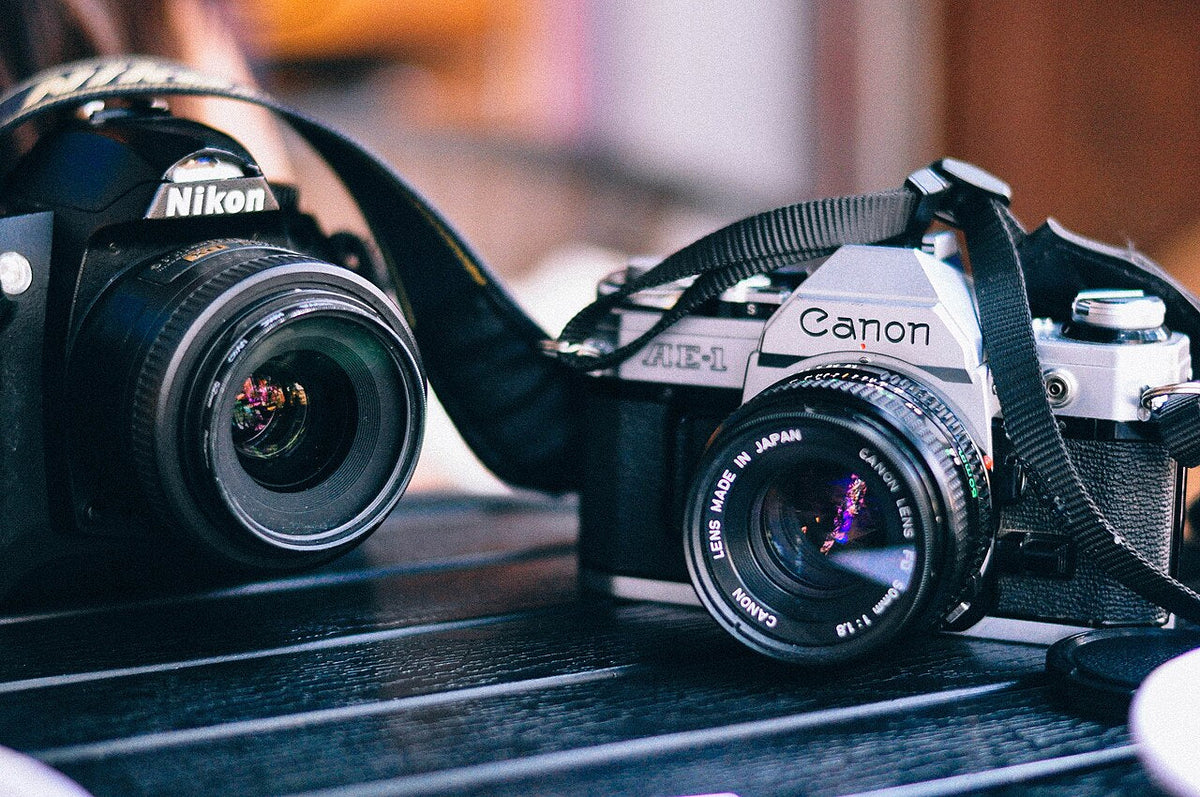
Which film SLR should you buy second-hand? There are hundreds, but about a dozen models contain the essentials: robust, easy to have serviced, with an abundant range of lenses. We have categorized them by profile rather than a single rating, because the best SLR for learning is not the best for shooting quickly. Each model links to our full review.
The verdict in 30 seconds
Our choices
- For learning: Pentax K1000 or Nikon FM2, 100% mechanical.
- For easy shooting: Minolta X-700 or Canon AE-1 Program, with program mode.
- For a lightweight companion: Olympus OM-1 or Pentax ME Super.
- For an indestructible pro body: Nikon F3.
Keep in mind
- An electronic SLR does not fire (or almost never) without a battery.
- The lens matters as much as the body: a clean 50 mm is essential.
- On a 40 or 50-year-old camera, the actual condition matters more than the model.

The comparison table
| SLR | Release | Automation | No battery? | Mount | Ideal for |
|---|---|---|---|---|---|
| Pentax K1000 | 1976 | None (manual) | Yes (battery for the cell only) | Pentax K | Learning, small budget |
| Canon AE-1 | 1976 | Shutter priority | No | Canon FD | Getting started with a little help |
| Canon AE-1 Program | 1981 | Program + shutter priority | No | Canon FD | Shooting without thinking |
| Canon A-1 | 1978 | Program, shutter and aperture priorities | No | Canon FD | Doing everything with a single body |
| Nikon FM2 | 1982 | None (manual) | Yes | Nikon F | Robustness, 1/4000 s speed |
| Nikon FE | 1978 | Aperture priority | No (except mechanical M90 speed and B exposure) | Nikon F | Simple and reliable automation |
| Nikon F3 | 1980 | Aperture priority | No (except backup mechanical speed) | Nikon F | Pro, 100% viewfinder |
| Olympus OM-1 | 1972 | None (manual) | Yes | Olympus OM | Compactness, huge viewfinder |
| Olympus OM-10 | 1979 | Aperture priority (manual with adapter) | No | Olympus OM | Small budget, lightweight |
| Pentax ME Super | 1979 | Aperture priority + manual | No (except 1/125 s and B exposure) | Pentax K | Small, lightweight, versatile |
| Minolta X-700 | 1981 | Program, aperture priority, manual | No | Minolta MD | Simplicity of P mode |
A "no battery" SLR can fire at all speeds without a battery: only the cell turns off. Practical for travel or extreme cold. You can then expose using the Sunny 16 rule.
The best SLRs for learning
Pentax K1000: the school camera
Entirely mechanical, without any automation, the K1000 forces you to understand every setting. A needle in the viewfinder guides you, and the rest depends on you. K mount with a huge choice of lenses. Read our review of the Pentax K1000.
Nikon FM2: the high-end mechanical

Same philosophy as the K1000, but with a more robust construction, a maximum speed of 1/4000 s and the Nikon F mount, compatible with decades of lenses. A body you keep for a lifetime. Our review of the Nikon FM2.
Olympus OM-1: the most compact
Smaller and lighter than its competitors of the time, with a very bright viewfinder. Its cell was designed for a mercury battery: see our guide of film batteries. Our review of the OM-1.
The best SLRs with automation
Canon AE-1 and AE-1 Program
The most popular film SLR. The AE-1 offers shutter priority; the AE-1 Program adds a fully automatic program mode. Both depend on their 6 V battery. We compare them in AE-1 vs AE-1 Program.
Minolta X-700: the simplest P mode
Program, aperture priority or manual: the X-700 covers everything, with a clear viewfinder and renowned and affordable Rokkor lenses. Our review of the Minolta X-700.
Canon A-1: the Swiss Army knife
Five exposure modes as early as 1978, digital display in the viewfinder: the A-1 was a concentrate of technology. Our review of the Canon A-1.
Pentax ME Super and Olympus OM-10: the featherweights
Two small and light aperture priority SLRs, perfect for travel. The ME Super also offers a manual mode by buttons; the OM-10 requires an adapter for manual. Our review of the Pentax ME Super.
The pro SLR: Nikon F3

100% interchangeable viewfinder, aperture priority, reportage construction and backup mechanical speed: the F3 accompanied professional photographers for two decades. Our review of the Nikon F3.
And the autofocus SLRs?
The autofocus SLRs from the 1990s-2000s (Canon EOS 300 or 500N, Nikon F80, Nikon F100, Minolta Dynax) are often cheaper than the mechanical ones from the 70s-80s and accept recent autofocus lenses. They are bulkier and entirely electronic, but very practical for photographing children or sports. The Canon EF and Nikon AF lenses you buy today will also work on a digital body of the same brand.
How to choose: our 4 questions
- Do you want to learn or just photograph? Learning: manual mechanical. Photographing: an automatic mode.
- Which mount? Nikon F offers the greatest compatibility with current lenses; Canon FD, Minolta MD and Olympus OM have vintage lenses at a good price; Pentax K is very open.
- What weight? OM-1, ME Super and OM-10 are significantly lighter than an F3.
- What condition? Check the foams, the cell, the slow speeds and the lens. Our second-hand purchase checklist details each point.
Are you still hesitating between an SLR and a compact? Read compact or film SLR: what to choose. And for the first roll, our guide what film camera to start with completes this ranking.
All cameras sold by Vibes Photo are checked before being put on sale and covered by a six-month commercial warranty, in addition to legal warranties. The details are in our general terms and conditions of sale.
Frequently asked questions
What is the best film SLR to start with?
The Pentax K1000 or the Nikon FM2 if you want to learn exposure; the Canon AE-1 Program or the Minolta X-700 if you want an automatic mode to start gently.
Which film SLR works without a battery?
The mechanical SLRs: Pentax K1000, Nikon FM2, Olympus OM-1, Pentax MX. The battery only powers the cell. The Nikon FE, the Pentax ME Super and the Nikon F3 have a backup mechanical speed.
Which mount to choose?
Nikon F for compatibility, Canon FD, Minolta MD and Olympus OM for affordable vintage lenses, Pentax K for choice. FD, MD and OM lenses also adapt very well to digital hybrids.
Is a film autofocus SLR worth it?
Yes for shooting quickly or moving subjects, often at a low price. But it is bigger, more electronic and less durable than a mechanical one.
Should you have a second-hand film SLR serviced?
A check is recommended: foams, cell, speeds, viewfinder cleanliness. Our cameras are checked in the workshop and guaranteed for six months.
Sources: camera-wiki.org – Pentax K1000 ; camera-wiki.org – Nikon FE ; camera-wiki.org – Olympus OM-10 ; camera-wiki.org – Canon AE-1 Program.