










The best compact film cameras: our selection by budget
From affordable compacts to premium icons: the best film compact cameras ranked by range, with their strengths and our detailed reviews.
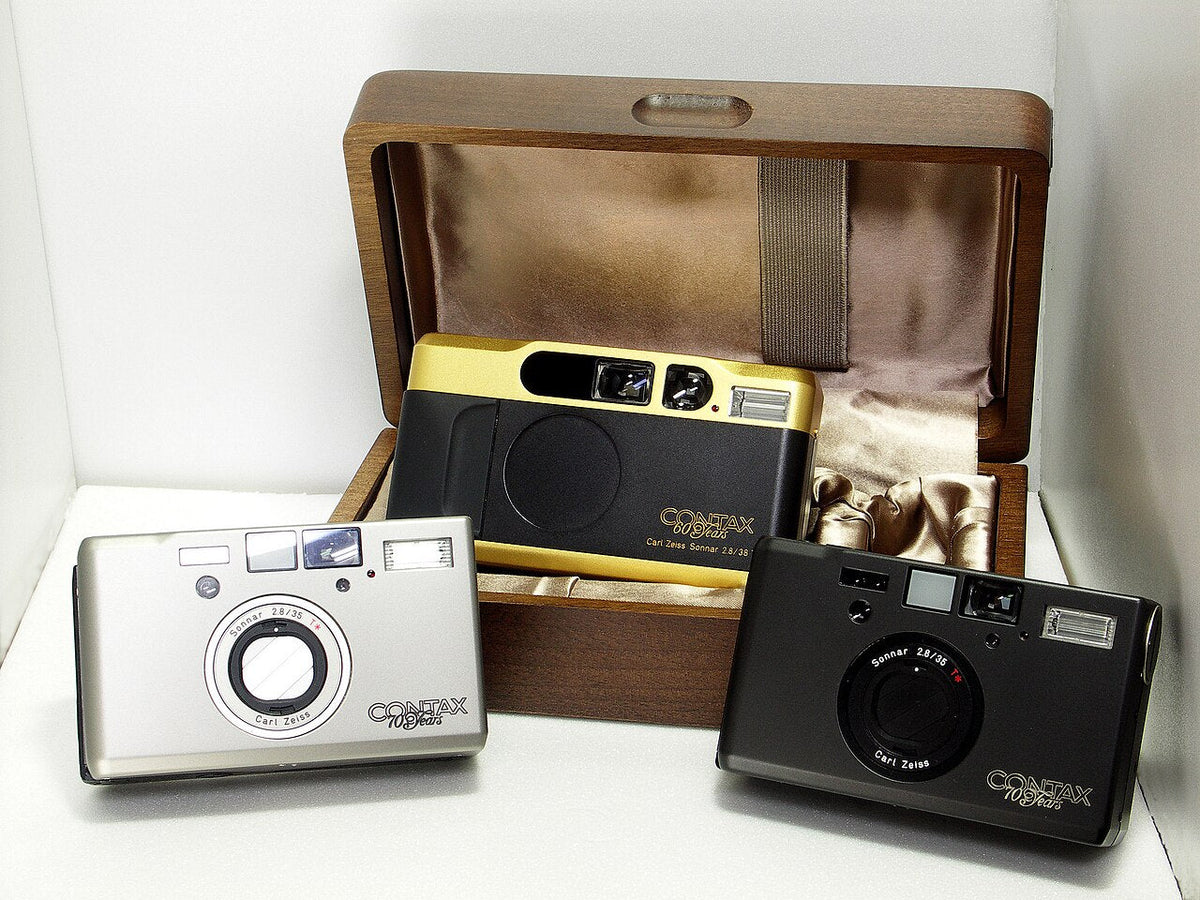
Film point-and-shoots are back in fashion, and their prices along with them. Good news: you don't need to aim for a Contax T2 to take great photos. We have ranked the best film point-and-shoots in three budget ranges (affordable, mid-range, premium), explaining what each one does better than the others. Each model links to our review or detailed comparison.
The verdict in 30 seconds
Our choices
- Best value for money: Konica Big Mini or a Canon Prima / Sure Shot.
- Most versatile: the Olympus Mju II, bright and splash-resistant (Mju II vs T4).
- Most original: the Olympus XA, a true pocket rangefinder.
- The premium: Contax T2, Ricoh GR1, Minolta TC-1.
Good to know
- Prices follow fashion more than optical quality: a less publicized point-and-shoot often performs just as well.
- Point-and-shoots are electronic: a screen or motor failure is rarely repairable.
- A point-and-shoot bought tested and guaranteed avoids unpleasant surprises.

The comparison table
| Point-and-shoot | Lens | Focusing | Range | Strength |
|---|---|---|---|---|
| Olympus Trip 35 | 40 mm f/2.8 | Zones | Affordable | No battery required |
| Canon Prima / Sure Shot | Depending on the model (prime or zoom) | Autofocus | Affordable | Wide choice, reliable |
| Nikon L35AF | 35 mm f/2.8 | Autofocus | Affordable to mid-range | Reputable fast lens, AA batteries |
| Konica Big Mini | 35 mm f/3.5 | Autofocus | Mid-range | Sharpness, close-up focusing |
| Olympus Mju I | 35 mm f/3.5 | Autofocus | Mid-range | The Mju style at a lower price |
| Olympus XA | 35 mm f/2.8 | Manual rangefinder | Mid-range | Aperture priority, tiny |
| Yashica Electro 35 | 45 mm f/1.7 (GSN) | Manual rangefinder | Mid-range | Very bright, retro look |
| Olympus Mju II | 35 mm f/2.8 | Autofocus | Mid-range to premium | Bright, lightweight, splash-resistant |
| Yashica T4 / T5 | Zeiss Tessar 35 mm f/3.5 | Autofocus | Premium | Zeiss signature |
| Ricoh GR1 | 28 mm f/2.8 | Autofocus | Premium | Reference wide-angle for street photography |
| Minolta TC-1 | 28 mm f/3.5 | Autofocus | Premium | Titanium, tiny format |
| Contax T2 | Zeiss Sonnar 38 mm f/2.8 | Autofocus + manual | Premium | Titanium, photographer settings |
| Kodak Ektar H35 | 22 mm f/9.5 (half-frame) | Prime | New, affordable | 72 shots per roll, new |
Affordable point-and-shoots
Olympus Trip 35: the battery-free classic
Its selenium cell surrounding the lens powers it: no battery. Focusing is done by zones (portrait, group, landscape). Perfect for those who accept a little method. Our review of the Trip 35.
Canon Prima / Sure Shot: the safe bet
Dozens of autofocus models, from the simplest to zooms. Reliable and often affordable, provided you choose well. Which Canon Prima to choose?
Nikon L35AF: the family Nikon
Nikon's first autofocus point-and-shoot (1983), with a reputable 35 mm f/2.8 and easy-to-find AA batteries. A little bigger than 1990s point-and-shoots, but very endearing.
Mid-range point-and-shoots

Konica Big Mini: the well-kept secret
A very sharp 35 mm f/3.5, close-up focusing and a tiny body. Cheaper than the "star" point-and-shoots for a comparable daytime result. Our review of the Konica Big Mini.
Olympus XA: the pocket rangefinder
Manual rangefinder focusing, aperture priority, 35 mm f/2.8: a true photographer's camera in a sliding case. Our review of the Olympus XA.
Yashica Electro 35: the brightest lens
Bigger than a modern point-and-shoot, but its 45 mm f/1.7 does wonders in low light. Our review of the Yashica Electro 35.
Olympus Mju I and Mju II
The Mju II (35 mm f/2.8, splash-resistant) is the ultimate everyday point-and-shoot; the Mju I (f/3.5) offers the style for less. Comparison: Mju I vs Mju II.
Premium point-and-shoots
Yashica T4 and T5
The Carl Zeiss Tessar 35 mm f/3.5 lens made its legend. The T5 (T4 Super) adds weather sealing and a waist-level viewfinder. Our review of the Yashica T4 / T5.
Ricoh GR1 and Minolta TC-1: the wide-angles
Two high-end 28 mm point-and-shoots, praised for street photography. On the GR1, check for haze in the lens and the condition of the screen. Comparisons in Contax T2 alternatives.
Contax T2: the icon
Titanium body, Zeiss Sonnar 38 mm f/2.8, aperture ring and manual focusing possible. The most desirable... and the most expensive. Our review of the Contax T2 and Contax T2 vs Yashica T4.
Why these price differences between point-and-shoots with similar results? We explain it in why film point-and-shoots are so expensive.
How to choose your film point-and-shoot
- Aperture: f/2.8 allows you to photograph indoors without flash much more often than f/3.5.
- Focal length: 35 mm for everyday, 28 mm for street and landscape, 38-40 mm for portrait.
- Focusing: autofocus for simplicity, rangefinder or zones for control.
- Flash: a detachable flash is essential if you want evening atmospheres (see party cameras).
- Battery: CR123A, CR2 or AA depending on the model; some are more expensive or rarer.
Still undecided between point-and-shoot and SLR? Read film point-and-shoot or SLR. For travel, our selection of cameras for travel completes this ranking.
All cameras sold by Vibes Photo are checked before being put on sale and covered by a six-month commercial warranty, in addition to legal warranties. Details are in our general terms and conditions of sale.
See our film point-and-shoots →
Frequently asked questions
What is the best film point-and-shoot?
There is no absolute best: the Olympus Mju II is the most versatile, the Contax T2 the most high-end, the Konica Big Mini the best value for money during the day, the Olympus XA the most original.
What film point-and-shoot to start with?
A simple autofocus point-and-shoot: Canon Prima / Sure Shot, Konica Big Mini or Olympus Mju. They set the focus and exposure alone.
Does a cheap film point-and-shoot take good photos?
Yes, especially during the day: the film and the light matter as much as the lens. f/2.8 point-and-shoots are more comfortable indoors.
What film point-and-shoot without a battery?
The Olympus Trip 35, thanks to its selenium cell. Most other point-and-shoots need a battery to work.
Are film point-and-shoots repairable?
Simple mechanical failures yes, electronic failures much less: parts are no longer manufactured. Hence the interest in a tested and guaranteed camera.
Sources: camera-wiki.org – Nikon L35AF; camera-wiki.org – Ricoh GR1; camera-wiki.org – Minolta TC-1; Wikipedia – Contax T.