










Film zoom compact: good deal or trap?
What you need to know about zoom film point-and-shoots: their limited aperture, the film to choose, and the model families.
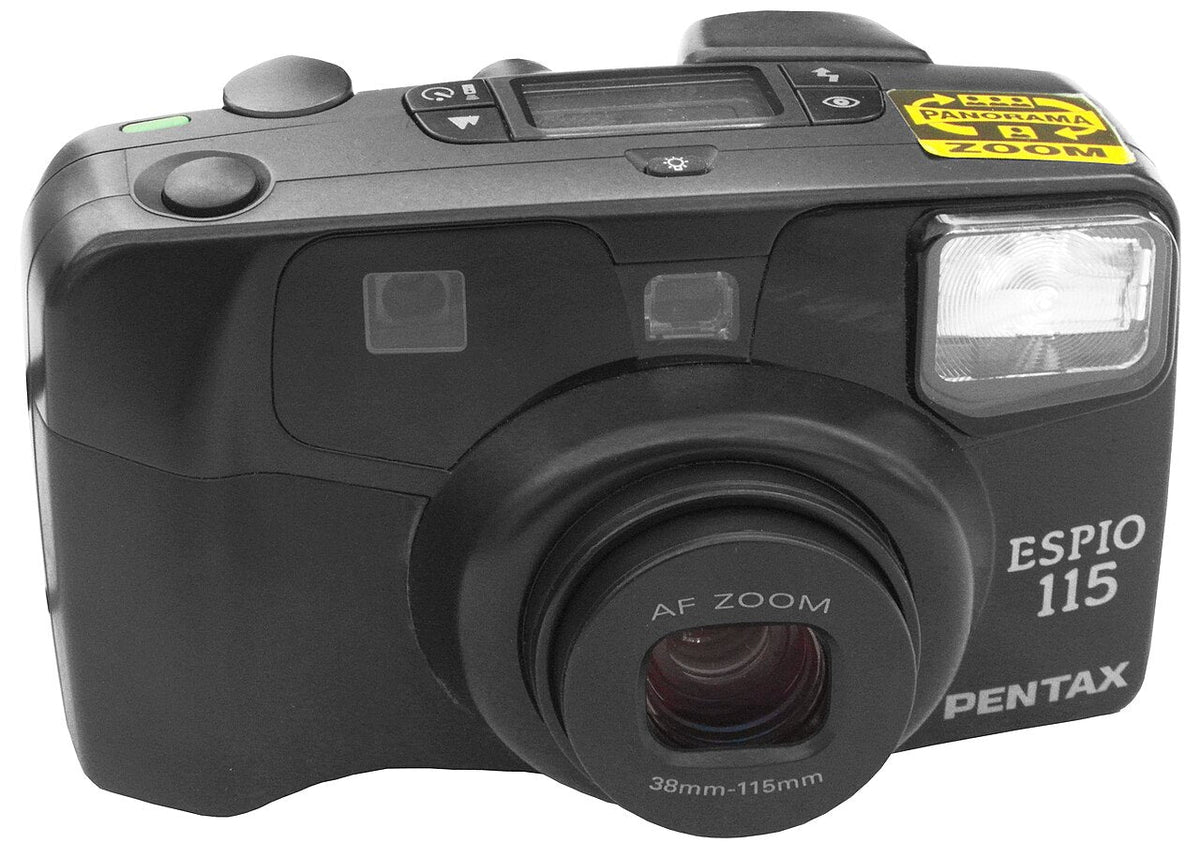
Zoom film cameras flooded store shelves in the 1990s: a single pocket-sized camera for both landscapes and portraits. Today, they are often much cheaper than highly sought-after prime-lens compacts. A bargain or a trap? It all depends on the light you have. Here’s what you need to know before choosing one.
The big compromise: aperture
To stay small, a compact zoom camera has a narrow aperture, which gets even narrower as you zoom. Comparison with camera-wiki specs:
| Camera | Focal length | Maximum aperture |
|---|---|---|
| Olympus Mju II (prime) | 35 mm | f/2.8 |
| Canon Prima Zoom 76 | 38–76 mm | f/3.8–7.2 |
| Pentax Zoom 90-WR | 38–90 mm | f/3.5–7.8 |
| Minolta Riva Zoom 70 | 35–70 mm | f/5.3–9.8 |
| Minolta Riva Zoom 115 | 37.5–115 mm | f/5.4–10.9 |
| Minolta Riva Zoom 150 | 37.5–150 mm | f/5.4–11.9 |
Between f/2.8 and f/9.8, there is almost a four-stop difference: at telephoto, the Riva Zoom 70 requires about twelve times as much light as the Olympus Mju II at its maximum aperture. In practice, indoors or in overcast conditions, the camera will fire the flash or select a slow shutter speed that risks camera shake.

How to make the most of a compact zoom camera
- Choose 400 ISO film (or higher): it compensates for the narrow aperture. See 200 or 400 ISO.
- Check the ISO readings: the Riva Zoom 70, for example, only reads 100, 200, and 400 ISO in DX mode, and exposes uncoded film at 100 ISO. See the DX code.
- Stay at wide-angle when the light is low: the aperture is widest there.
- Accept the flash indoors, or disable it and use a tripod if you want to capture the atmosphere.
- Make the most of the telephoto in broad daylight: portraits, details, distant landscapes.
Zoom or prime lens?
| Compact zoom | Prime-lens compact | |
|---|---|---|
| Versatility | Wide-angle and portrait in a single camera | A single field of view |
| Low light | Flash used frequently, risk of blur | Wider aperture (often f/2.8 to f/3.5) |
| Size | Often larger | Often very compact |
| Used price | Generally more affordable | Cult models are highly sought after |
To understand the price surge for prime-lens compacts: why film compact cameras are so expensive. For alternatives to the Mju II: alternatives to the Olympus Mju II.

A few families of compact zoom cameras
- Minolta Riva Zoom: very common, from 70 to 150. See our Minolta Riva guide.
- Canon Prima Zoom / Sure Shot Zoom: see which Canon Prima or Sure Shot to choose.
- Pentax Espio / IQZoom: including the Zoom 90-WR, which is splash-resistant.
- Olympus Mju Zoom and Mju II Zoom: the zoom versions of the famous Mju cameras.
- Konica Z-up: the Z-up 80 RC offers a macro mode down to 60 cm.

Before buying
- Check that the zoom extends and retracts smoothly without any unusual noise, at all focal lengths.
- Check the lens cover and LCD screen.
- Check the battery type (often CR123A or CR2). See film camera batteries.
- Check the condition of the battery compartment (corrosion).
More tips: buying a used film camera and the best film compact cameras.
All cameras sold by Vibes Photo are inspected before being listed and covered by a six-month commercial warranty, in addition to statutory warranties. Details can be found in our general terms and conditions of sale.
Frequently asked questions
Is a zoom film compact camera a good idea?
Yes for broad daylight and versatility. In low light, its narrow aperture requires a flash or fast film.
What film should I use with a compact zoom camera?
400 ISO is the best all-round choice, or even 800 ISO for indoors without flash.
Why are compact zoom cameras cheaper?
They are plentiful on the used market and less sought after than fast prime-lens compacts.
Zoom or prime lens for beginners?
A fast prime lens often delivers better results in low light; a zoom is more versatile in broad daylight.
Sources: Camera-wiki – Minolta Riva Zoom 70; Camera-wiki – Minolta Riva Zoom 115; Camera-wiki – Minolta Riva Zoom 150; Camera-wiki – Canon Sure Shot Mega Zoom 76; Camera-wiki – Pentax Zoom 90-WR; Camera-wiki – Konica Z-up 80; Camera-wiki – Olympus mju II.