










Holga, Diana, Lomo LC-A: which lomo camera to choose?
Holga, Diana and Lomo LC-A compared: history, film, lens, exposure, rendering and photo examples, to choose the lomo camera that suits you.
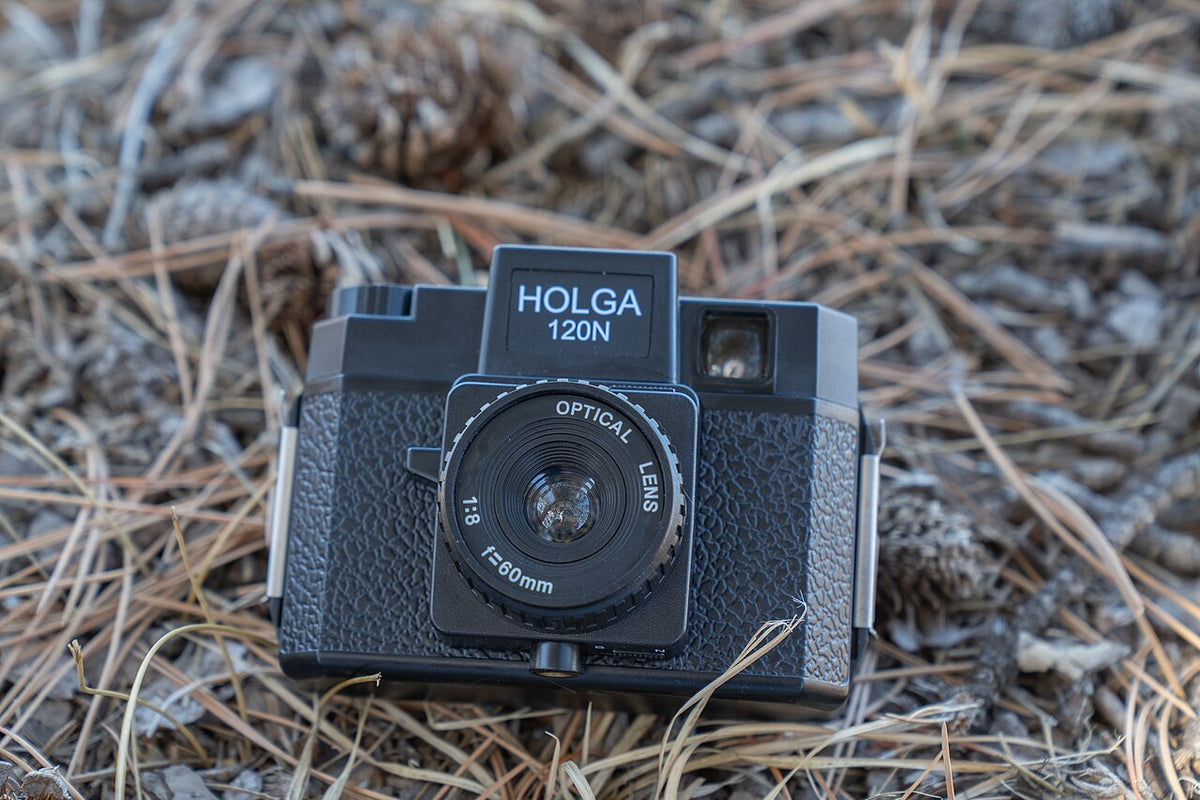
Holga, Diana, Lomo LC-A: these three cameras are the icons of lomography. What do they have in common? A simple construction, sometimes made of plastic, and imperfect images: vignetting, soft blur, saturated colors, light leaks. But they are very different to use. Here is their history, what they can do, and which one to choose depending on what you are looking for.
The three at a glance
| Holga | Diana | Lomo LC-A | |
|---|---|---|---|
| Origin | Hong Kong, 1982 | Hong Kong, 1960s | Leningrad (USSR), 1984 |
| Film | 120 (135 and 110 versions also available) | Originally 120; Diana Mini in 135, Diana Baby in 110 | 35 mm (LC-A 120 in medium format) |
| Lens | 60 mm f/8 plastic meniscus (glass version: 120GN) | Plastic meniscus | Glass Minitar-1 |
| Exposure | Single speed (1/100 s on the 120S), two aperture settings | Simple speed and aperture | Automatic, from 2 min to 1/500 s |
| Focusing | Zone focusing | Zone focusing | Zone focusing (0.8 m, 1.5 m, 3 m, ∞) |
| Rendering | Pronounced vignetting, blur, light leaks | Soft, dreamlike blur | Saturated colors, vignetting, contrast |
The Holga: the simplest medium format
The Holga was designed in 1982 by Lee Ting-mo in Hong Kong to offer an affordable 120 camera to the Chinese public. 35 mm film quickly replaced 120 in China; the Holga then found another audience: photographers drawn to its flaws. Its plastic meniscus lens produces vignetting, blur, and distortion. A photo of Al Gore taken with a Holga by photojournalist David Burnett was even awarded in 2001 by the White House News Photographers' Association. The factory closed at the end of 2015, but production resumed in 2017.

The most common model is the 120N: 60 mm f/8 plastic lens, B exposure, tripod mount, and 6 × 4.5 and 6 × 6 film backs. There are many variants: with flash (120FN), colored flash (120CFN), glass lens (120GN), pinhole (120PC), TLR, or panoramic versions.

Tip: the body often lets light in. Many photographers place opaque tape over the seams and the film counter window, unless they are specifically looking for light leaks.

Want to see more images? Browse the most popular photos taken with a Holga 120N on Lomography (Lomography community gallery, photos copyrighted by their authors).
The Diana: the ancestor that became the Diana F+
The Diana was manufactured from the early 1960s by the Great Wall Plastic Factory in Kowloon (Hong Kong), mainly for the United States and the United Kingdom, where it was often given away as a free gift or promotional item. Production ceased in the 1970s, and there are more than 50 variants. Its meniscus lens produces an image that barely covers the film: hence pronounced vignetting and a soft, almost pictorialist blur. With no shutter lock, it allows multiple exposures.
Since 2007, Lomography has been reissuing it: the 120 Diana F+ has become a modular system with interchangeable lenses, flashes, and backs. There is also the Diana Mini in 35 mm and the Diana Baby in 110.

Want to see more images? Browse the most popular photos taken with a Diana F+ on Lomography (Lomography community gallery, photos copyrighted by their authors).
The Lomo LC-A: the camera that launched lomography
The LOMO LC-A (Lomo Kompakt Automat) is a 35 mm compact camera launched in 1984 and manufactured in Leningrad by LOMO. It was inspired by the Japanese Cosina CX-2. Production ceased in 1994, then resumed at the request of a group of Viennese students who founded the Lomographic Society International, until 2005. Its successor, the LC-A+, has been made in China since 2006.
Unlike the Holga and the Diana, the LC-A has a real exposure meter: in automatic mode, it selects a speed from 2 minutes to 1/500 s and apertures from f/2.8 to f/16. It uses zone focusing. It runs on three 1.5 V LR44 or S76 batteries. Its Minitar-1 glass lens produces saturated colors and characteristic vignetting.


Want to see more images? Browse the most popular photos taken with a Lomo LC-A on Lomography (Lomography community gallery, photos copyrighted by their authors).
Which one to choose?
- You want an everyday pocket camera: the Lomo LC-A or LC-A+, compact and automatic.
- You want to discover medium format on a budget: the Holga 120N. For a more serious start, read getting started in medium format.
- You are looking for a soft rendering and multiple exposures: the Diana F+.
- You want sharp, reliable images: look instead at a compact camera like the Olympus Mju II or another film compact.
What film for a Lomo camera?
These cameras have few settings: a high-latitude film will forgive a lot. In 120 or 135, a 400 ISO color film is a good default choice (see 200 or 400 ISO), such as Portra 400 or Ultramax 400 in 35 mm. For unexpected colors, you can also try an expired film.
All cameras sold by Vibes Photo are inspected before being put on sale and covered by a six-month commercial warranty, in addition to legal warranties. Details can be found in our general terms and conditions of sale.
Frequently asked questions
What is the difference between Holga and Diana?
Both are plastic 120 cameras with meniscus lenses. The Holga dates from 1982; the Diana from the 1960s, reissued by Lomography as the Diana F+, a system with interchangeable lenses.
Is the Lomo LC-A automatic?
Yes for exposure: it selects a speed from 2 minutes to 1/500 s. Loading, advancing, and zone focusing are manual.
How to prevent light leaks on a Holga?
Place opaque tape over the seams of the back and the film counter window.
What battery for a Lomo LC-A?
Three 1.5 V LR44 or S76 button batteries.
Can you take multiple exposures with a Diana?
Yes: with no shutter lock, simply release the shutter several times without advancing the film.
Sources: Wikipedia – Holga; Wikipedia – Diana camera; Wikipedia – Lomo LC-A; Wikipedia – Lomography.