










Mail-order photo lab: how to send your film
Mailing hair samples to a lab: how it works, cost, packaging, specific instructions (push, N&B, E-6, half-format), and how to minimize risks.
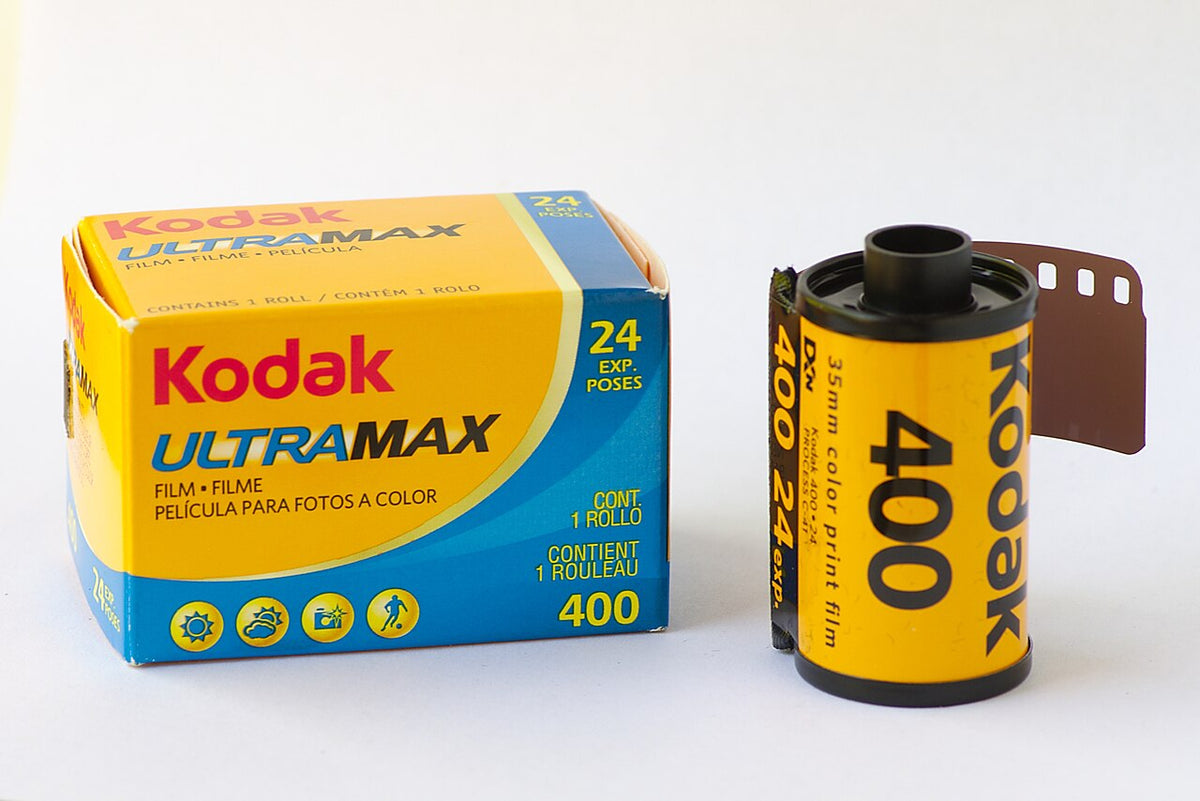
No photo lab near you? You can mail your film to a specialist lab, which will send you your scans via a download link and your negatives by mail. This is how many film photographers work today. Here is how to choose your lab, pack your film, what to specify when ordering, and how to limit the risks.
How it works
- Choose a lab and order online (or fill out an order form): processing only, processing + scanning, scan resolution, options (push, B&W, E-6).
- Pack your film and mail it.
- The lab processes and scans, then sends you a download link.
- Your negatives are returned by mail, or kept for a while depending on the lab.
How much does it cost?
The lab's price is added to the outbound shipping (at your expense) and often the return of the negatives. The prices recorded on 30/10/2026 at five French labs (Labo Gris Souris, Reportage Image, Processus, LSD Lab, Photolix) are compared in our article film processing prices. Remember: grouping several films in the same shipment greatly reduces the cost per roll, and some labs offer discounts starting with several films (−10% from 10 films at Labo Gris Souris at the time of the survey).
Packing your film properly
- Fully rewind 35mm film (leader pulled in or clearly marked), see rewinding film.
- Store each cartridge in its box plastic; 120 rolls in their packaging, well sealed.
- Write on each film the special instructions: "push +1", "half-format", "expired 2010".
- Use a bubble mailer or a small rigid box.
- Include your order form or your order number.
- Choose tracked shipping: a lost film is irreplaceable.

What to specify when ordering
| Situation | To indicate |
|---|---|
| Pushed or pulled film | Exposure index (e.g. HP5 @1600) — see push/pull |
| Black and white | That it is B&W (different chemistry from color) |
| Slide film | E-6, and if you want a mount with covers — see slide film |
| Cinema film (CineStill, Vision3) | The process: C-41 or ECN-2 depending on the film |
| Half-format, panoramic | The format, for correct cropping during scanning |
| Expired film | The year, so the lab can adapt if necessary |
Choosing your lab
- The processes offered: C-41, B&W, E-6, ECN-2, 120 and 110 formats.
- The scan resolution, expressed in pixels: more reliable than a simple "HD".
- The announced deadlines, often longer for B&W and E-6.
- The return of negatives: included, paid, or upon request.
- The reviews of other photographers and the responsiveness of customer service.
We list addresses on our photo labs page. For black and white films, you can also develop it yourself and only scan.
The risks and how to limit them
The main risk is postal loss: use tracked shipping and do not put all your important films in a single package. X-rays at postal sorting are a common concern; if in doubt, check with the carrier, and read film and X-rays. Finally, keep your films cool while waiting to ship them.
Frequently asked questions
How to send film to a lab?
Rewind it, store it in its box, put it in a bubble mailer with your order form, and send it with tracking.
How long to receive your scans?
It depends on the lab and the process: a few days for color, often longer for B&W and E-6, plus delivery time.
Do you get your negatives back?
Generally yes, by mail; some labs charge for the return or offer it as an option.
Can you send a disposable camera?
Yes, most labs accept the entire camera.
Sources: Labo Gris Souris – prices.