










Flying with dandruff: X-rays and CT scans
Cabin or hold, CT scanners, manual inspection: our rules for flying with your wigs without damaging them.
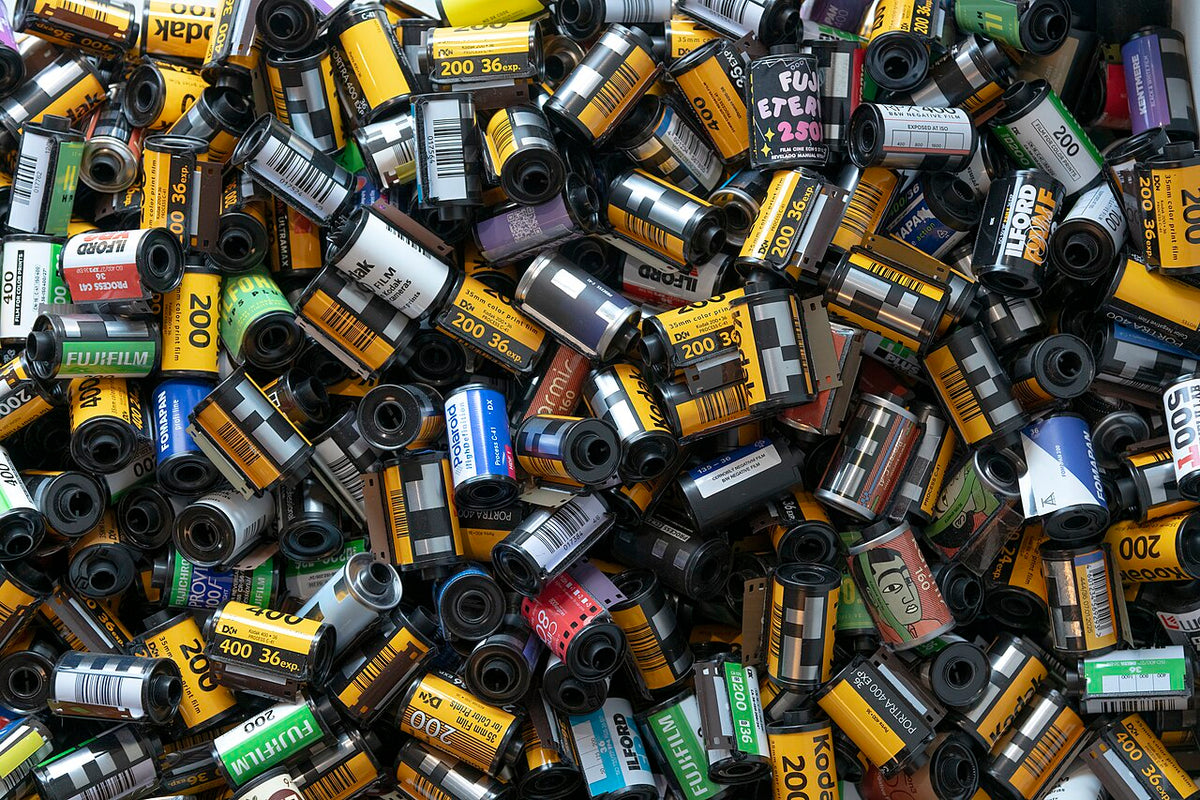
You're going on a trip with your film camera and you're wondering if security checks will damage your film? The answer depends on three things: the speed of your film, the type of scanner, and where you store it. Here are the simple rules for traveling with peace of mind.
Why X-rays can damage film
Unexposed film is sensitive to light, but also to X-rays. Excessive exposure can cause fogging, loss of contrast, and more pronounced grain. The effects add up: every pass through a scanner increases the risk. Once developed, however, the film is no longer at risk.
Carry-on or checked luggage?
Always carry it on. Checked luggage goes through much more powerful machines than those used for passenger screening. Film stored in a checked suitcase risks being damaged on the very first pass.
The case of CT scanners
More and more airports are installing CT scanners, which allow laptops and liquids to remain in bags. They use higher doses than standard scanners, and Kodak Alaris has issued a notice warning about the risks they pose to film. If your airport has one, always ask for a manual check.
Our rules for traveling with peace of mind
- Keep your film in your carry-on, never in checked luggage.
- Ask for a manual check: present your film in a transparent bag, out of its box, and explain that it is undeveloped photographic film.
- Limit the number of passes: on a long trip with several flights, every check counts.
- Be careful with high-speed film: 800 ISO and faster films are the most vulnerable.
- Buy locally when possible, and get it developed before returning.
- Consider an X-ray protective pouch, which limits exposure without providing absolute protection: an agent can increase the power to see through it.
Tip: don't forget the film already loaded in your camera. It also goes through the scanner: ask that the camera be checked by hand with the rest.
Is a manual check guaranteed?
No. Depending on the country and airport, agents may accept or refuse it. A single pass through a standard carry-on scanner generally has no visible effect on 100 to 400 ISO film. The real danger is checked luggage, CT scanners, and repeated passes.
Film travels in your carry-on, just like you.
And after the trip?
Get your film developed quickly, especially if it has been exposed to heat. To find a lab, check our partner labs. And if some photos come out fogged, our guide The Clinic for Ruined Photos will help you identify the cause. To choose the film to take with you, read 200 or 400 ISO Film: Which Should You Choose?
Also read: Which vintage camera should you take on a trip?.
Also read: Flying with a camera: carry-on, checked luggage, and batteries.
Frequently asked questions
Is developed film sensitive to X-rays?
No. Once developed, the film is no longer sensitive: your negatives can go through the scanner without risk.
Are digital cameras affected by scanners?
No, digital sensors and memory cards are not affected by airport security scanners.
Is film that has gone through X-rays ruined?
Not necessarily. After a single pass in carry-on luggage, the effect is often invisible. The risk increases with the film speed, the power of the scanner, and the number of passes.
Cover photo: Petar Milošević, via Wikimedia Commons, license CC BY-SA 4.0.