










Canon EOS 300D, 350D, 400D, 450D, 20D, 30D, 40D: which used DSLR?
The first Canon EOS digital SLRs remain excellent cameras for beginners. The 300D, 350D, 400D, 450D, 20D, 30D and 40D compared, with cards and batteries.
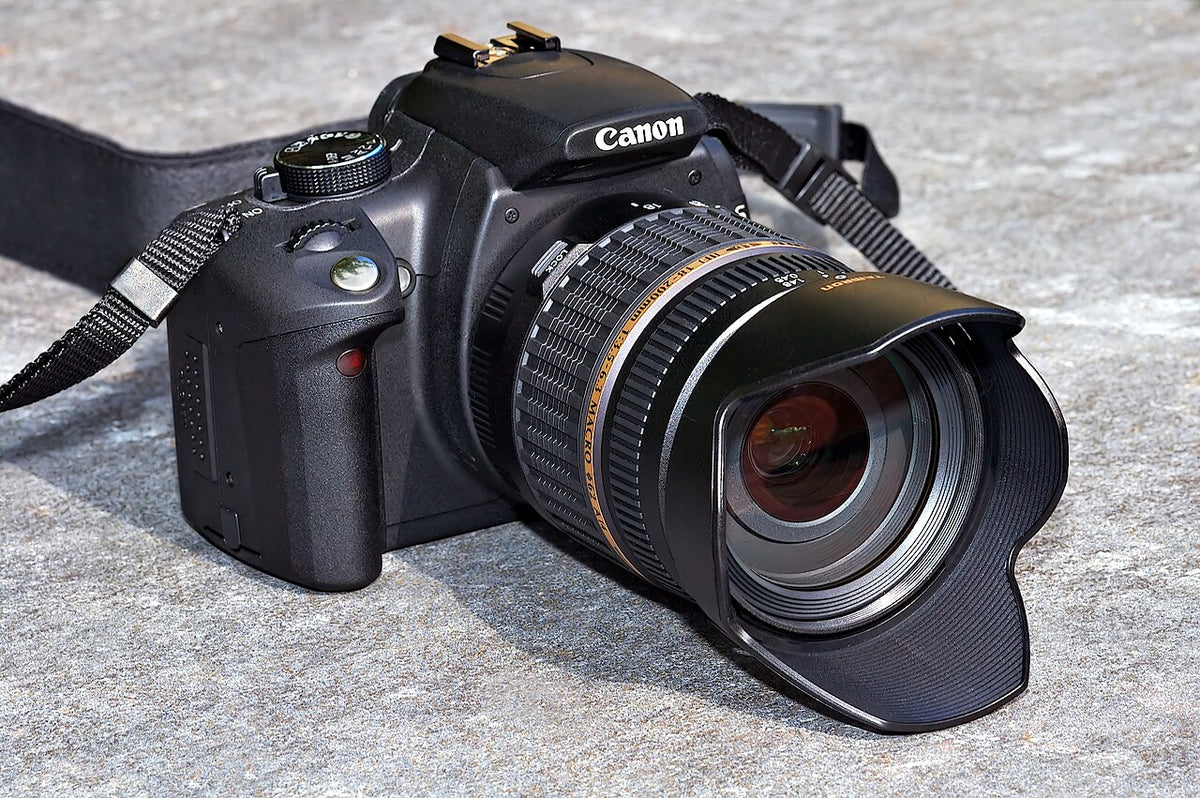
Canon's first digital SLRs are divided into two ranges. The EOS 300D, 350D, 400D and 450D are the consumer models, lightweight, with a single dial. The EOS 20D, 30D and 40D are enthusiast bodies, more robust, with a second dial on the back and a faster burst rate. All use an APS-C CMOS sensor (1.6x crop factor) and accept EF and EF-S lenses. For getting started today, the 450D has the advantage of an SD card; the 40D is the most advanced of the enthusiast models.
Comparison table
| Model | Year | Sensor | Card | Battery |
|---|---|---|---|---|
| EOS 300D | 2003 | 6.3 MP | CompactFlash | BP-511 |
| EOS 350D | 2005 | 8 MP | CompactFlash | NB-2LH |
| EOS 400D | 2006 | 10.1 MP, built-in cleaning | CompactFlash | NB-2LH |
| EOS 450D | 2008 | 12.2 MP, Live View | SD / SDHC | LP-E5 |
| EOS 20D | 2004 | 8.2 MP, 5 fps | CompactFlash | BP-511(A) |
| EOS 30D | 2006 | 8.2 MP, 5 fps | CompactFlash | BP-511A |
| EOS 40D | 2007 | 10.1 MP, 6.5 fps, Live View | CompactFlash | BP-511A |
Sources: Canon Camera Museum, Canon brochures, DPReview, Wikipedia.
Consumer models: 300D to 450D
The 300D (2003) was the first Canon digital SLR accessible to the general public, and it introduced the EF-S mount. The 350D made it more compact. The 400D added sensor cleaning by vibration, very useful for second-hand purchases. The 450D moves to an SD card, Live View, and 12 MP: it is the easiest to equip today.
Enthusiast models: 20D, 30D, 40D
These bodies have a sturdier build, a rear dial for quickly adjusting exposure, and a burst rate of 5 to 6.5 images per second. They share the BP-511A battery, which is easy to find as a compatible model. The 40D adds Live View, sensor cleaning, and a large screen: it is the most recommended of the three.

Lenses to pair with them
The EF-S 18-55 mm kit zoom is a good start (the IS versions are stabilized). The EF 50 mm f/1.8 is the most affordable fast lens in the range. Note: EF-S lenses cannot be mounted on full-frame bodies like the Canon EOS 5D. See our guide to lenses and mounts.
Tip: CompactFlash cards are still easy to find. A 4 to 16 GB card is sufficient, and a USB CF reader allows you to transfer the photos.
Checks before buying a used body
- Shutter count: for Nikon, it is usually found in the photos' EXIF data; for Canon, a third-party software is often required. A high number is not necessarily a dealbreaker, but it influences the price.
- The sensor: photograph a clear sky at f/16 to spot dust, and check for dead pixels.
- The viewfinder and screen: clean, without mold or deep scratches.
- The dials, buttons and flaps: all functional, card flap closed properly.
- The mount: no play, clean contacts.
- The battery and charger: original or high-quality compatible ones.
For the brand's history, see our Canon camera guide.
At Vibes Photo, each camera is checked before being put up for sale and covered by a six-month commercial warranty, in addition to the legal warranties of conformity and hidden defects. The details are in our general terms and conditions of sale.
Frequently asked questions
What is the best old Canon SLR to start with?
The 450D is the most convenient (SD card, Live View, 12 MP). The 40D is more robust and faster, but heavier.
Are EF-S lenses compatible with all Canons?
With APS-C SLRs (300D, 350D, 400D, 450D, 20D, 30D, 40D...), yes. Not with full-frame ones like the 5D.
Does the Canon 350D have a CCD sensor?
No, all consumer Canon digital EOS SLRs use a CMOS sensor.
What battery for a Canon EOS 400D?
The NB-2LH battery, also used in the 350D.
Main image: Canon EOS 350D digital SLR seen from a three-quarter angle with a zoom lens and its lens hood. Photo: André Karwath aka Aka, CC BY-SA 2.5, via Wikimedia Commons