










Super 8 Camera: The Guide to Shooting on Film Today
Super 8 is still alive and well: modern Kodak film, cartridge run time, developing and scanning, and what to check on a used camera.
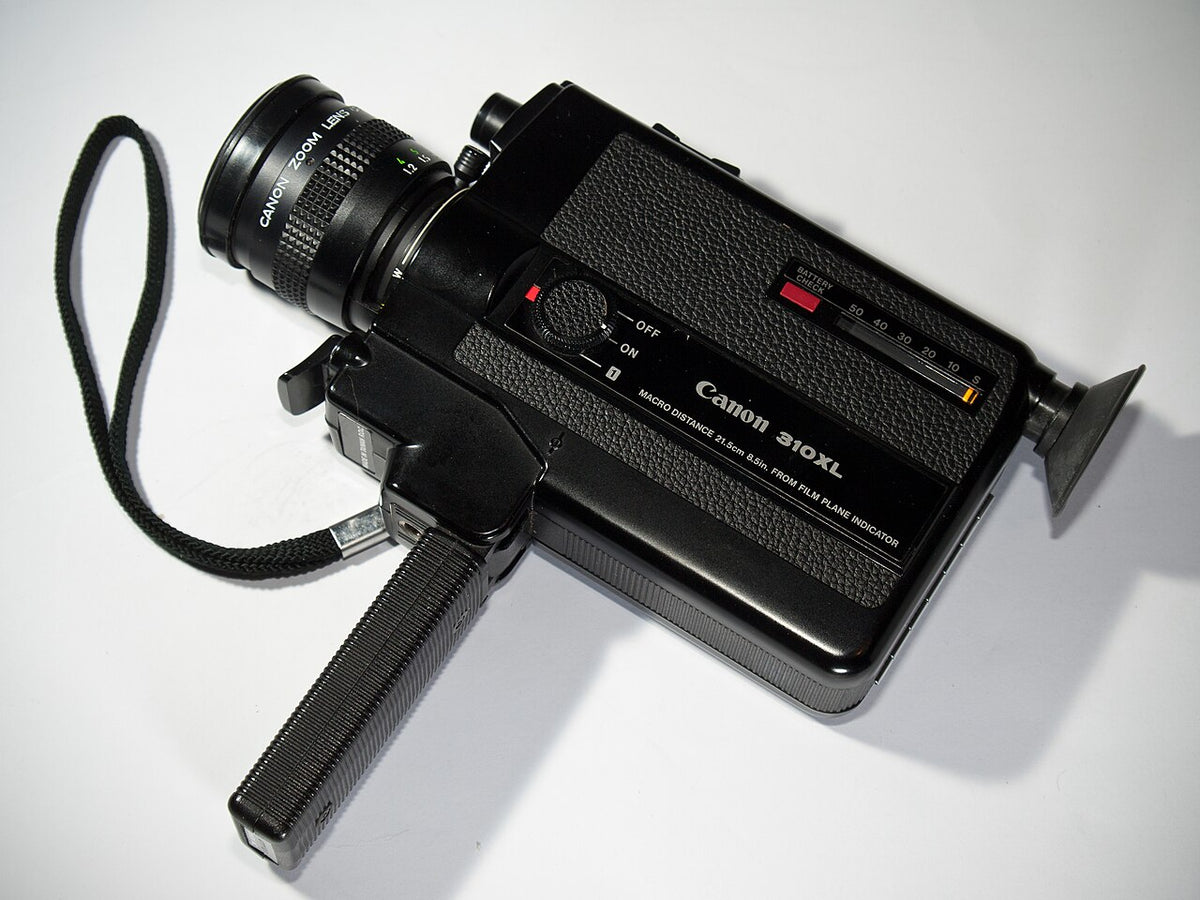
Yes, you can still shoot on Super 8: Kodak still produces cartridges (Vision3 50D, 200T and 500T in color negative, Ektachrome 100D in positive color, Tri-X in positive black and white). A 15-meter (50-foot) cartridge gives approximately 3 min 20 s at 18 frames per second, or 2 min 30 s at 24 fps. It then needs to be developed and scanned by a specialized laboratory: it is an expensive format per minute, chosen for its unique look, not for filming for hours.
The verdict in 30 seconds
Why Super 8
- a film look that is impossible to perfectly imitate;
- simple cameras, often automatic;
- every shot counts: you film less but better.
What to know beforehand
- high cost per minute (cartridge + lab + scan);
- no sound on current cartridges;
- used cameras need checking (motor, light meter).

What is Super 8?
Launched by Kodak in 1965, Super 8 is an amateur film format 8 mm wide loaded into a cartridge: it is inserted into the camera without handling the film, in broad daylight. The cameras are generally battery-powered, with an automatic light meter and often a zoom. It was the format for home movies until the arrival of camcorders in the 1980s.
Available films
| Film | Type | Sensitivity according to Kodak | Processing |
|---|---|---|---|
| Vision3 50D (7203) | Color negative, daylight | 50 | ECN-2 |
| Vision3 200T (7213) | Color negative, artificial light (tungsten) | 200 | ECN-2 |
| Vision3 500T (7219) | Color negative, tungsten, low light | 500 | ECN-2 |
| Ektachrome 100D (7294) | Positive color (projectable), daylight | 100 | E-6 |
| Tri-X (7266) | Positive black and white | 200 in daylight | Dedicated process |
Source: Kodak Super 8 films. Availability varies by retailer.

The daylight filter and the light meter
Most Super 8 cameras were designed for film balanced for artificial light. They include an orange filter (type 85) that is automatically placed in front of the film for outdoor shooting. A switch or key (often a sun / light bulb symbol) allows it to be removed indoors. With a "T" film (200T, 500T), keep the filter on outdoors; with a "D" film (50D, 100D), the filter must be removed, which some cartridges do automatically thanks to a notch.
The camera's light meter reads the sensitivity thanks to notches on the cartridge. Not all cameras recognize all sensitivities: check your model's manual. With negative film, a small exposure error can be corrected during scanning.
What to check on a used camera
- The battery compartment: no signs of oxidation (see leaking battery).
- The motor: with new batteries, it should run smoothly at each speed (18 and 24 fps).
- The light meter: the needle or indicator should react when you point the camera at a light area then a dark area.
- The zoom: motorized or manual, it should be smooth. Look through the viewfinder to spot fungus or haze.
- The pressure plate and the gate: clean, without scratches.
- Ideally, a test with a cartridge, but it is expensive: a seller who has tested the camera with film is a good sign.
Some common cameras
- Canon: many XL models (310XL, 514XL, 814XL-S, 1014XL-S...), renowned for their fast lenses. The "XL" models are designed for low light.
- Braun Nizo: German cameras with a refined design, highly sought after for the high-end models.
- Bauer, Chinon, Elmo, Minolta, Sankyo: many simple and affordable models, perfect for beginners.
- Beaulieu: high-end models, more expensive and more complex.

Development and scanning
Negative films (Vision3) are developed in ECN-2, Ektachrome in E-6: a few specialized laboratories in Europe do it, often with scanning (frame-by-frame image scan) as an option. Ask for the scan resolution (HD, 2K, 4K) and the file format. Positive film can also be projected with a Super 8 projector. Allow several weeks depending on the labs.
Super 8 or camcorder?
Super 8 gives a real film grain, warm colors, and a film cadence. A camcorder gives the 1990s-2000s video aesthetic, for much less per minute. If you want to film a lot, start with a camcorder: see vintage camcorder: which one to choose and our guide camcorder for clips and TikTok.