










Flash photography: techniques for a successful (and intentional) look
Range, guide number, unapologetic direct flash, fill flash in broad daylight, slow sync flash and bounce flash: everything you need to master flash photography.
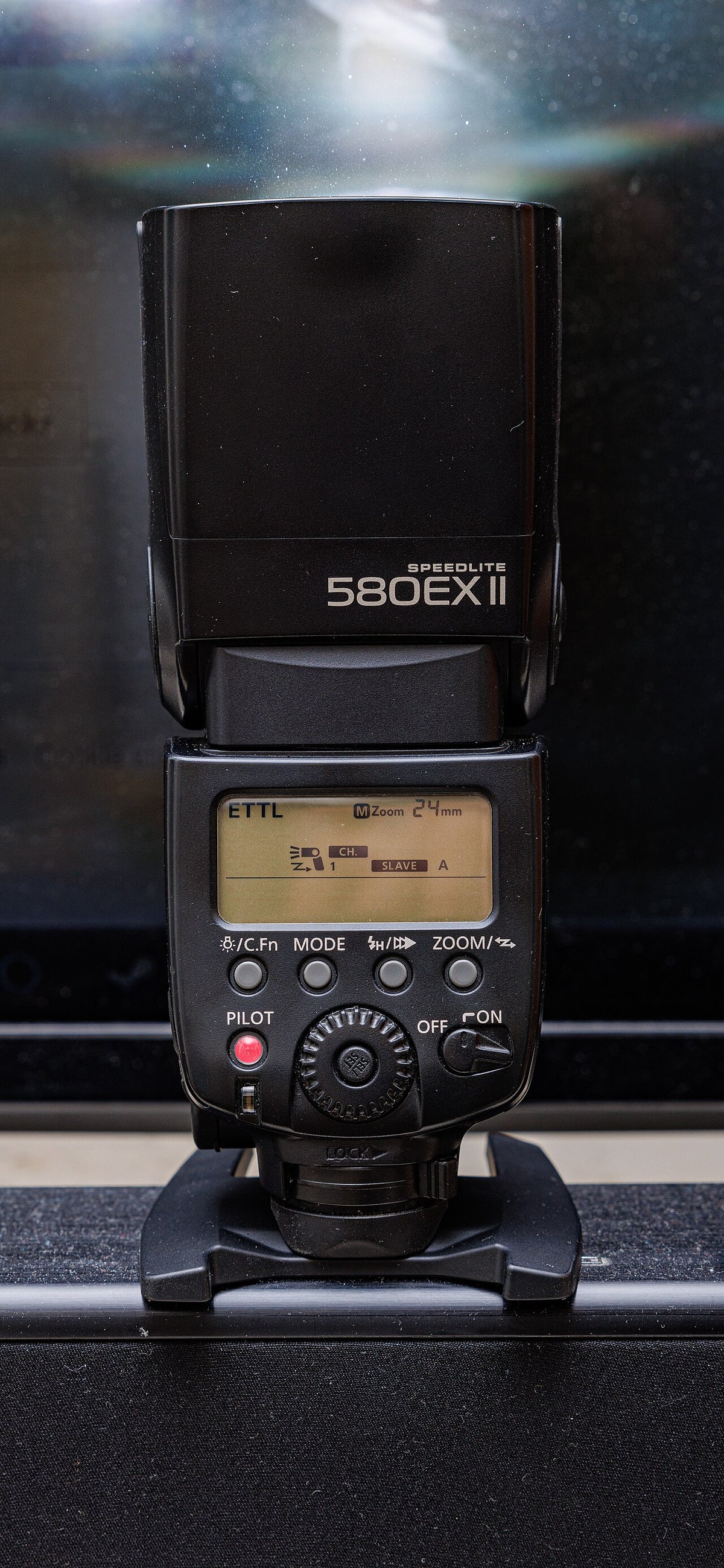
To get a good flash photo, you first need to respect its range: a built-in flash illuminates well between 1 and 3 meters approximately, rarely beyond. Next, choose the effect: direct flash gives the sharp and high-contrast look of the 2000s, fill flash opens up shadows in broad daylight, slow flash preserves the atmosphere of an evening, and indirect flash (bounced off the ceiling) softens everything. Each technique has its settings.
The verdict in 30 seconds
Good reflexes
- subject between 1 and 3 m for a built-in flash;
- forced flash in backlight;
- slow flash to keep the background in the evening.
The mistakes
- flashing a distant scene or a concert from the venue;
- subject pressed against a white wall (harsh shadow);
- finger in front of a compact's flash.
Understanding range: the guide number
The power of a flash is expressed by its guide number (GN), given for ISO 100 in meters. The formula is simple: maximum distance = GN ÷ aperture. A flash with GN 12 at f/4 therefore reaches about 3 m. At ISO 400, the range doubles (twice the sensitivity = two stops = range × 2).
| Guide number (ISO 100) | At f/2.8 | At f/4 | At f/8 |
|---|---|---|---|
| GN 8 (small built-in flash) | 2.9 m | 2 m | 1 m |
| GN 12 | 4.3 m | 3 m | 1.5 m |
| GN 36 (powerful cobra flash) | 12.9 m | 9 m | 4.5 m |
The guide number of your camera is in its manual. Zoom compacts often have a modest aperture in telephoto position: the flash range then drops significantly.
1. The direct flash, embraced
It's the look of the 2000s parties: sharp face, bold colors, black background. To succeed, stay at a good distance (1 to 3 m), avoid reflective surfaces behind the subject and leave a little space with the wall to avoid a harsh cast shadow. On a digicam, force the flash in the menu. See the settings for the 2000s look and Which camera for an evening or a wedding?
2. The fill flash in broad daylight
In full sun or in backlight, the face is in the shadow. A forced flash shot opens up the shadows and adds a reflection in the eyes. It's the most underestimated use of flash. On a film compact, force the flash (lightning bolt symbol); on a reflex, many TTL flashes automatically dose the fill.
3. The slow flash (or "night portrait")
The flash illuminates the person, and the long exposure time records the ambient lights behind. Result: a sharp portrait on a lively background, with sometimes light trails. Hold the camera steady, or use the trails creatively. The "second curtain sync" mode, on cameras that have it, places the trails behind the moving subject rather than in front.
4. The indirect flash
With an adjustable cobra flash, point the flash head towards a ceiling or a light wall: the light comes back diffused, without harsh shadow. It doesn't work with a built-in flash, nor under a very high or colored ceiling (the color reflects on the skin).

Flash on film: the sync speed
On a reflex with a curtain shutter, the flash only works correctly at the sync speed or slower (often 1/60 s on 70s cameras, 1/125 to 1/250 s on newer ones; the symbol is marked on the dial). Beyond that, a black band appears on the image. Compacts and central shutter cameras sync at all speeds. Also check the hot shoe: modern hot shoe flashes have a low trigger voltage, and some old flashes have a high voltage that can damage an electronic body.
Tip: with a manual flash on a film reflex, use the guide number formula to choose the aperture: GN 20, subject at 2.5 m, so f/8.
Red eyes
They appear when the flash is very close to the lens axis, in the dim light (dilated pupils). Solutions: turn on the room light, ask the person not to stare at the lens, use the anti-red-eye function (pre-flashes), or a flash offset from the lens.
Flash is not a flaw of the party photo: it's its style. You just need to master it.
For night photography without flash, read Night photography: settings and tips; for portrait, Succeeding in your portraits.
See our film cameras → See our vintage digital cameras →
Frequently asked questions
Why is the background black on my flash photos?
The flash only illuminates what is close. The background, too far away, remains in the dark. Use slow flash to illuminate it with ambient light.
Can you use any flash on a film reflex?
A hot shoe flash with central contact works in manual on most bodies. The automatic functions (TTL) depend on the brand. Beware of old flashes with high trigger voltage on electronic bodies.
Does flash damage a baby's eyes?
A one-off photo flash is not considered dangerous, but it surprises and bothers. Prefer natural light for the very young, or an indirect flash.