










Night photography: settings, equipment and tips for sharp images
Blue hour, tripod, long exposure, ISO, slow flash and light trails: the settings and tips to capture great night photos with any camera.
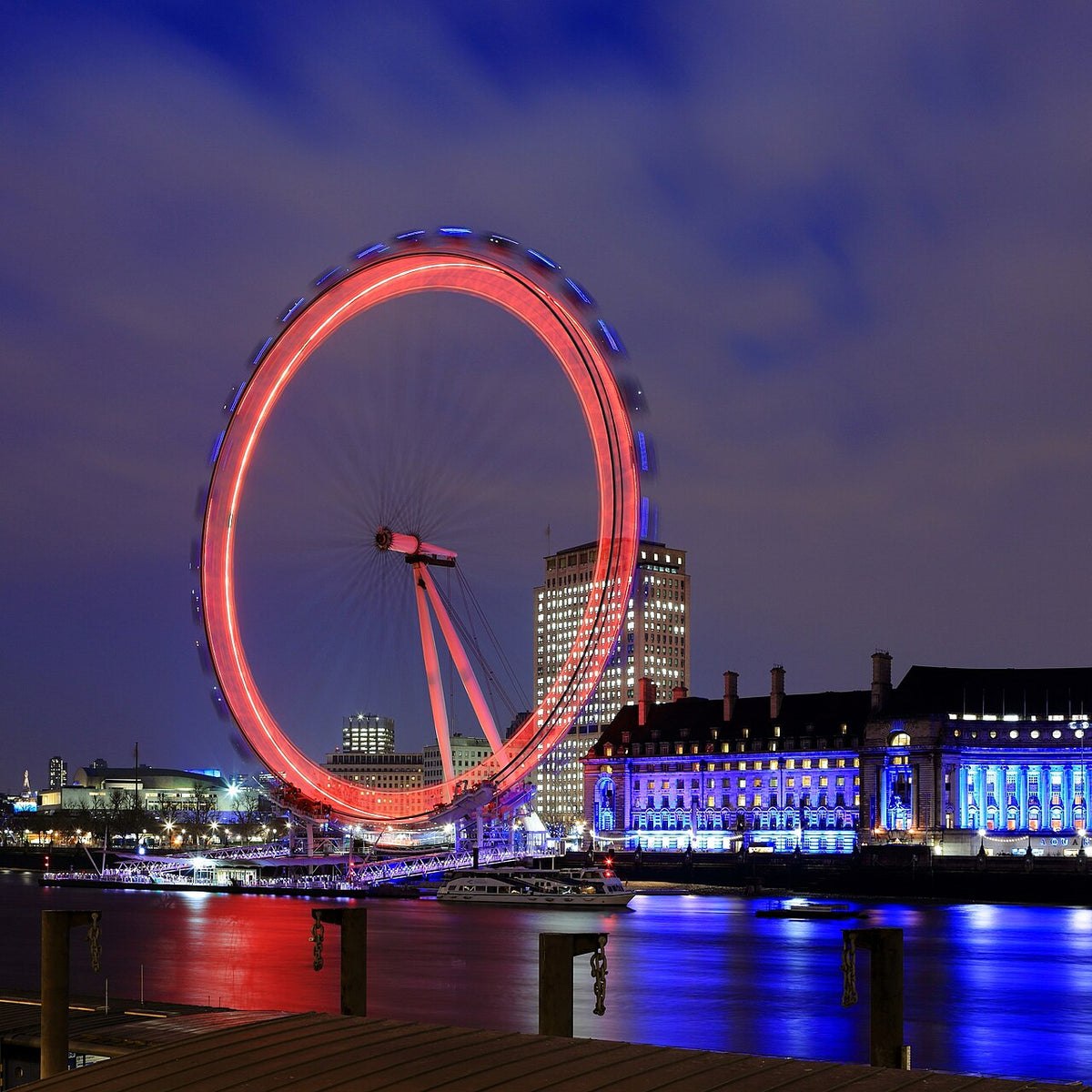
Successful night photography comes down to a simple choice: either stabilize the camera (on a tripod, wall, or bag) to shoot for a long time at a low sensitivity, or increase the sensitivity and open the aperture wide to shoot handheld, at the cost of noise or grain. The ideal time is the blue hour, just after sunset, when the sky still retains some color and the city lights come on.
The verdict in 30 seconds
With a tripod
- Low ISO (100-200), f/8, several seconds exposure;
- timer or remote shutter to avoid camera shake;
- ideal for monuments and light trails.
Handheld
- wide aperture (f/1.4 to f/2.8);
- high ISO (800 to 3,200 depending on the camera) or 800 ISO film;
- shutter speed of at least 1/focal length, leaning against a wall.

Starting settings
| Scene | Suggested settings (tripod, ISO 100) | Note |
|---|---|---|
| City at the blue hour | f/8, 2 to 8 s | The sky remains blue, the lights stand out |
| Lit streets, dark night | f/8, 5 to 15 s | Watch out for blown-out streetlights |
| Headlight trails | f/11, 10 to 30 s | The longer the exposure, the more continuous the trails |
| Fairground, carousel | f/8, 1 to 4 s | The movement creates circles |
| Fireworks | f/8 to f/11, 2 to 8 s (B exposure) | Shoot when the rocket launches |
These values are starting points: check the image (or histogram) and adjust. At ISO 400, divide the times by four.
Stabilizing without a tripod
- place the camera on a low wall, railing, or bench, using your scarf or bag to steady it;
- use a 2 or 10-second timer to avoid camera shake from pressing the shutter;
- when shooting handheld, exhale, keep your elbows against your body, and lean against a wall; the classic rule: no slower than 1/focal length (1/50 s with a 50 mm).
Tip: on a DSLR, enable mirror lock-up if the camera offers it, to reduce vibrations on exposures of about 1/30 to 1 s.
Night photography with a digicam
The small sensors of 2000s compact cameras become very noisy above 400 ISO. Two approaches work:
- "Night Landscape" mode or long exposure, camera stationary, ISO at minimum: clean image, typical CCD colors;
- "Night Portrait" mode or slow flash: the flash illuminates the person, the long exposure preserves the atmosphere behind. Stay still, or embrace the light trails.
Forced flash in the evening gives the black background a "2000s" look; it's an aesthetic choice, not a mistake. See Digicam: settings for the 2000s look.
Night photography on film
- choose a sensitive film: pushed 400 ISO, or 800 ISO (like Portra 800 or CineStill 800T, balanced for artificial light); in black and white, an Ilford HP5 Plus pushed to 1,600;
- on long exposures, film loses sensitivity (Schwarzschild effect or "reciprocity failure"): beyond about 1 second, you need to increase the exposure time. Consult the manufacturer's technical sheet;
- many mechanical cameras have a B exposure: use a screw-in remote shutter release to keep the shutter open without moving.

Mistakes to avoid
- letting the automatic flash fire on a distant monument: it only illuminates the foreground;
- trusting the meter when facing a large black sky: it overexposes; use exposure compensation (-1 EV);
- forgetting to turn off stabilization on a tripod (on some cameras, it can cause blurriness);
- photographing through glass without pressing the lens against it: reflections guaranteed.
At night, light is scarce: every second of exposure and every point of support counts.
For the basics, reread the exposure triangle, and for the tripod, our guide Which tripod for a vintage camera?
See our film cameras → See our vintage digital cameras →
Frequently asked questions
What ISO for night photography?
As low as possible on a tripod (100-200). Handheld, increase it until the shutter speed is sufficient, accepting the noise; on an old digicam, do not exceed 400 ISO if you want a clean image.
How to photograph the stars?
Tripod, wide-angle, wide aperture, high ISO and an exposure of about 15 to 25 s; a practical rule (called the "500 rule") suggests not exceeding 500 divided by the equivalent focal length, in seconds, to keep stars as points.
Why are my night photos orange?
Sodium street lighting is very orange. Set the white balance to "tungsten" or correct it during development; on film, a tungsten-balanced film (like CineStill 800T) limits the effect.