










Architectural photography: straight lines, light and framing
Tips for photographing architecture: straight verticals, focal length choice, lighting depending on the time of day, framing and details, in both digital and film photography.
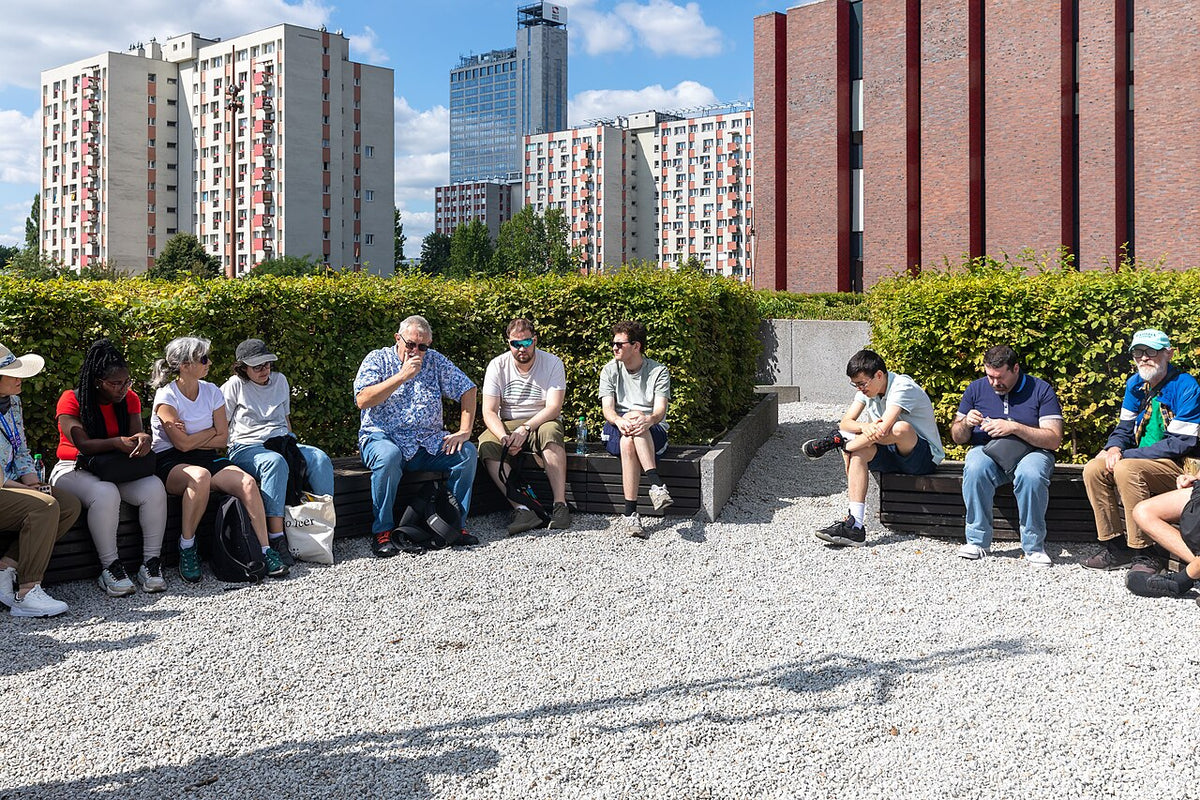
In architectural photography, the secret is to keep the verticals straight: hold the camera level, without tilting it upwards, even if you have to crop it later or correct the perspective in post-processing. Add to that the right time of day (raking light for facades, blue hour for illuminated buildings) and a careful framing that follows the lines of the building.
Verticals
When you tilt the camera upwards, the walls seem to fall back: this is converging perspective. Three solutions:
- Step back and keep the camera level, then crop the bottom of the image.
- Correct it in post-processing: most software has a perspective correction tool (see free photo editing software).
- Tilt-shift lens: the pros' solution, expensive, but you can find them second-hand.
Or embrace the convergence outright, with a pronounced low-angle shot: it's a creative choice.
Focal length
- Wide-angle (16-28 mm): interiors, narrow streets, entire buildings. Watch out for distortion at the edges.
- Standard (35-50 mm): natural views, facades from across the street.
- Telephoto: details, patterns, compression of aligned facades.

Light
| Time | Effect |
|---|---|
| Morning, evening | Raking light that reveals the textures of the facades |
| Noon | Harsh shadows; good for graphic shapes and black and white |
| Blue hour | Deep blue sky and illuminated building: tripod recommended |
| Overcast sky | Ideal for interiors and details |
Look at the orientation of the facade: an east-facing facade is illuminated in the morning. For blue hour, read night photography.
Framing and composition
- Symmetry: position yourself right in the center facing symmetrical buildings.
- Leading lines: stairs, railings, streets that guide the eye.
- Scale: a passerby gives the size of the building.
- Details: handles, mosaics, window shadows.
More tips in composition rules. Black and white works very well for architecture: black and white photography.
Film photography
A reflex with a 28 mm or a 35 mm and a slow film (100 ISO) is enough for highly detailed facades. On a tripod, take the time to set the level. To measure light without a cell, see cell and light meter.
All cameras sold on Vibes Photo are checked before shipping and covered by a 6-month warranty (details in our general terms and conditions of sale).