










Watching an eclipse through photographic film: why it's dangerous
Why you should not view an eclipse through a negative or film, safe protections, and how to photograph an eclipse without damaging your eyes or your camera.
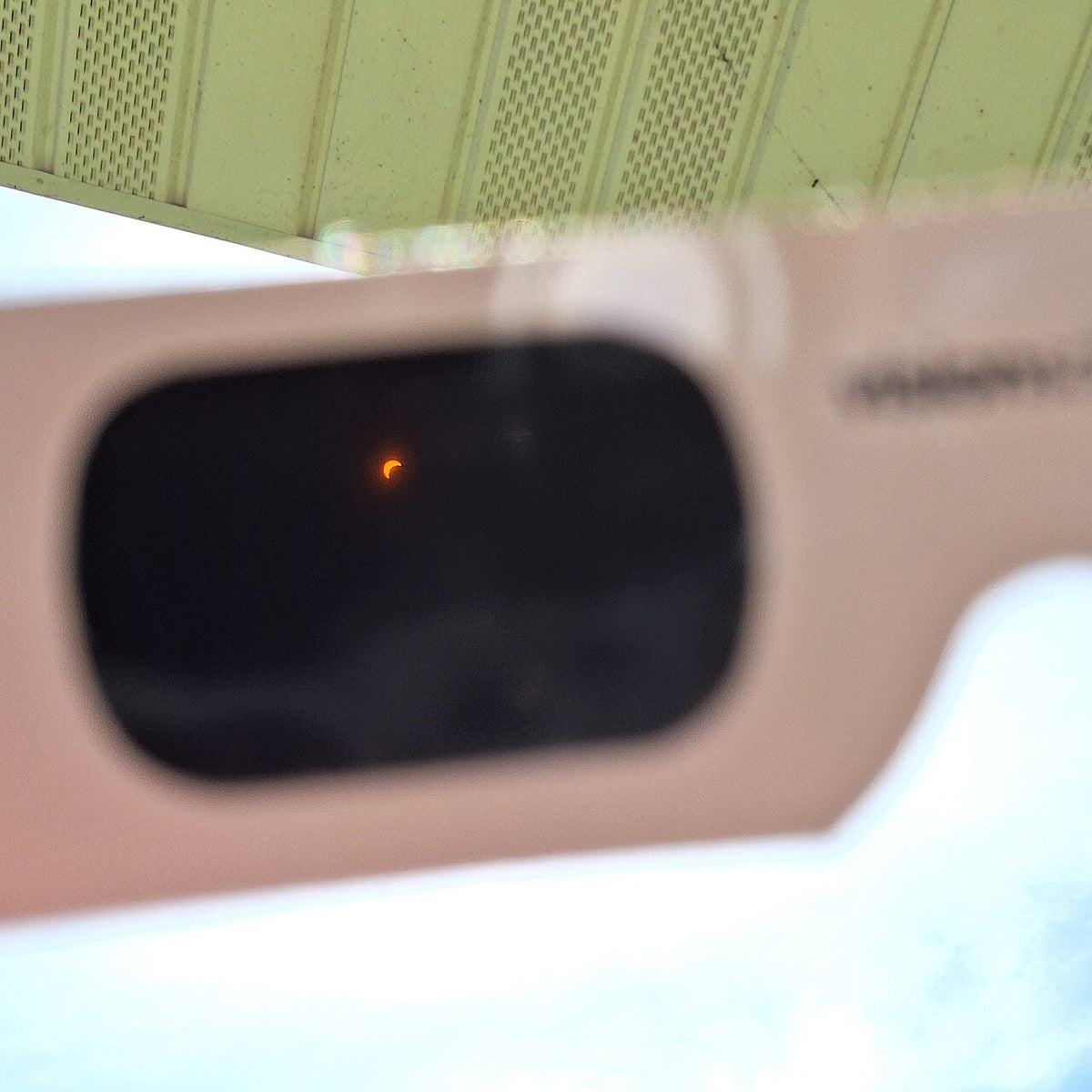
No, you should not watch an eclipse through photographic film, a negative or an X-ray: these materials can allow dangerous radiation (especially infrared and ultraviolet) to pass through and cause retinal burns, without pain, and sometimes irreversibly. The only protection for looking directly at the Sun is eclipse glasses compliant with the ISO 12312-2 standard, as Santé.fr reminds us.
What you should never use
- a photographic negative or film, even if darkened;
- an X-ray;
- sunglasses, even layered, or 3D movie glasses;
- tinted glass or a CD;
- a standard photo filter (neutral grey, polarizing);
- old eclipse glasses, such as those from 1999, which should not be reused.
The negative trick has been around for a long time, but the actual density of a film or its transmission in the infrared is unknown. Lesions appear without pain, and vision problems may only be noticed several hours later.
Watching an eclipse safely
- Eclipse glasses marked CE and NF EN ISO 12312-2:2015, with instructions in French, purchased from an identified seller (optician, pharmacy, astronomy association).
- Check them before each use: no scratches or holes (look at a lamp through them: no bright spot should pass through).
- Put them on before looking up and take them off after looking away; take breaks.
- Never look through binoculars, a telescope or a camera viewfinder with eclipse glasses: a certified solar filter must be attached to the front of the instrument, as the Paris Observatory reminds us.


The no-glasses method: projection
You can observe the eclipse indirectly: poke a small hole in a piece of cardboard and project the image of the Sun onto a white sheet of paper, with your back to the Sun. A colander or the foliage of a tree also projects dozens of small crescents on the ground. This is the principle of a pinhole camera, with no risk as long as you look at the projection and not the Sun.
Photographing an eclipse
- Attach a certified solar filter in front of the lens. An ordinary neutral grey filter does not protect the sensor or your eyes.
- With a DSLR, never point at the Sun through the optical viewfinder without this filter: instead, frame on the rear screen.
- Keep your eclipse glasses on while photographing.
- A tripod, remote shutter release and manual settings help a lot: see astrophotography for beginners, which tripod and shutter release and remote control.
- Film in the camera does not protect anything: it is the lens that concentrates the light.
Standard photo filters are presented in the lens filter guide: none are designed for pointing at the Sun.
The next eclipses visible in France
After the eclipse of August 12, 2026, partial in France, the Paris Observatory announces a total eclipse on August 2, 2027 (Spain, Morocco, Egypt), partial in metropolitan France, then an annular eclipse on January 26, 2028, also partial in metropolitan France. In both cases, protection is necessary from start to finish.
Frequently asked questions
Can you watch an eclipse with a black photographic negative?
No. Health authorities advise against negatives and film: they do not guarantee sufficient filtration of dangerous radiation.
Can you photograph an eclipse with your phone?
With a solar filter placed in front of the lens, yes. Keep your eclipse glasses on during the shot and do not point at the Sun for long without a filter.
Are the 1999 glasses still good?
No. Santé.fr recommends not reusing them, as their filters may have deteriorated without any visible sign.
All devices sold on Vibes Photo are checked before shipping and covered by a 6-month warranty (details in our general terms and conditions of sale).