










Mounting a vintage lens on a mirrorless camera: adapters, settings, pitfalls
How to mount a film camera lens (M42, Canon FD, Nikon F, Minolta MD, Olympus OM…) on a mirrorless camera: choosing the right adapter, configuring the camera, and avoiding common pitfalls.
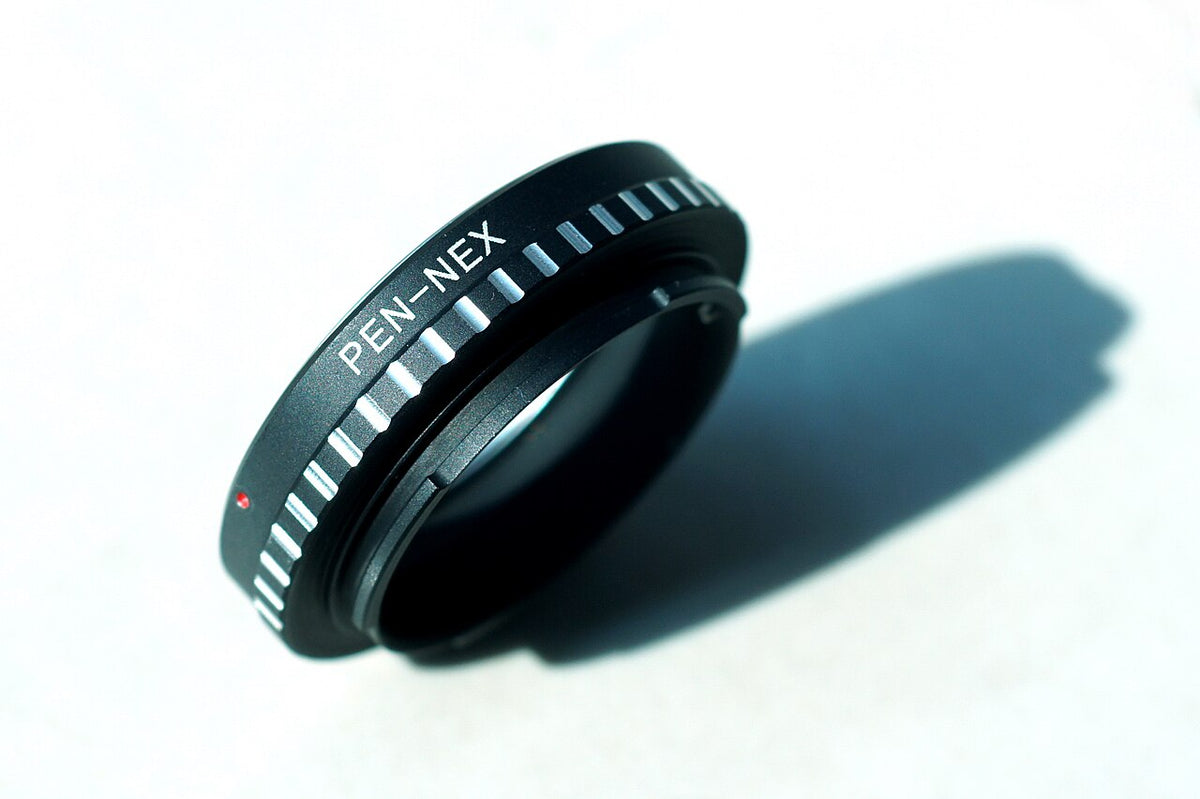
Almost all film lenses can be mounted on a mirrorless camera using a simple adapter with no glass, because the distance between the mount and the sensor in mirrorless cameras is very short. You need a “lens mount to camera mount” adapter (for example, M42 to Sony E), then enable the “shoot without lens” setting. Focus and aperture are set manually: focus peaking and the camera’s magnification make it easy.
The verdict in 30 seconds
What works well
- M42, Canon FD, Nikon F (AI), Minolta MD, Olympus OM, Pentax K, Leica M;
- simple and inexpensive adapters;
- the rendering and bokeh of vintage lenses.
The limitations
- no autofocus (except with special adapters);
- no lens EXIF data;
- “extended” focal length on APS-C and Micro 4/3.

Why it works: mechanical flange distance
Mechanical flange distance is the distance between the mount and the film or sensor. To focus at infinity, a lens must be placed at its original flange distance. Film SLRs have a large flange distance (due to the mirror), while mirrorless cameras have a short one: the adapter simply makes up the difference.
| Lens mount | Flange distance (mm) | Mirrorless mount | Flange distance (mm) |
|---|---|---|---|
| Nikon F | 46.5 | Sony E | 18 |
| Olympus OM | 46 | Fujifilm X | 17.7 |
| M42, Pentax K | 45.46 | Micro 4/3 | 19.25 |
| Contax/Yashica | 45.5 | Canon RF, L-Mount | 20 |
| Canon EF | 44 | Nikon Z | 16 |
| Minolta SR/MD | 43.5 | ||
| Canon FD | 42 | ||
| Leica M | 27.8 |
As long as the lens's flange distance is greater than the camera's, a lensless adapter is sufficient. This is the case for all the mounts listed above on all these mirrorless cameras.
Choosing the right adapter
- Simple adapter (no electronics): for manual lenses with an aperture ring (M42, FD, Nikon AI, OM, MD, K, etc.). Choose one that is well machined: a poorly calibrated adapter will prevent you from focusing at infinity.
- Lenses without an aperture ring (Nikon G, Canon EF): you need an adapter that controls the aperture (a lever-actuated ring for Nikon G) or an electronic adapter for Canon EF.
- Canon FD: the adapter has a lever to lock the aperture; without it, the lens remains wide open.
- Focal length reducer: an adapter with glass that reduces the crop factor on APS-C or Micro 4/3 sensors and increases the maximum aperture. More expensive.
Camera settings
- Enable “Shoot without lens” in the menu (the name varies by brand): otherwise, the camera will not allow you to take photos.
- Switch to aperture priority (A/Av): you choose the aperture on the lens, and the camera sets the shutter speed.
- Enable focus peaking (highlights the areas in focus) and the focus magnifier.
- If your camera has image stabilization, enter the lens's focal length in the stabilization menu.
- Consider stopping down the aperture by one or two stops for greater sharpness.
Cropping by sensor
On a full-frame mirrorless camera, a 50 mm lens remains a 50 mm lens. On APS-C, it frames like a 75 mm lens; on Micro 4/3, like a 100 mm lens. To understand: equivalent focal length and crop factor.

Which vintage lenses should you try?
- Helios 44 (58 mm f/2, M42): renowned for its swirling bokeh and very affordable.
- Takumar (M42, Pentax): well-built with a soft rendering.
- 50 mm f/1.8 and f/1.4 lenses from Canon FD, Nikon, Minolta, and Olympus: perfect for portraits.
- Small wide-angle lenses (28 mm, 35 mm): for street photography, especially on full-frame.
Before buying, inspect the lens with a flashlight (for fungus or haze): see fungus in a lens. For compatibility between lenses and digital SLR cameras, also read lenses and mounts: the compatibility guide.
All cameras sold on Vibes Photo are inspected before shipping and covered by a 6-month warranty (details in our general terms and conditions of sale).
View our film cameras → View the vintage digital essentials →