










Macro photography: equipment, settings and tips for close-up photography
Macro lens, lens hoods, extension tubes or a compact camera's macro mode: the equipment, settings and tips to nail your close-up photos.
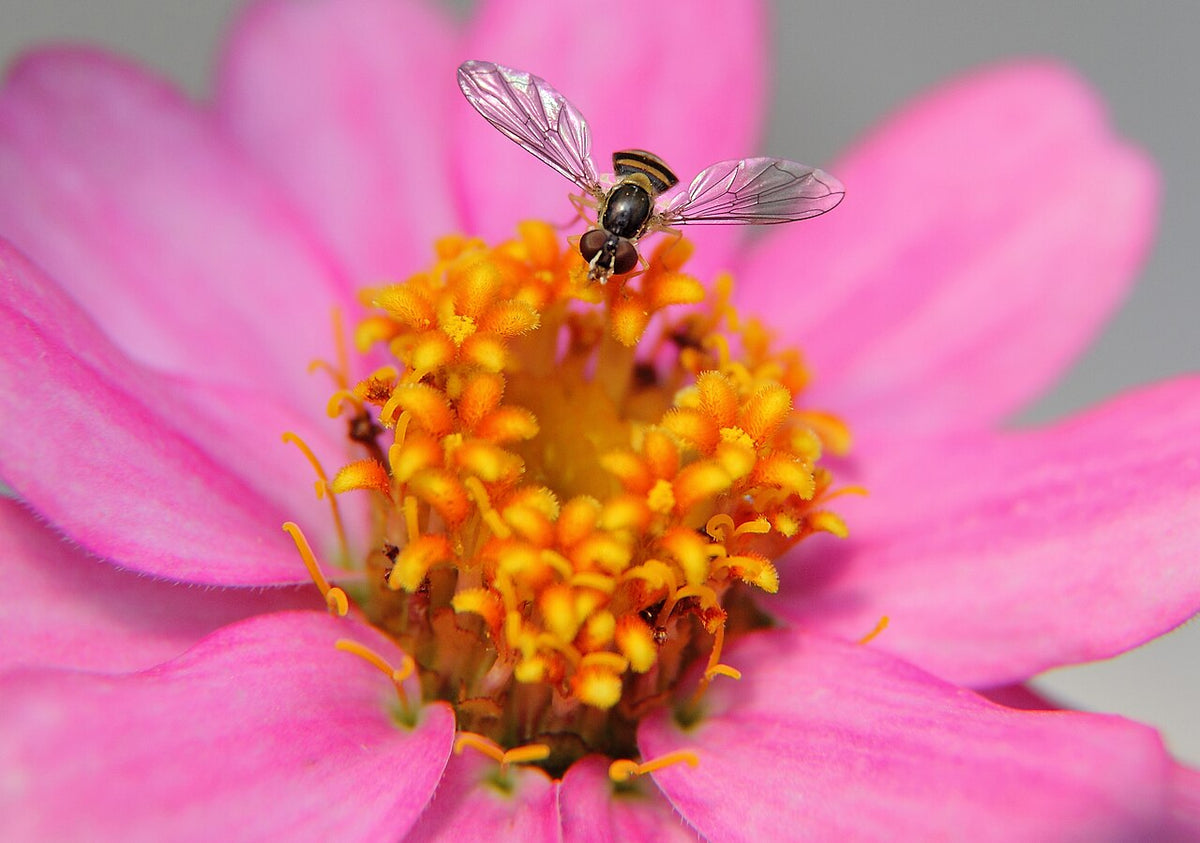
Macro photography involves photographing a small subject from very close up, ideally at a 1:1 ratio (the subject is reproduced at its actual size on the sensor or film). You don't need an expensive lens to get started: a point-and-shoot's macro mode, a close-up lens screwed onto the lens, or extension tubes can already deliver great results. The main challenge is depth of field, which is very shallow when shooting close up: you need to close the aperture, focus carefully, and provide plenty of light.
The verdict in 30 seconds
To get started
- macro mode (flower icon) on a point-and-shoot;
- a +2 or +4 close-up lens on an existing lens;
- soft light, still subject.
To take it further
- 50 or 100 mm macro lens (1:2 or 1:1 ratio);
- extension tubes on a DSLR;
- tripod and remote shutter release.

Comparison of hardware solutions
| Solution | Cost | Magnification | Advantages | Limitations |
|---|---|---|---|---|
| Macro mode on a point-and-shoot or digicam | None | Variable, often very close (a few cm) | Large depth of field thanks to the small sensor | Camera shadow on the subject, wide-angle distortion |
| Close-up lens (additional lens) | Low | Medium (+1 to +10 diopters) | Screws on like a filter, retains autofocus | Quality drops at the edges with single-element close-up lenses |
| Extension tubes | Low to medium | Medium to high | No added optics, sharp image | Loss of light, impossible to focus at infinity |
| Reversed ring | Very low | High | Lens mounted upside down: high magnification | Aperture often needs to be adjusted manually, delicate handling |
| Macro lens | Medium to high | 1:2 or 1:1 | Better quality, versatile (also for portraits) | Price, weight |
Depth of field, the real challenge
The closer you are, the thinner the area of focus: in 1:1 macro, it is often measured in millimeters. To widen it, close the aperture (f/8 to f/16), but not too much: beyond that, diffraction softens the image. Position the sensor plane parallel to the subject to maintain maximum sharpness on an insect or flower. Point-and-shoots with small sensors naturally have more depth of field than DSLRs: this is a real advantage in macro.
Tip: for precise close-up focusing, set the lens to its minimum distance, then gently move the entire camera forward and backward until the subject is sharp. It is more reliable than turning the focus ring.
Lighting
- an overcast sky provides ideal soft light;
- a reflector (white sheet, silver cardboard) fills in shadows;
- the built-in flash, when too close, is often blocked by the lens or overexposes: diffuse it with tracing paper, or use a ring flash;
- due to the shallow depth of field and small apertures, the shutter speed drops: stabilize the camera.

Film macro
Film DSLRs are very well suited for macro with extension tubes or a used macro lens (55 mm, 50 mm, or 100 mm from many brands). The reflex viewfinder shows exactly the area of focus. Film point-and-shoots, on the other hand, have an offset viewfinder: from very close up, the photo is not framed as you see it (parallax error). Extension tubes reduce light: a DSLR's TTL cell takes this into account, but an external cell does not.
Subjects to practice with
- flowers and leaves in the early morning, with dew;
- textures (wood, fabric, rust) and everyday objects;
- water drops, coins, watch mechanisms;
- less skittish insects, in cool weather, when they move less.
In macro, one millimeter changes everything: take your time, and try many times.
To choose your filters and close-up lenses properly, read Photo filters: UV, polarizing, ND, and color, and for the tripod, Which tripod for a vintage camera?
See our film cameras → See our vintage digital cameras →
Frequently asked questions
What is a 1:1 ratio?
The subject is reproduced at its actual size on the sensor or film: a 10 mm insect occupies 10 mm of the negative. This is the strict definition of macro.
Which close-up lens should I choose?
A +2 or +4 to get started, in the filter diameter of your lens (indicated on the front ring). Achromatic close-up lenses (two lenses) are sharper.
Can a digicam take good macros?
Yes, many point-and-shoots from the 2000s focus at a few centimeters in macro mode, with a good depth of field.