










Used Nikon D40, D60, D70, D80, D90: which one to choose?
Nikon DX DSLRs from the 2000s are highly sought after, notably for their CCD sensors. D40, D60, D70, D80 and D90 compared, and the autofocus motor trap.
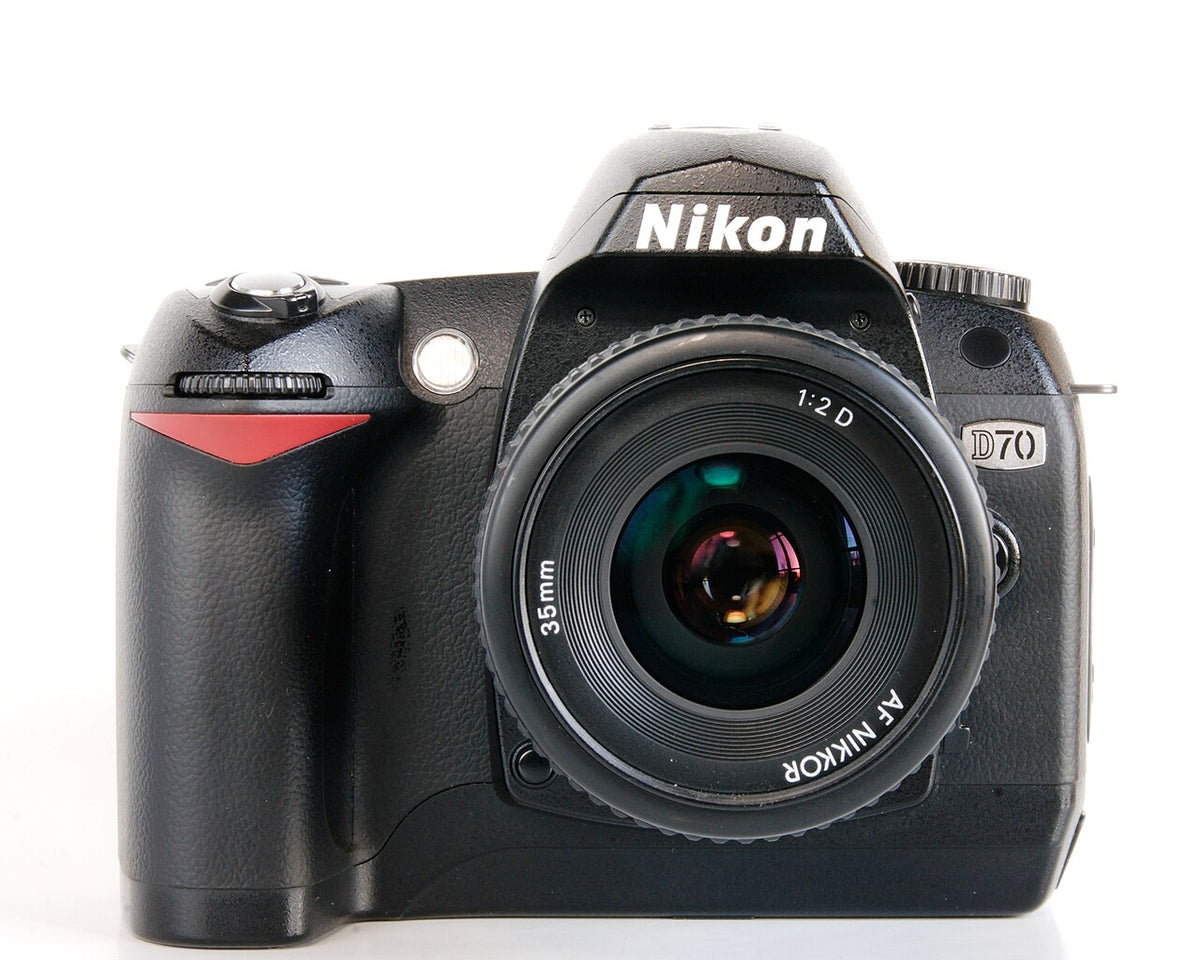
The Nikon D40, D60, D70, D80 DSLRs have one feature that is highly sought after today: a CCD sensor with highly regarded color reproduction. The D90 switched to a 12.3 Mpx CMOS and was the first DSLR to offer video. The deciding factor is the autofocus motor: the D40 and D60 do not have one and can only autofocus with AF-S lenses (or AF-P on some), while the D70, D80 and D90 can also drive older AF and AF-D lenses.
Comparison table
| Model | Year | Sensor | AF motor | Card | Battery |
|---|---|---|---|---|---|
| D70 | 2004 | 6.1 Mpx CCD | Yes | CompactFlash | EN-EL3 |
| D40 | 2006 | 6.1 Mpx CCD | No | SD | EN-EL9 |
| D80 | 2006 | 10.2 Mpx CCD | Yes | SD | EN-EL3e |
| D60 | 2008 | 10.2 Mpx CCD | No | SD / SDHC | EN-EL9a |
| D90 | 2008 | 12.3 Mpx CMOS, 720p video | Yes | SD / SDHC | EN-EL3e |
Sources: Nikon (press releases and product sheets), DPReview, comparison on nicovandijk.net.
The autofocus motor trap
Nikon AF and AF-D lenses (1980s-2000s) are focused by a motor located in the camera body. On a D40 or D60, they can be mounted, but focusing is manual. To keep autofocus, choose AF-S lenses (motor in the lens), such as the 18-55 mm kit lens or the AF-S 35 mm f/1.8 DX. If you want to take advantage of the very affordable AF-D lens range, get a D70, D80 or D90. More details in our guide to lenses and mounts.

Which one to choose?
- D40: the lightest and simplest, highly regarded 6 Mpx CCD rendering, but autofocus limited to AF-S lenses.
- D70: AF motor, two dials, CompactFlash card; 6 Mpx CCD.
- D80: the best CCD compromise: 10 Mpx, AF motor, SD card, pleasant viewfinder.
- D90: cleaner CMOS at high sensitivity, 720p video, AF motor: the most versatile.
The D200 (10 Mpx CCD, weather-sealed body) is the expert big brother of this generation. For the complete list of CCD bodies, see the list of CCD cameras.

Checks before buying a used body
- The shutter count: at Nikon, it is generally found in the EXIF data of the photos; at Canon, third-party software is often required. A high number is not necessarily a dealbreaker, but it influences the price.
- The sensor: photograph a plain sky at f/16 to spot dust, and check for dead pixels.
- The viewfinder and screen: clean, without mold or deep scratches.
- The dials, buttons and flaps: all functional, card flap closed properly.
- The mount: no play, clean contacts.
- The battery and charger: original or high-quality compatible ones.
Tip: at Nikon, the shutter count appears in the EXIF data of a photo ("Shutter Count" field or equivalent depending on the software). Ask the seller for a recent photo to check it.
For the entire range: our guide to Nikon cameras.
At Vibes Photo, each camera is checked before being put on sale and covered by a six-month commercial warranty, in addition to the legal guarantees of conformity and hidden defects. The details are in our general terms and conditions of sale.
Frequently asked questions
Does the Nikon D40 have a CCD sensor?
Yes, a 6.1 Mpx APS-C CCD, like the D70. The D60 and D80 have a 10.2 Mpx CCD.
Which lenses autofocus on a Nikon D40?
Only those with a built-in motor: AF-S, and AF-P on compatible bodies. AF and AF-D lenses remain in manual focus.
Does the Nikon D90 record video?
Yes, in 1280 x 720 at 24 frames per second. It is the first digital SLR to offer video.
Which memory card for a Nikon D70?
A CompactFlash card. The D40, D60, D80 and D90 use SD cards.
Main image: Nikon D70 digital SLR equipped with a Nikkor 35 mm f/2 lens. Photo: Jastrow, CC BY 2.5, via Wikimedia Commons