










Camcorders from the 80s, 90s and 2000s: which one to choose based on the look
The camcorder guide by decade: formats, image quality, ease of use today, and representative models, from the 1980s to the 2000s.
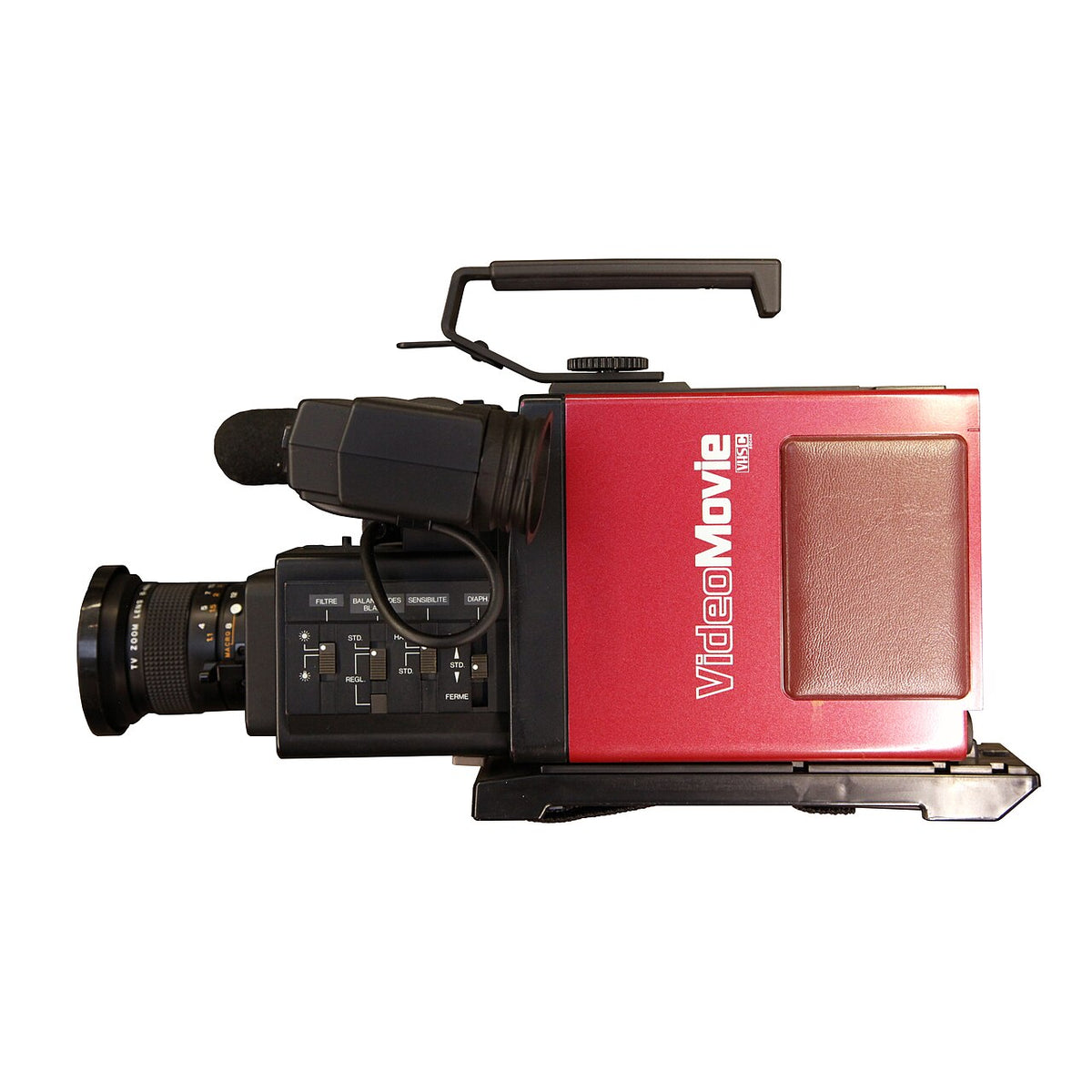
For an 80s-90s VHS look, get a VHS-C or Video8 camcorder; for a sharper 90s look that's still analog, the Hi8; for early 2000s video and the easiest transfer to a computer, the MiniDV or the Digital8; and to avoid tapes altogether, a DVD, hard drive, or card camcorder from the late 2000s. The choice therefore depends on the look you want and how easy it is to read and transfer the footage today.
The table by decade
| Era | Formats | Look | Today |
|---|---|---|---|
| 80s | Betamovie, VHS, VHS-C, Video8 | Soft image, bleeding colors, noise | Heavy devices, parts and tapes for some formats are now rare |
| 90s | VHS-C, Video8, Hi8, then MiniDV (1995) | Sharper analog (Hi8), then digital | The heart of the vintage market, Hi8 and MiniDV tapes are still available |
| 2000s | MiniDV, Digital8, DVD, hard drive, card | SD digital video, then early HD models | The easiest to transfer, 2000s "home video" look |
80s: the pioneers
The first consumer camcorders combined a camera and a VCR in a single body. Sony launched the Betamovie in 1983 (it records but cannot play back on its own), JVC launched the GR-C1 in VHS-C format in 1984, then Sony launched the CCD-V8 in Video8 in 1985. They are beautiful collector's items, but they present difficulties for everyday filming: weight, hard-to-find batteries, worn-out mechanics. The Betamovie is best reserved for collectors.

To film with the look of the era, a late 80s or 90s VHS-C, more compact and more reliable, is often a better choice: see the VHS-C camcorder guide.
90s: Hi8 and the arrival of digital
The Hi8 (1989) significantly improved the definition of Video8 and dominated the 90s with Sony, Canon, or Hitachi. In 1995, the DV (MiniDV) format arrived with the Sony DCR-VX1000: digital image, lossless copying, FireWire output. The Hi8 and Video8 guide and the MiniDV, Hi8 or VHS-C comparison detail the differences. The semi-pro models of the decade are presented in Sony VX1000, VX2000 and VX2100.

2000s: MiniDV, Digital8 and the end of the tape
The MiniDV became the standard: small Sony DCR-PC, Panasonic NV-GS, JVC GR-D, Canon MV camcorders. Sony also launched the Digital8 (1999), which records digitally on Hi8 tapes and often plays back old 8mm tapes. Then came the DVD (from 2000), hard drive and card camcorders, and the AVCHD (2006) high-definition format. See the MiniDV guide, the Digital8 and the DVD, hard drive and SD card camcorders.
How to choose
- The look above all: VHS-C or Video8 for the analog grain, MiniDV for 2000s SD digital video.
- The transfer: a card or hard drive camcorder plugs into USB; a MiniDV requires a FireWire port or an adapter; analog goes through a capture box.
- The tapes: check that they are still available (which tape for which camcorder, where to buy MiniDV tapes).
- The battery: is the right reference still available? See camcorder battery.
- The brands: Sony Handycam and Panasonic, JVC and Canon.
Frequently asked questions
Which camcorder for an authentic VHS effect?
A 90s VHS-C or Video8 gives the look closest to home videos of the era. A MiniDV gives more of the early 2000s look.
Which vintage camcorder is the easiest to use today?
A memory card or hard drive model from the late 2000s, followed by the MiniDV. Analog tape camcorders require more equipment for transfer.
Can you still find tapes for an 80s camcorder?
For VHS-C and Video8/Hi8, you can still find new stock or used tapes. For Betamovie, it is much more complicated.
All devices sold on Vibes Photo are checked before shipping and covered by a 6-month warranty (details in our general terms and conditions of sale).