










Camera battery not charging: causes and solutions
The charger flashes, the battery dies after just a few photos, or the camera refuses to turn on: simple checks and when to replace your digicam battery.
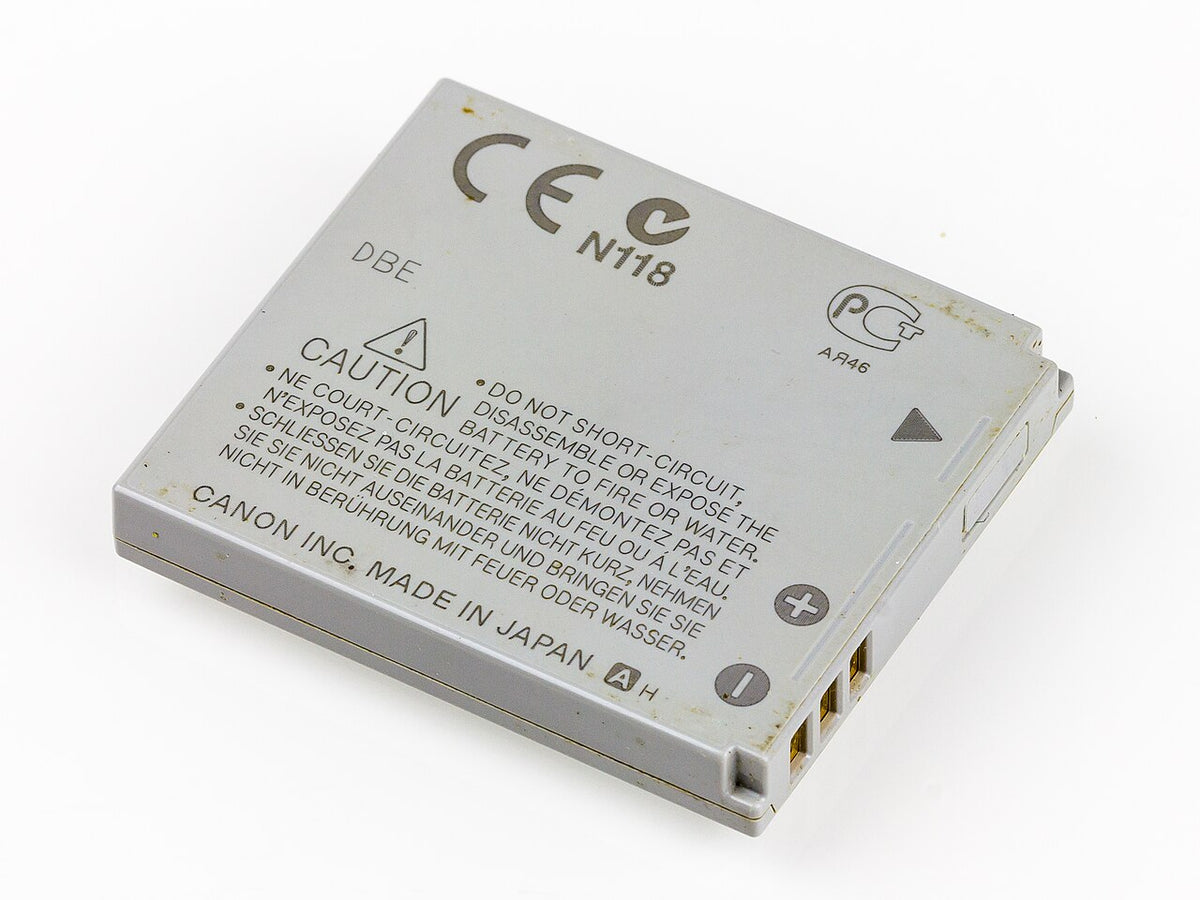
A camera battery that no longer charges is the most common problem with an old digicam. In most cases, it is simply that the lithium-ion battery has aged: it loses capacity over the years, even without being used. Before replacing it, check three things: the contacts (clean, free from oxidation), the charger (correct model, correct voltage, indicator light turns on), and the battery model number. A swollen battery must no longer be used.
Symptoms and their probable causes
| Symptom | Probable cause | What to do |
|---|---|---|
| The charger indicator light does not turn on | Faulty charger or cable, poor contact | Test another outlet, clean the contacts |
| The indicator light flashes or never switches to "charged" | Worn battery or fault detected by the charger | Consult the charger manual, test another battery |
| The battery drains after a few photos | Capacity greatly reduced due to age | Replace the battery |
| The camera does not turn on with a charged battery | Dirty contacts, poorly closed battery cover, worn battery | Clean, check the battery cover, test another battery |
| Bulged, deformed battery | Internal degradation | Stop using it, drop it off at a collection point |
The exact meaning of the flashing varies depending on the charger: always check the model's manual.
Simple checks
- Clean the contacts of the battery and the charger with a cotton swab barely moistened with isopropyl alcohol, then let dry.
- Check the model number: each camera has its battery (for example NB-4L, NB-6L, NP-BG1, EN-EL10…). A battery that fits does not mean it is suitable.
- Test another battery or another compatible charger to isolate the culprit.
- Leave a battery that has remained empty for years to charge longer: some chargers take time to "wake it up", others reject it. If it rejects, it is probably unusable.
Safety: a swollen, hot, or leaking battery should not be recharged. Do not puncture it, do not throw it in the trash: drop it off at a battery collection point.
Original or compatible battery?
Original batteries for old cameras are often no longer manufactured, or those found are old stocks that have also aged. A recent compatible battery, from a reputable brand, with the usual protections, is often the best option. Avoid unbranded batteries with an unrealistic stated capacity. All the details in battery and charger for old digital camera.

AA battery cameras
Canon PowerShot A, Kodak EasyShare and Nikon Coolpix L cameras run on AA batteries. If the camera turns off immediately with alkaline batteries, try well-charged NiMH rechargeable batteries: they provide the current required by the flash and zoom better. See our PowerShot A guide and our battery section.
Storing your batteries
- store them half charged, in a cool and dry place;
- recharge them every few months if you do not use them;
- remove the battery from the camera if you store it for a long time.
At Vibes Photo, each camera is checked before being put on sale and covered by a six-month commercial warranty, in addition to the legal warranties of conformity and hidden defects. The details are in our general terms and conditions of sale.
Frequently asked questions
Why does my camera battery no longer charge?
Most often because it has aged: a lithium-ion battery loses its capacity over time. First check the contacts and the charger.
The indicator light on my charger is flashing, what should I do?
On many chargers, flashing indicates a charging fault or a worn battery. The exact meaning is in the charger manual.
Can I use a compatible battery?
Yes, a recent compatible battery from a reputable brand is often preferable to an original battery stored for years.
What should I do with a swollen battery?
Stop using or charging it, and drop it off at a battery collection point.
Main image: Canon NB-4L lithium-ion battery from a Canon Digital IXUS 70. Photo: Raimond Spekking, CC BY-SA 4.0, via Wikimedia Commons