










Street photography: settings, camera and ethics for photographing the street
Discreet equipment, 28 or 35 mm focal length, zone focusing, settings, attitude and image rights in France: everything you need to get started with street photography.
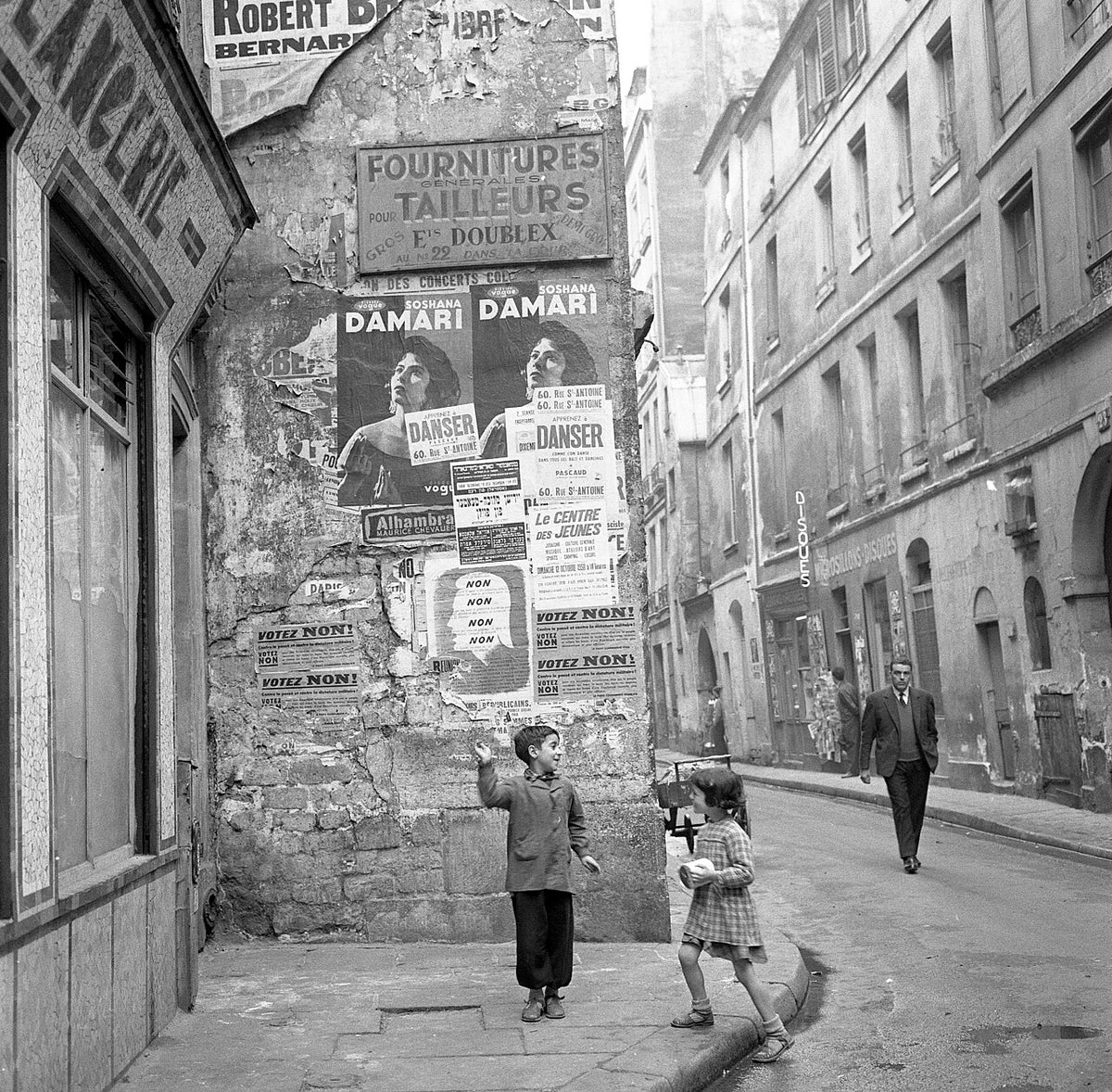
To get started with street photography, you mainly need a discreet and fast camera (film point-and-shoot, rangefinder, digicam, or small mirrorless), a moderate wide-angle focal length of 28 or 35 mm, and a technique: zone focusing, which consists of pre-focusing the camera so you can shoot without waiting for autofocus. The rest is observation, patience, and respect for the people being photographed.
The verdict in 30 seconds
The ideal kit
- 28 to 40 mm film point-and-shoot or rangefinder;
- 400 ISO film or ISO 400-800 in digital;
- wrist strap, camera always ready.
Typical settings
- f/8, focus at 2.5-3 m;
- shutter speed of 1/250 s or faster to freeze motion;
- measure exposure once, then don't change it.

What camera for the street?
| Type | Strengths | Examples |
|---|---|---|
| Autofocus film point-and-shoot | Small, quiet, discreet | Olympus Mju II, Yashica T4, Ricoh GR1, Konica Big Mini |
| Rangefinder, manual focus point-and-shoot | Rangefinder scale, ideal for zone focusing | Olympus 35 RC, Canonet QL17, Leica M (high budget) |
| Film SLR with 35 or 50 mm | Accurate framing, depth of field scale | Pentax ME Super, Nikon FM2, Olympus OM-1 |
| 2000s digicam | Discreet, free to use, distinctive rendering | Canon IXUS, Ricoh GR Digital, CCD point-and-shoots |
| Modern premium point-and-shoot | Fast, large sensor, snap mode | Ricoh GR III, Fujifilm X100 |
To compare point-and-shoots, read Olympus Mju II vs Yashica T4 and Modern premium point-and-shoot or digicam.
The zone focusing technique
Instead of letting autofocus search, you pre-focus at a given distance (for example 3 m) and close the aperture (f/8 or f/11) to obtain a sharp zone of about 2 to 7 m with a 35 mm. You just have to shoot when someone enters this zone. This is the method of street photographers for decades, ideal with a camera with a distance scale. All the calculation is in Focusing, hyperfocal and zone focusing.
Tip: on an autofocus point-and-shoot, press halfway on an object at the desired distance, keep your finger pressed, then shoot at the right moment. Some recent point-and-shoots have a "snap" mode that fixes the distance.
Settings in practice
- Bright sunlight: 400 ISO, f/11 to f/16, 1/500 s (see the Sunny 16 rule) ;
- Shade, overcast sky: 400 ISO, f/5.6 to f/8, 1/250 s ;
- Evening, lit streets: 800 to 1,600 ISO (or pushed film), wide aperture, 1/60 s, and acceptance of motion blur.
Finding your images
- choose a setting (a beautiful light, a poster, a passage) and wait for someone to come and complete the scene ;
- look for contrasts: shadow and sun, reflections in shop windows, gestures, colors that complement each other ;
- shoot from hip height if the camera allows it, but check your framing ;
- walkways, markets, train stations, beaches, demonstrations: where people live, without being suspicious ;
- shoot series: the same place, at different times.

Ethics and image rights in France
In France, everyone has a right to their image: in principle, publishing the photo of a recognizable and isolated person requires their agreement. Case law allows exceptions, notably for news, crowds where no one is individualized, or artistic expression, but they are assessed on a case-by-case basis. Taking a photo in a public place is not the same as publishing it. A few simple rules:
- smile, show the camera, agree to delete or not publish if asked ;
- avoid people in vulnerable or degrading situations, and children without parental consent ;
- for commercial use, written authorization is essential.
These elements are general information, not legal advice: in case of doubt, consult a legal professional.
In street photography, the best setting remains patience.
See our film cameras → See our vintage digital cameras →
Frequently asked questions
What focal length for street photography?
The 35 mm is the most versatile; the 28 mm requires being closer, the 50 mm isolates more. Film point-and-shoots of 35 to 40 mm are perfect.
Film or digital for the street?
Both work. Film forces you to choose your images; digital (or a digicam) allows you to multiply attempts without cost.
How to be more discreet?
A small quiet camera, a wrist strap rather than a big strap, and zone focusing to shoot without holding the camera up for long.