










Used Panasonic Lumix LX3, LX5, LX7: reviews and differences
The Lumix LX3, LX5 and LX7 are expert compact cameras with very bright Leica lenses. CCD or CMOS sensor, zoom, video: their differences and which one to choose.
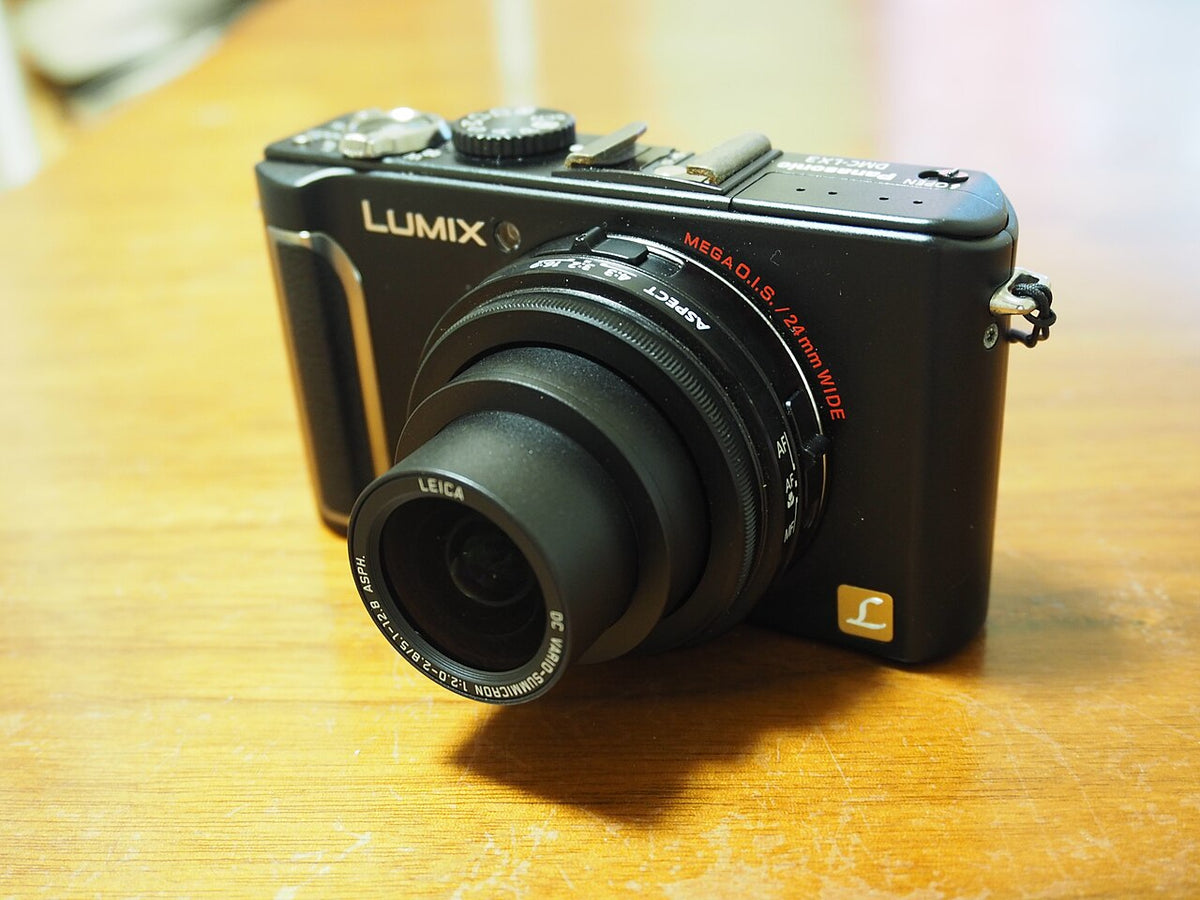
Between 2008 and 2012, Panasonic built a little legend with its Lumix LX cameras: expert compacts with fast Leica lenses, manual controls, and RAW format. The LX3 and LX5 use a CCD sensor, which is why they are still sought after by digicam rendering enthusiasts today; the LX7 switches to CMOS with an even faster lens.
The three models compared
| Lumix LX3 | Lumix LX5 | Lumix LX7 | |
|---|---|---|---|
| Release | 2008 | 2010 | 2012 |
| Sensor | 1/1.63-inch CCD, 10.1 MP | 1/1.63-inch CCD, 10.1 MP | 1/1.7-inch CMOS, 10.1 MP |
| Lens (equiv.) | 24-60 mm f/2.0-2.8 | 24-90 mm f/2.0-3.3 | 24-90 mm f/1.4-2.3 |
| Video | 720p | 720p | Full HD |
Sources: Wikipedia (Panasonic Lumix DMC-LX3), DPReview (LX7 announcement), Panasonic.
Lumix LX3: the fast wide-angle
The LX3 made its mark with its 24 mm f/2.0, which was rare on a compact camera in 2008. Its zoom is short (24-60 mm), but it is appreciated for street and indoor photography. Its CCD sensor provides a rendering typical of the era.

Lumix LX5: the longer zoom
The LX5 keeps the 10.1 MP CCD sensor and extends the zoom to 24-90 mm, at the cost of a slightly smaller aperture at the telephoto end (f/3.3). It is the most versatile of the two CCD LX cameras.
Lumix LX7: the fastest
The LX7 switches to a CMOS sensor (1/1.7 inch) and adopts an exceptionally fast 24-90 mm f/1.4-2.3 lens. It records in Full HD. It is the best in low light, but it no longer has the CCD rendering.

Which one to choose?
Choose an LX3 or an LX5 if
- you are looking for the CCD rendering;
- you want an affordable vintage expert compact;
- you like the 24 mm wide-angle.
Choose an LX7 if
- you often photograph in low light;
- you want to record in Full HD;
- the CCD rendering does not matter to you.
To check before buying
- the zoom extends and retracts without abnormal noise or error message (lens error);
- the absence of visible dust on photos of a clear sky;
- the condition of the battery (battery and charger for old digital camera).
The other Lumix compacts (TZ, FS): Lumix TZ, FS and LX: which model. The difference with a classic digicam: expert compact or digicam.
At Vibes Photo, each camera is checked before being put on sale and covered by a six-month commercial warranty, in addition to the legal warranties of conformity and hidden defects. The details are in our general terms and conditions of sale.
Frequently Asked Questions
Does the Lumix LX3 have a CCD sensor?
Yes, a 10.1 MP CCD, like the LX5.
What is the difference between the LX5 and the LX7?
The LX7 switches to CMOS with a faster lens (f/1.4-2.3) and records in Full HD; the LX5 keeps a CCD.
Is the LX3 still a good camera today?
For a CCD rendering and a fast wide-angle in a compact, it is still appreciated, with the limitations of its era in low light.
What zoom on the LX3?
A 24-60 mm equivalent opening at f/2.0-2.8.
Main image: Black Panasonic Lumix LX3 expert compact on a wooden table. Photo: Motokoka, CC BY-SA 4.0, via Wikimedia Commons