










Minolta and Konica Minolta Dimage: Used X, A, Z and 7 Series
Dimage has introduced major innovations, such as sensor-shift stabilization. Series 7, A, X and Z: what you need to know before buying.
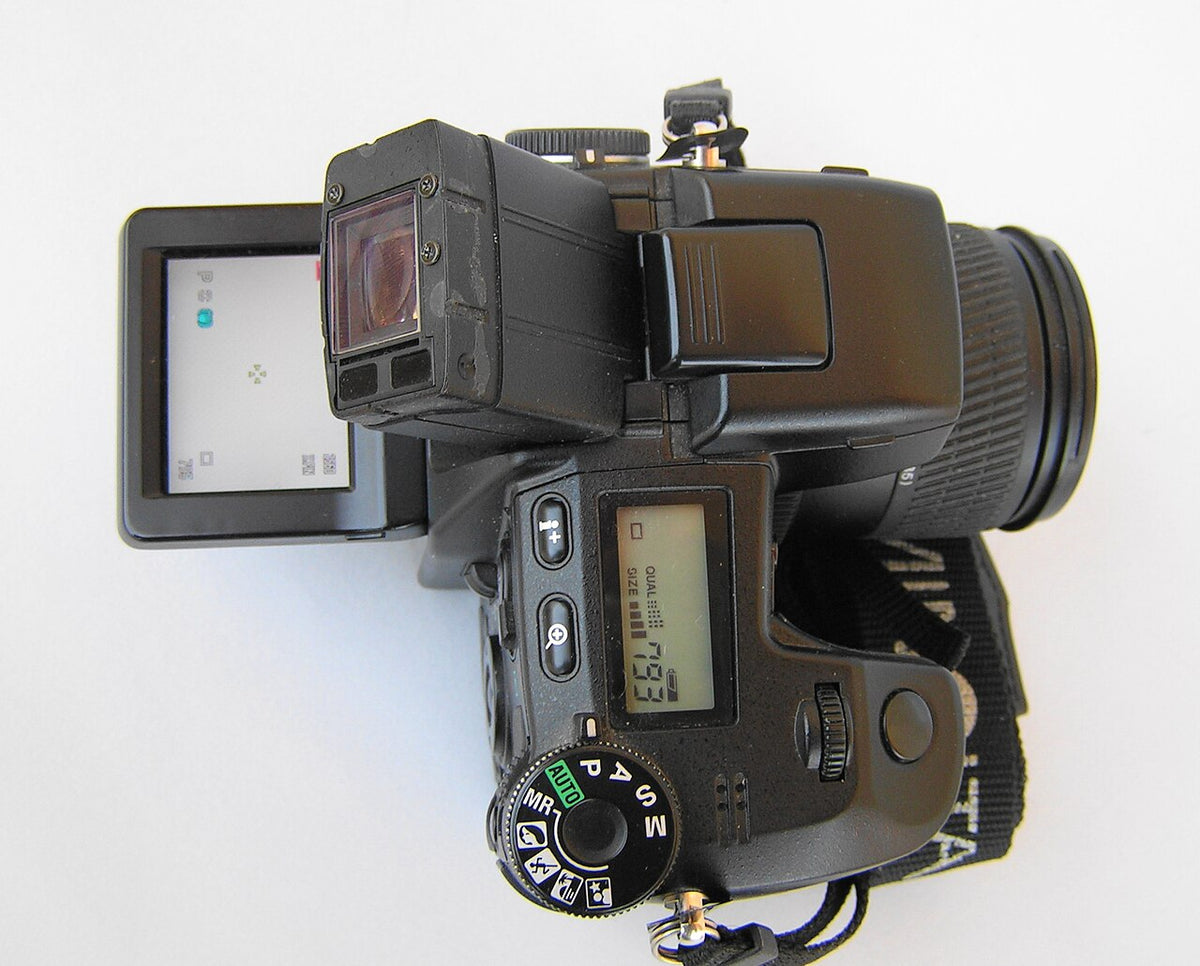
Before selling its camera business to Sony in 2006, Minolta (which became Konica Minolta in 2003) produced highly innovative digital cameras under the Dimage brand. The 7 and A bridge cameras impressed discerning enthusiasts, while the X compacts pioneered fully internal zoom in an ultra-slim body. They all featured a CCD sensor.
Dimage Series
| Series | Type | Key Features |
|---|---|---|
| Dimage 7, 7i, 7Hi | Enthusiast bridge camera (2001–2002) | 5 Mpx 2/3-inch CCD, 28–200 mm f/2.8–3.5 zoom, 4 AA batteries |
| Dimage A1, A2, A200 | Enthusiast bridge camera (2003–2004) | Sensor-shift stabilization (A1: 5 Mpx CCD, 28–200 mm zoom) |
| Dimage X (X, Xi, Xt, X20, X1…) | Ultra-slim compact camera | Retractable lens: the zoom does not extend from the body |
| Dimage Z | Compact bridge camera | Affordable high-magnification zoom |
Sources: Minolta and Konica Minolta press releases (Dimage A1, Dimage X1), DPReview, Wikipedia (Minolta Dimage 7 series).
Dimage A1: Sensor-Shift Stabilization
In 2003, Minolta introduced the Dimage A1 as the first consumer camera to stabilize images by moving the CCD sensor ("Anti-Shake"), offering an advertised improvement of approximately three stops. This technology was later adopted in Konica Minolta and then Sony Alpha SLR cameras, such as the Sony A200 and A350. The A1 combines a 5 Mpx 2/3-inch CCD with a 28–200 mm f/2.8–3.5 zoom.

Dimage X: Retractable Lens
Dimage X cameras use a retractable lens (a prism directs light at a 90° angle): the lens never extends from the body, allowing for a very slim camera. The Dimage X1 (2005) added an 8 Mpx CCD and stabilization that tilts the entire lens and sensor assembly. The advantage when buying second-hand is that the zoom does not extend, reducing the risk of lens errors.

Check Before Buying
- CCD defect: several Dimage cameras (7i, 7Hi, A1, Xi, Xt, X20) were included in Konica Minolta's 2005 recall; test the image on the screen (see our article);
- Power supply: Dimage 7 cameras consume a lot of power with their four AA batteries, so plan to use good NiMH rechargeable batteries;
- After-sales service: Konica Minolta ended its camera business in 2006, and parts are rare.
For memory cards and batteries: which memory card for an older digital camera and battery and charger for an older digital camera. Other CCD cameras: the list of CCD cameras.
At Vibes Photo, every camera is inspected before being put up for sale and covered by a six-month commercial warranty, in addition to statutory warranties for conformity and hidden defects. Details can be found in our general terms and conditions of sale.
Frequently Asked Questions
What is the Dimage A1's Anti-Shake?
A stabilization system that moves the CCD sensor to compensate for movement, a first for a consumer camera according to Minolta.
Do Minolta Dimage cameras have CCD sensors?
Yes, the 7, A, X, and Z series use CCD sensors.
Why does the Dimage X zoom not extend?
It uses a retractable lens: a prism directs light toward a zoom lens housed vertically within the body.
Can a Dimage camera still be repaired?
It is difficult: Konica Minolta ended its camera business in 2006, and parts are rare.
Main image: Minolta Dimage A1 digital bridge camera with its 28–200 mm zoom. Photo: Brian Eager from Livno, Bosnia and Herzegovina, CC BY 2.0, via Wikimedia Commons