










2000s digital camera: which one to choose for the CCD look?
Canon IXUS, Sony Cyber-shot, Nikon Coolpix: how to choose a 2000s digital compact to recapture the famous CCD look without falling into the traps.
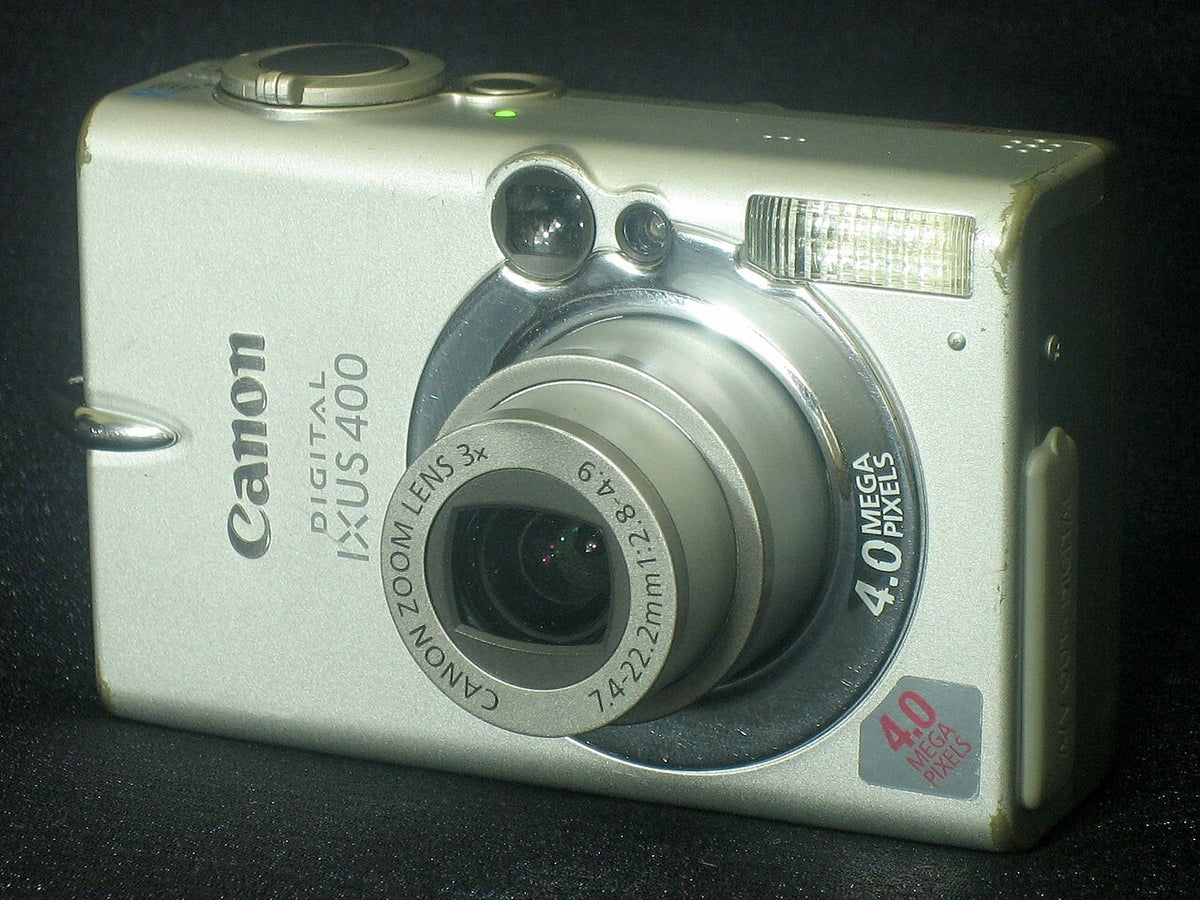
Direct flash, bold colors, light grain: the look of 2000s digital compacts is everywhere on social media. In 2026, searches for these "digicams" have reached their highest level in ten years. But between Canon, Sony, Nikon, and Olympus, and hundreds of models, how do you choose the right one? Here is everything you need to know before buying.
Why this look is so popular
Compacts from this era most often used a CCD sensor, a technology that has since been replaced by CMOS in modern cameras. Many attribute these rich colors and slightly "cinematic" look to it. In reality, the look comes from a combination: the sensor, the JPEG image processing of the time, the small sensor size, and above all, the direct flash. It is this combination, difficult to reproduce with a smartphone, that gives it all its charm.
Fewer pixels, more atmosphere.
The major families
Canon IXUS and PowerShot
Often metal bodies, well-finished, with fairly natural colors. The IXUS are the most sought-after for their compact and elegant design.
Sony Cyber-shot
Very popular, often equipped with Carl Zeiss lenses. Note: many older models use Sony-proprietary Memory Stick cards.
Nikon Coolpix
A very wide and reliable range, with models for every budget.
Olympus µ and Fujifilm FinePix
Original designs and appreciated looks. Some models use xD-Picture Card cards, which are harder to find today.
To compare the two most popular families, read our comparison Canon IXUS vs Sony Cyber-shot.
The criteria for choosing well
- The memory card. Choose a model compatible with SD, and ideally SDHC, which applies to most cameras released from around 2007 onwards. Memory Stick and xD cards can still be found, but are rarer and more expensive.
- The battery and charger. Most use a specific battery: check that it holds a charge and that a charger is included.
- The resolution. Between 5 and 10 megapixels, you get the desired look with enough detail for Instagram or a print.
- The lens. It must extend and retract without issue. On some Canons, the message "Lens Error" or "E18" indicates a jammed lens.
- The sensor. Some CCD sensors manufactured in the early 2000s had a defect affecting several brands: images become purple or blurry. Always do a test before buying.
Vintage digital, tested and guaranteed →
Our settings to recreate the 2000s look
- Leave the camera in automatic mode, flash enabled.
- Keep the ISO sensitivity as low as possible.
- Keep the JPEG files as they come out of the camera, without filters.
- Close-up photography, at night, with flash: that is where the look is most pronounced.
Tip: remember to set the camera's date and time from the first use. Your photos will be sorted in the correct order on your phone.
Also read: CCD or CMOS: what difference in look?, the 10 checks for a used digicam and What memory card for an old digital camera?.
See our vintage digital cameras →
Frequently asked questions
What is a CCD sensor?
It is an image sensor technology widely used in compacts until the late 2000s, since replaced by CMOS, which is faster and more energy-efficient.
What memory card to buy?
Check the exact model: most cameras accept SD or SDHC cards, but older Sonys use Memory Sticks, and some Olympus or Fujifilm use xD cards. The oldest SD models often do not accept more than 2 GB.
How much does a 2000s digital camera cost?
Prices vary greatly depending on the model and its popularity. The most sought-after, such as certain IXUS or Cyber-shot, have increased significantly with the trend. A tested and guaranteed camera saves you from unpleasant surprises.
Cover photo: David Gerard, via Wikimedia Commons, Public domain license.